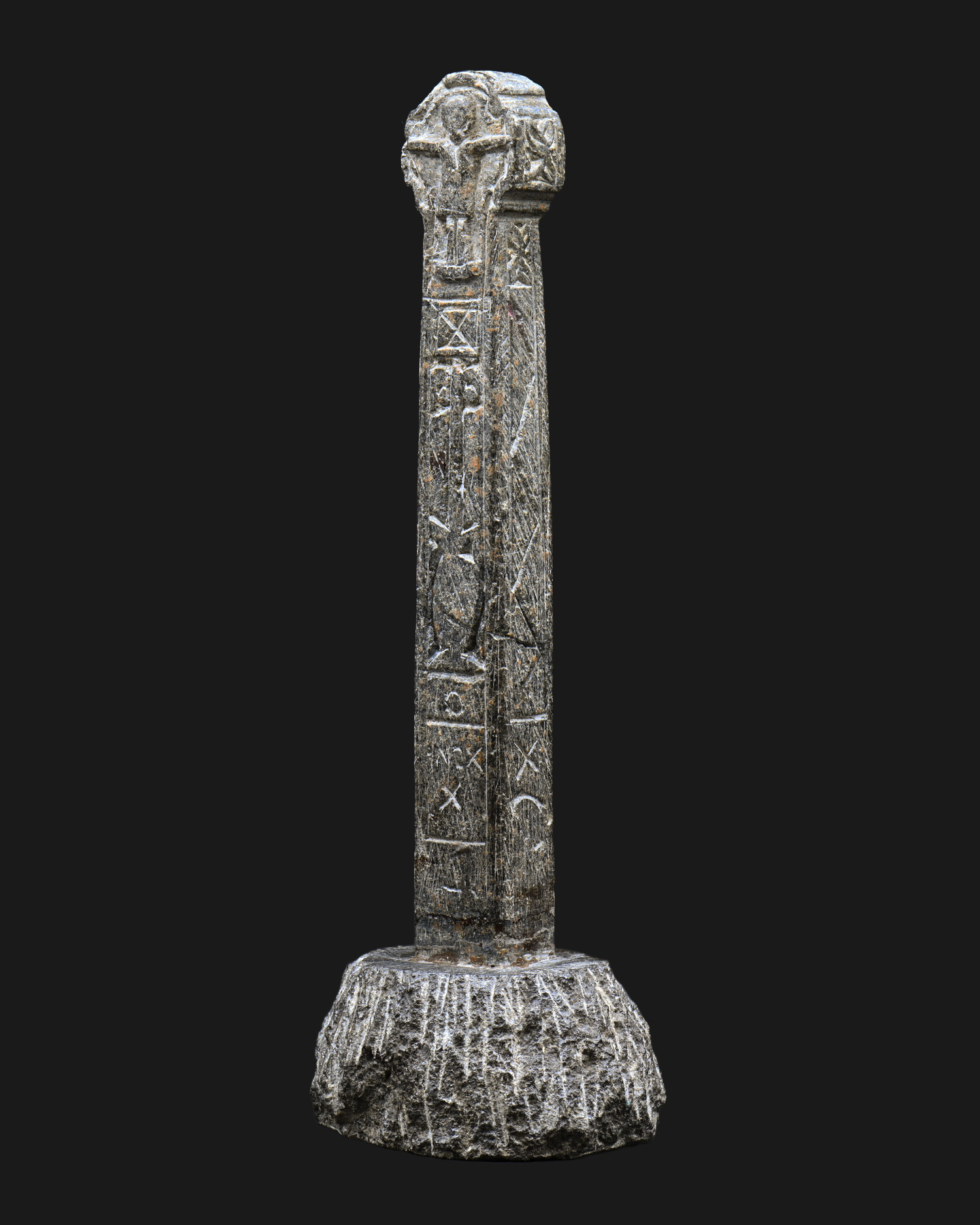
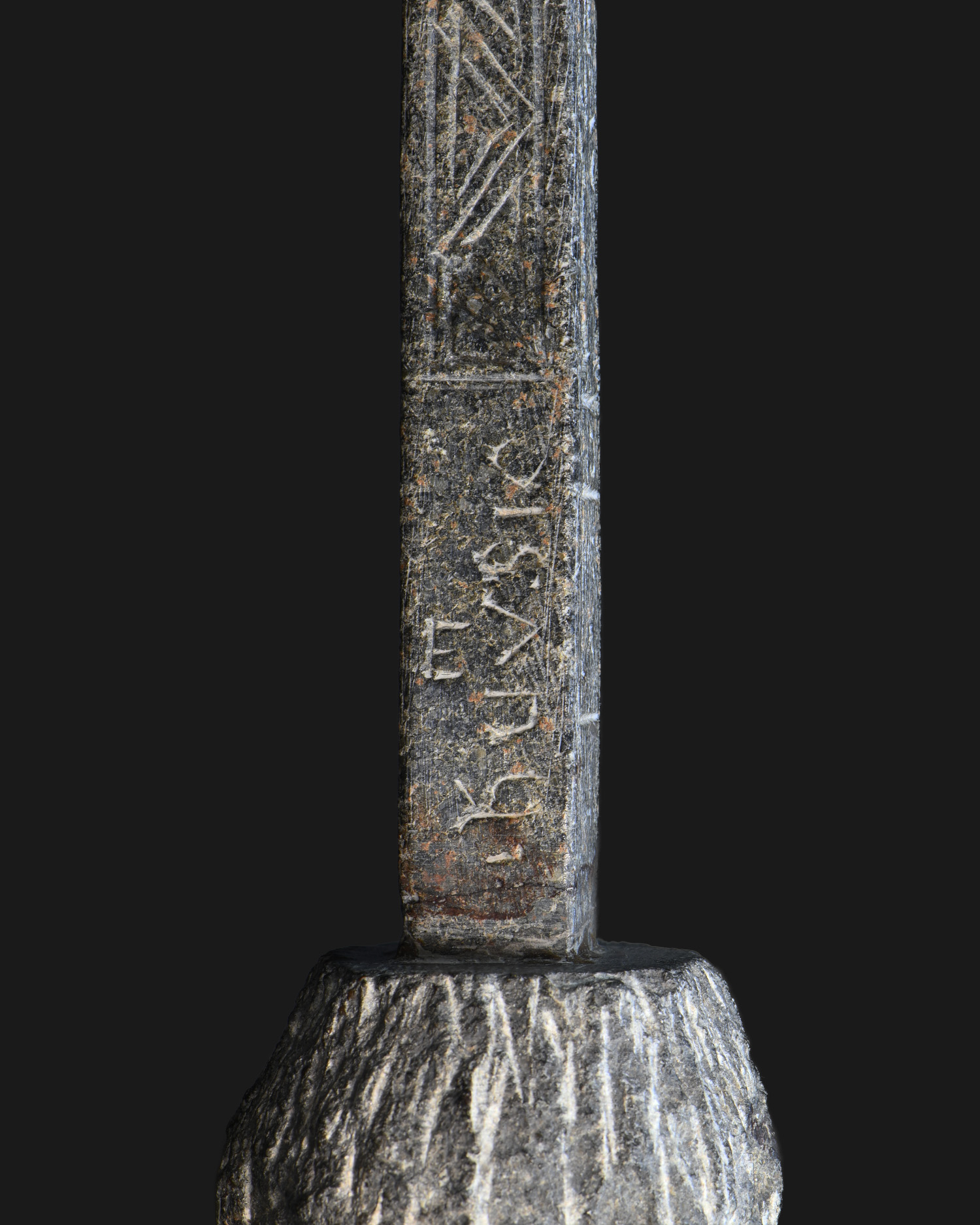
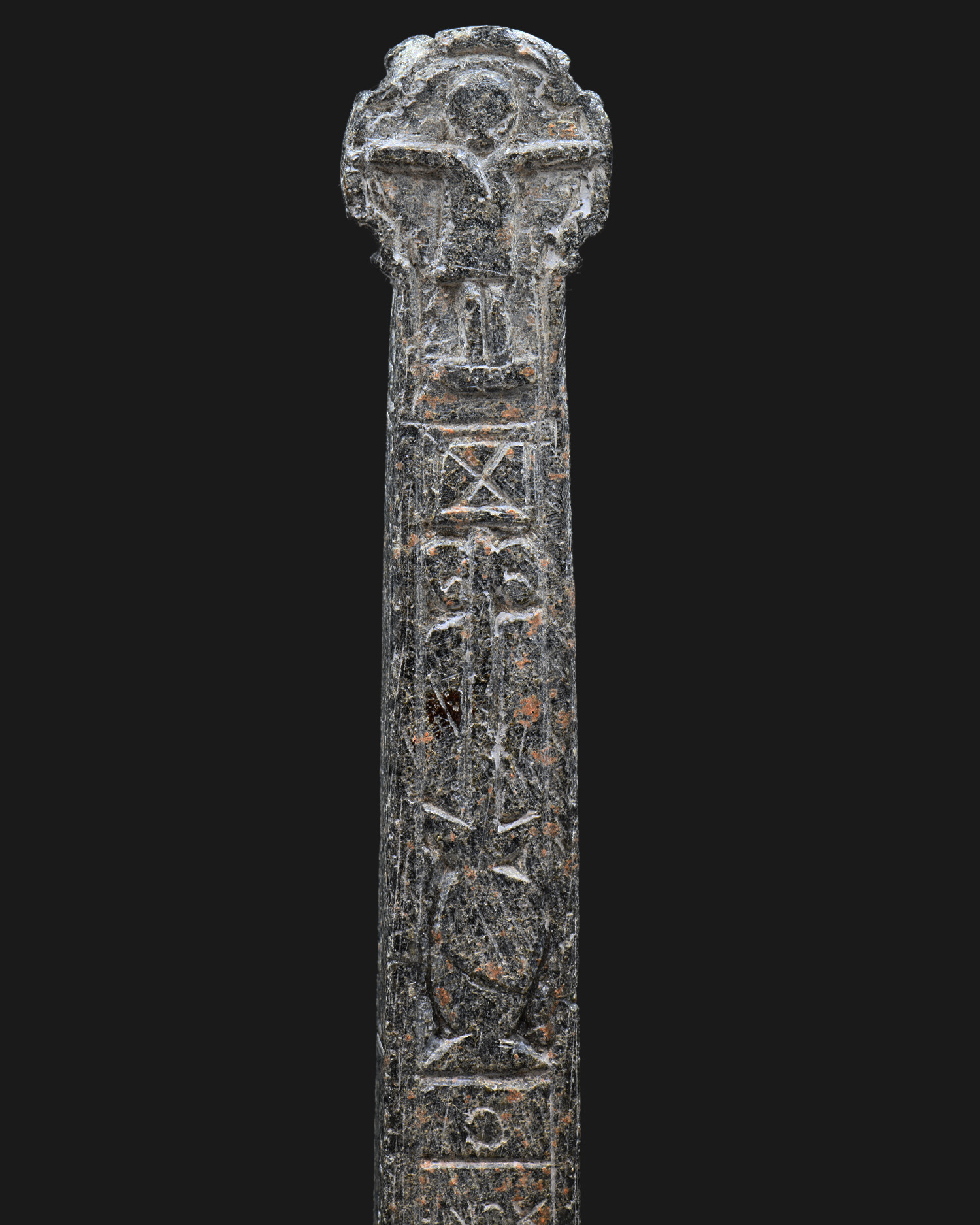
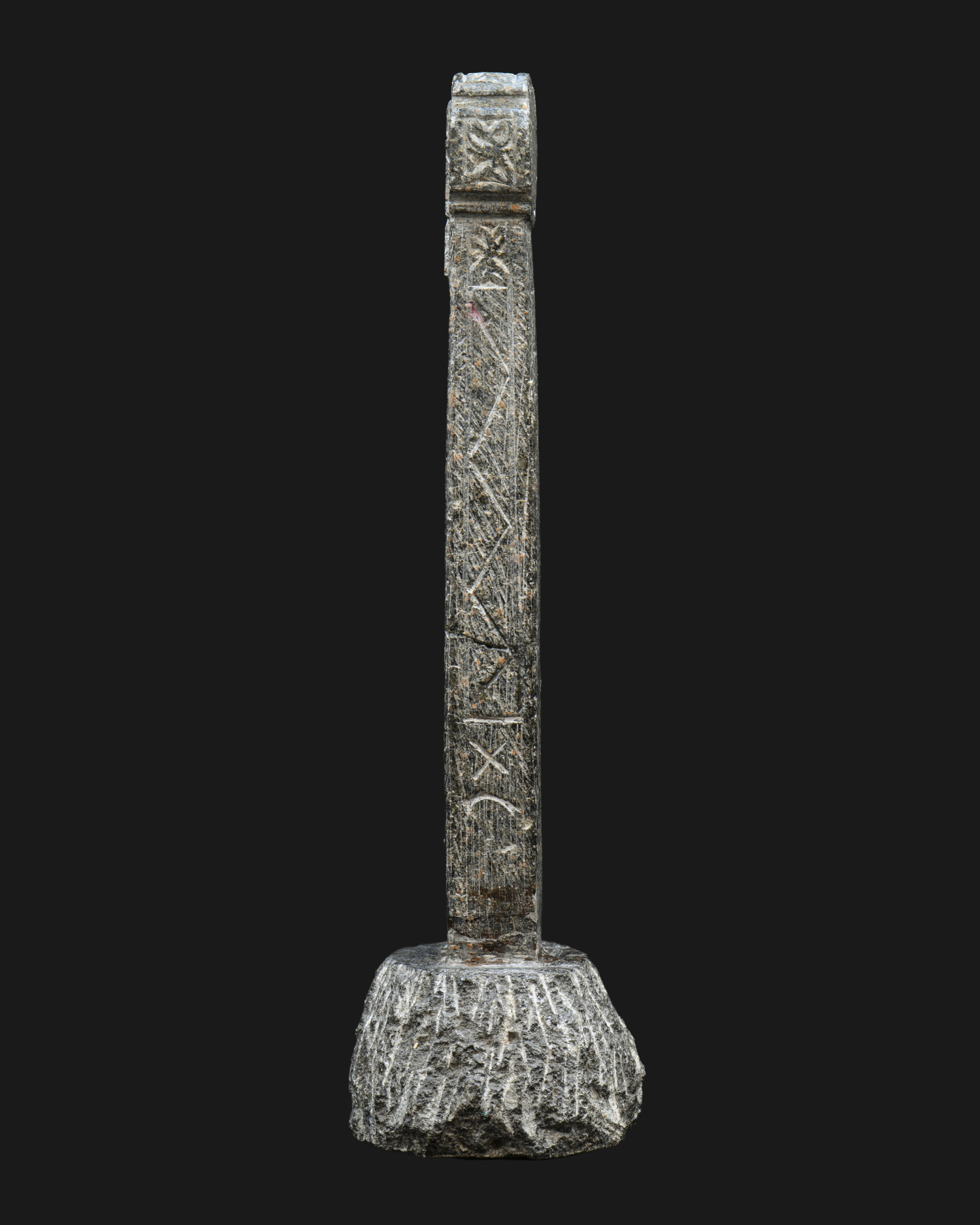
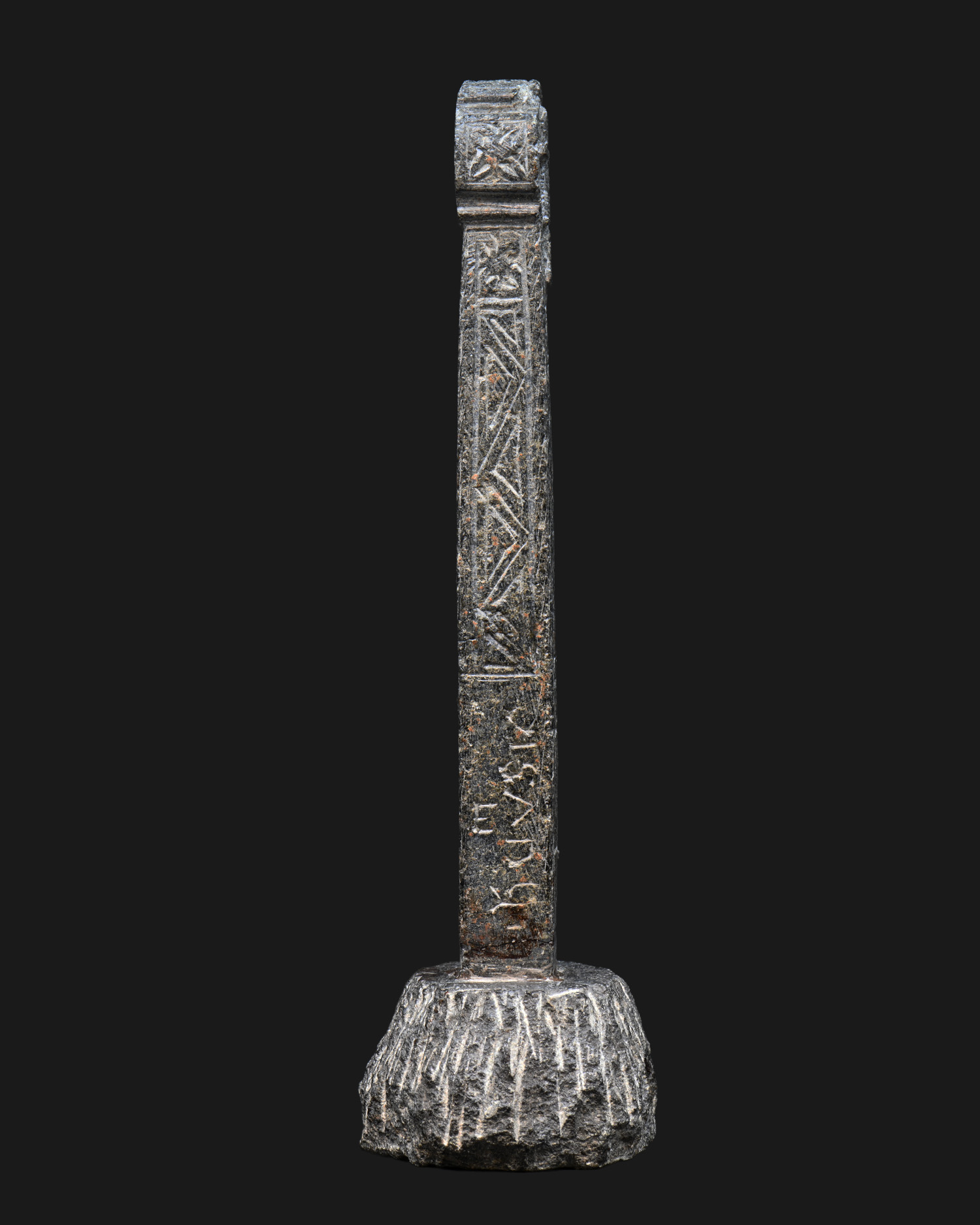
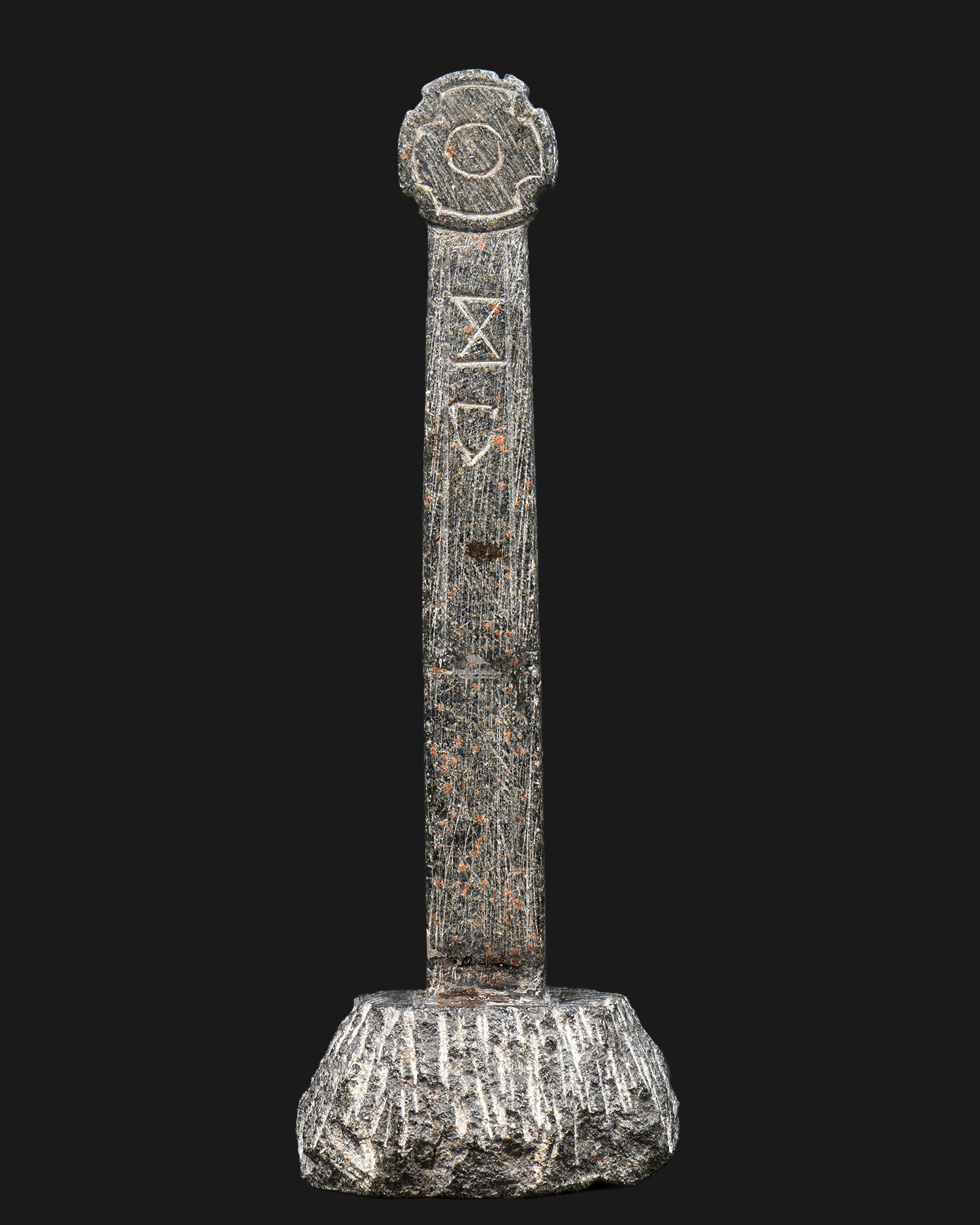
The sculpture in the form of an Iryan cross, 24 cm high, made of a single piece of gray stone (slate). Like the medieval prototypes, it consists of a base (pedestal) with chamfered sides, a high shaft topped by a crossbar merged with a circle (nimbus). In the upper part there is, partially inscribed in the nimbus, a semi-plastic representation of the crucified Christ. The shaft below is decorated with "X" signs and schematic ornaments carved in stone, as well as the INCX inscription. The sides of the shaft are decorated with engraved rosettes and zigzag ornamentation, in addition, the right side bears the inscription IXC, the left side bears an unintelligible word, probably in Irish (Gaelic). The back face of the shaft bears an "X" sign, with a triangular shield below. The ends of the cross arms are decorated with four-pointed rosettes.
Irian cross, more commonly referred to as the high cross (irl. ardchros) or Celtic cross
It is a monumental stone structure from the early medieval period (mainly 8th-12th centuries) that has become a symbol of Ireland and its identity. However, crosses of this kind were erected not only in Ireland, but also in Scotland, Wales and Britain. The tradition developed in the early Middle Ages, as a result of a combination of Celtic and Christian motifs. Their dimensions varied quite a bit, with most exceeding 3-4 meters, and the tallest measuring as much as 5-6 meters. The crosses were covered with complex ornamentation in the Celtic style typical of the era (braids, spirals) and carved biblical scenes, serving a didactic function (the so-called "poor man's bible").
The ornamentation of our cross is very simple, but it should be remembered that Celtic art disappeared at the dawn of modernity, only to return in the 19th century (the so-called Celtic Renaissance). For several centuries, it functioned in a simple folk form, of which our cross is an expression. Even such examples of it are now rare. This cross, most likely, served as a crucifix in a traditional Irish home.