

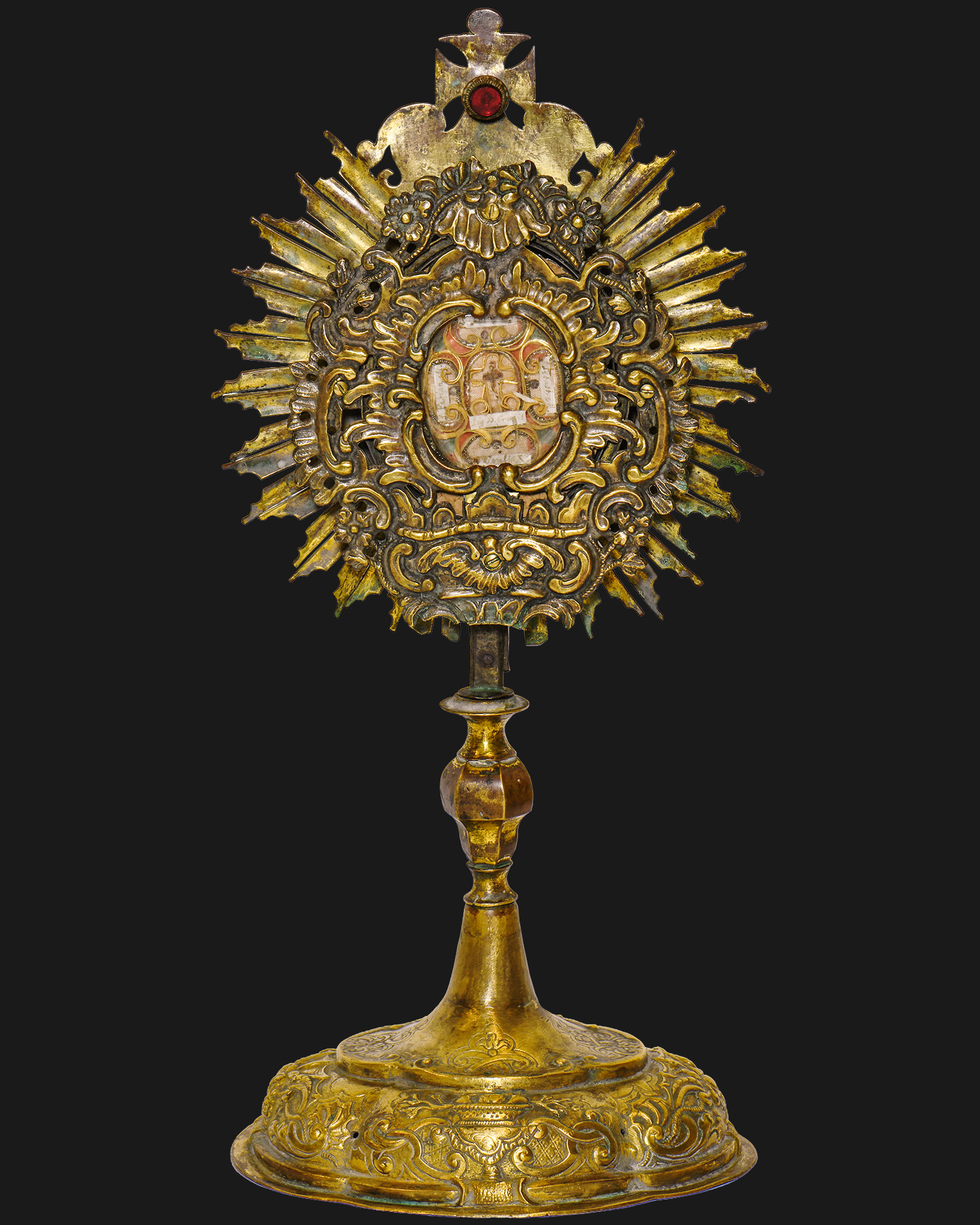
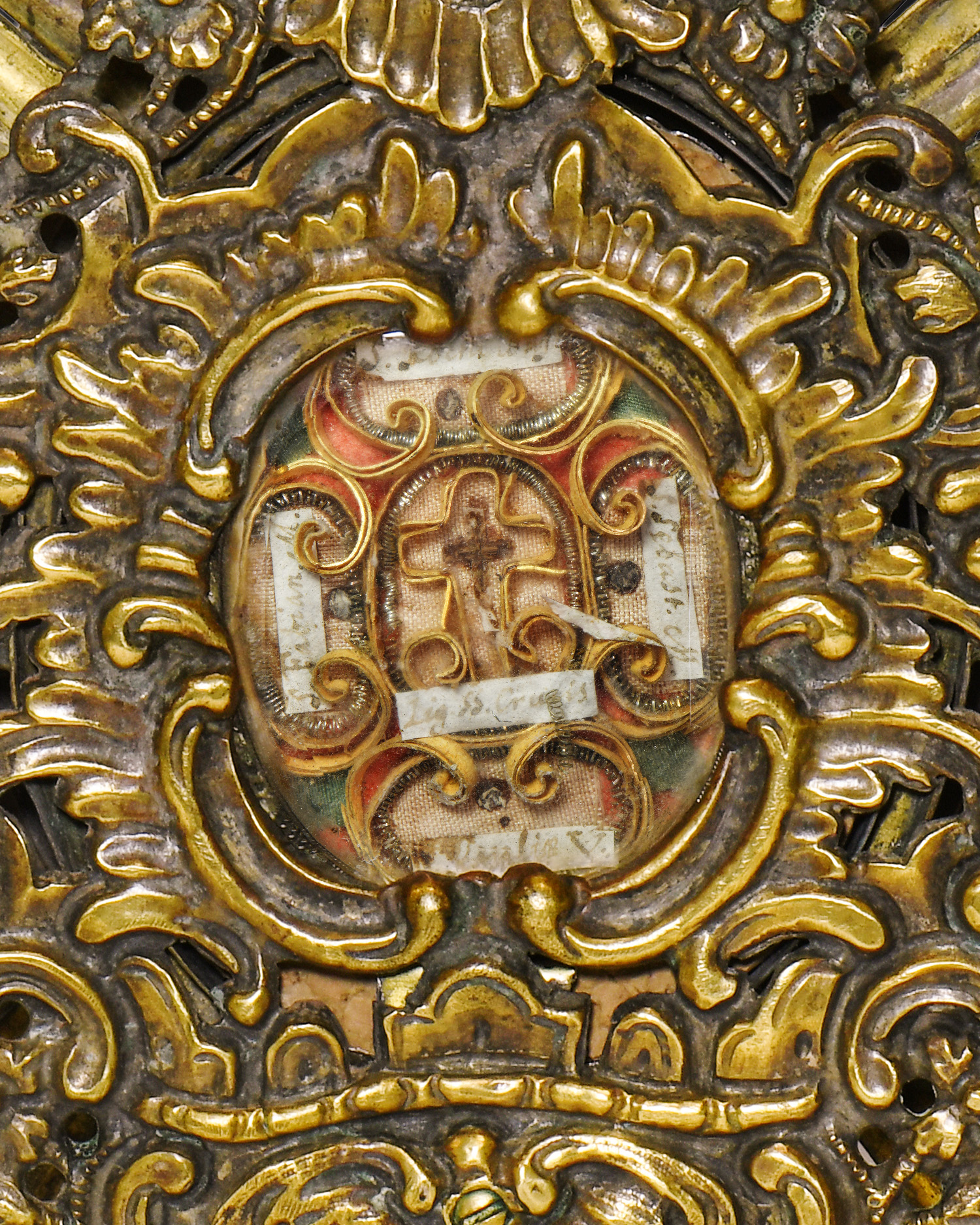
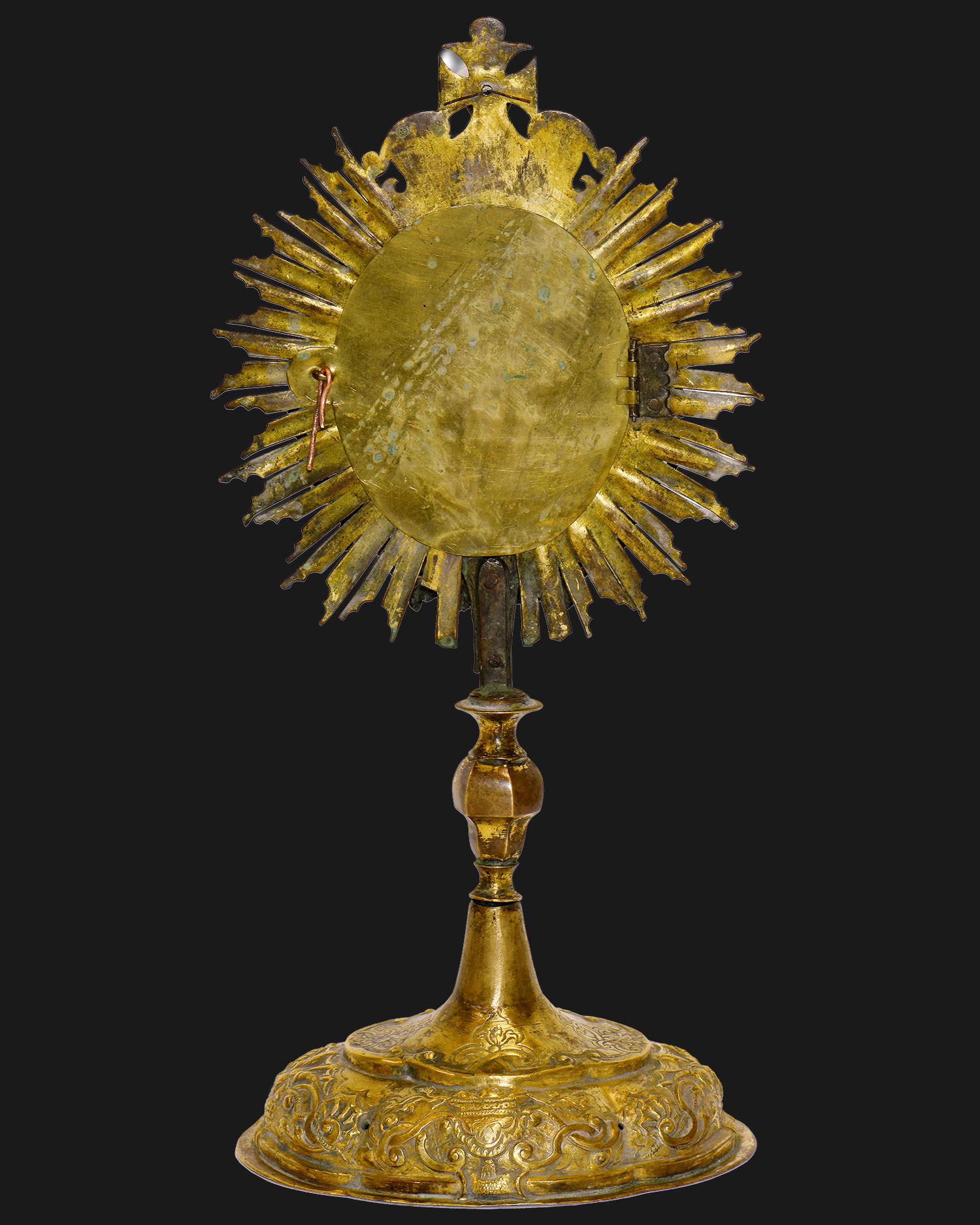
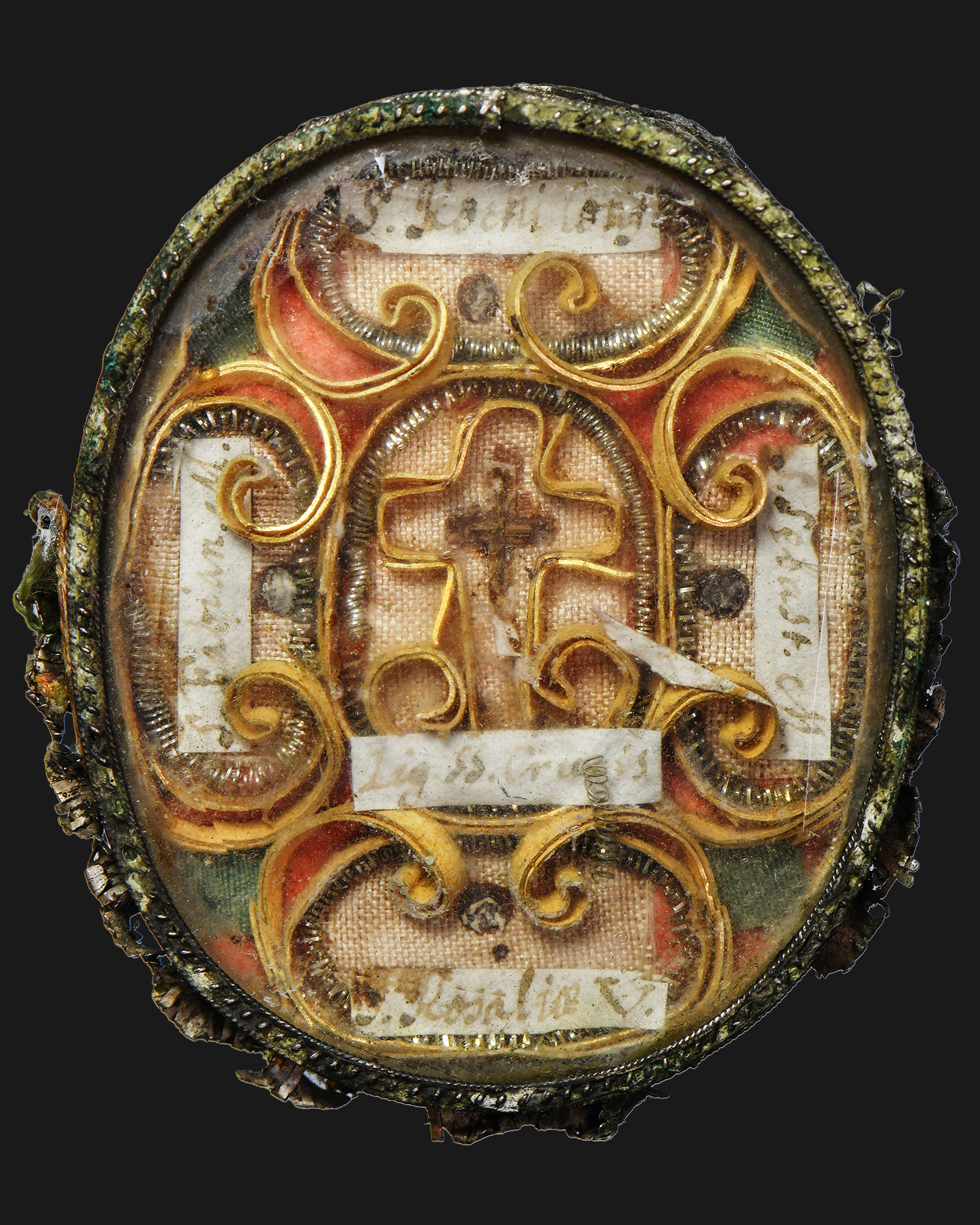
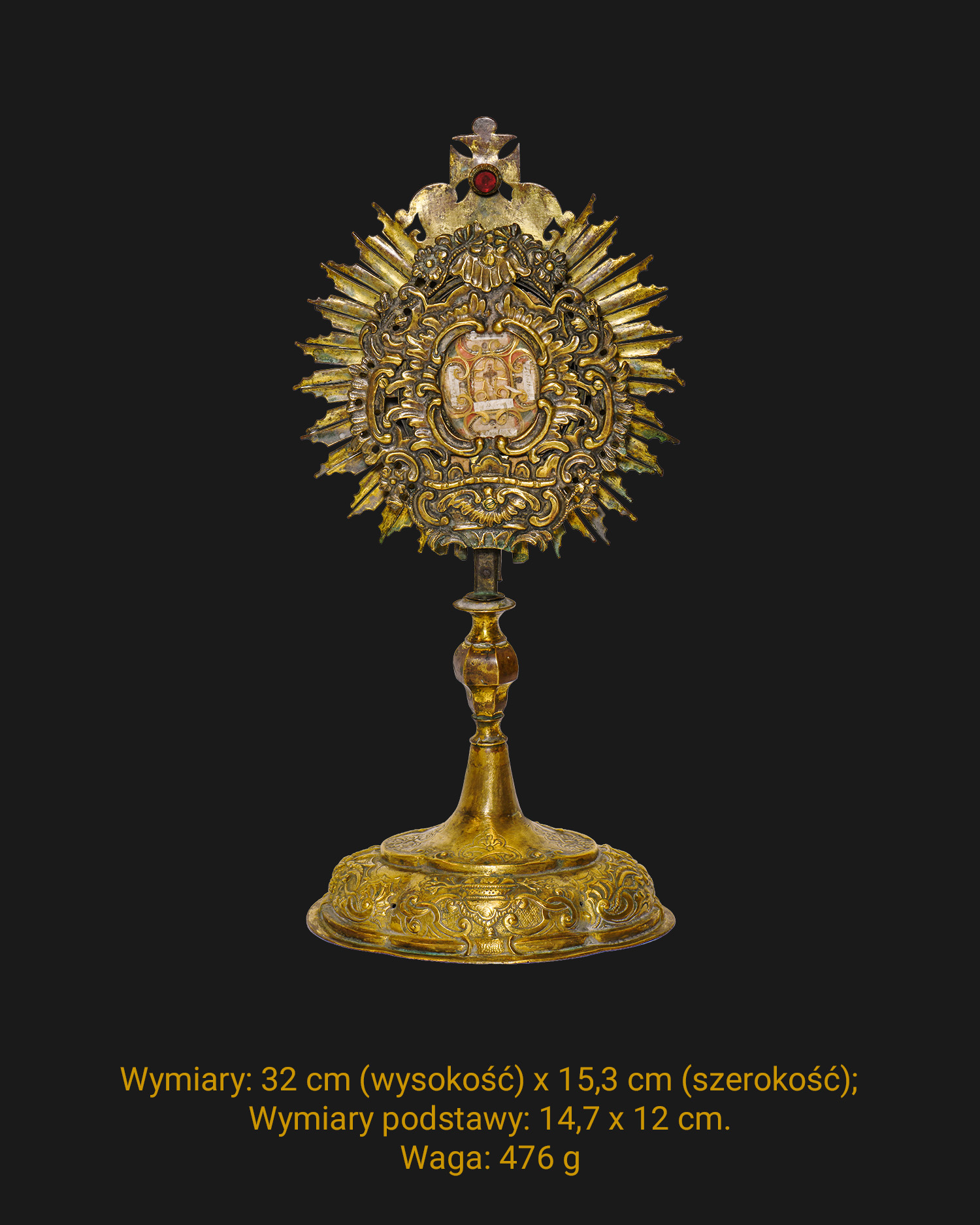

Reliquary with relic of the Holy Cross and four saints, gilded bronze, Central Europe, 18th century.
8000,00 zł
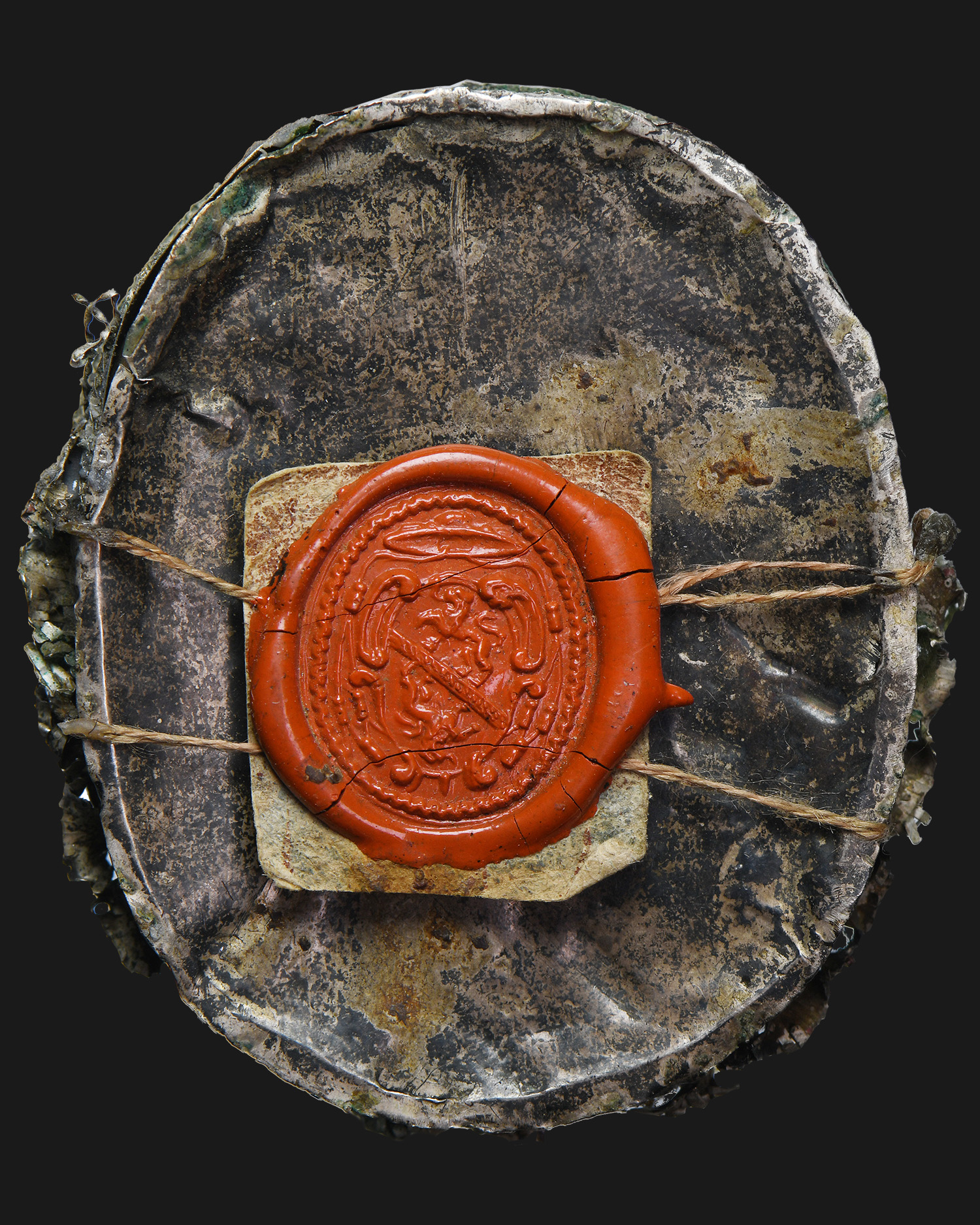
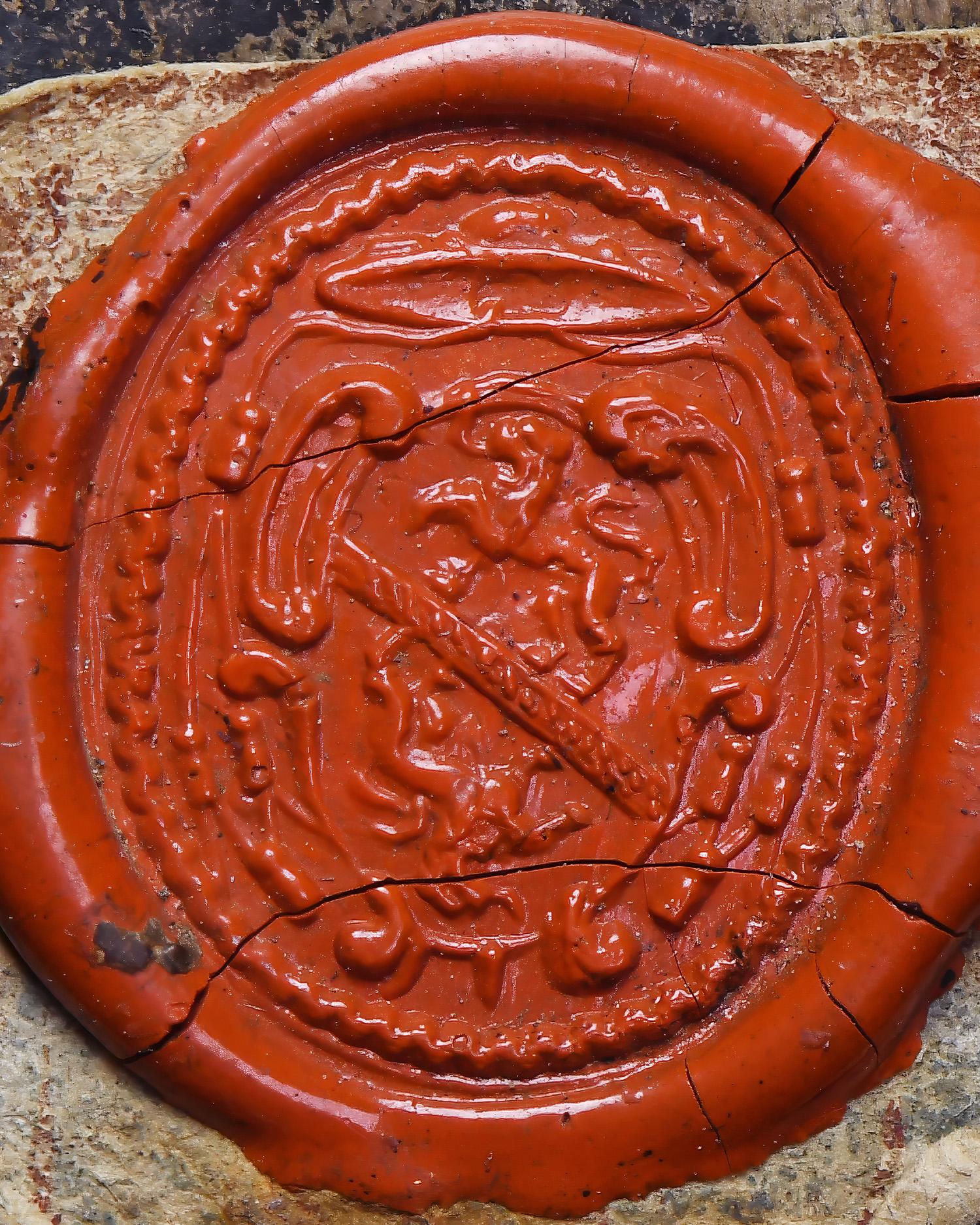
Baroque reliquary in the form of a monstrance, made of gilded bronze. Oval foot, multi-stepped, decorated with repoussed and engraved floral ornament. Smooth shaft with profiled nodus. Reservaculum surrounded by a gloria The gloria of the reliquary was formed of frayed, numerous rays, over which is superimposed a contrasting decorative wreath covered with rocaille and floral motifs. In the repository is placed an oval capsule made of silver sheet, glazed from the front. Glass at the edge decorated with octagonal faceting. On the back there is a wax seal on strings. The seal bears a coat of arms: in an ornamental cartouche a lion to the left, and below – separated by a beam – an opposite griffin to the left. The whole is crowned with a cardinal’s hat (Galero): a hat with a wide brim and dangling strings with brads (fiocchi), which is a sign of cardinal dignity. Inside the capsule are 5 relics, described in ink on bandoliers – read more in the extended content below.
| Type |
Relic |
|---|---|
| Form |
Monstrance |
| Materiał |
Bronze ,Crystal ,Gilding |
| Kolorystyka |
Gold |
| Technika |
null |
| Czas powstania |
18th century (1701-1800) |
| Era |
Baroque |
| Kraj pochodzenia |
Central Europe |
| Autor |
Unknown |
| State of preservation |
Gilt rubbing, visible signs of age but overall very good. |
Related products
Chapel with Our Lady of Czestochowa and Eagle, Poland, 19th century.
Christ Crucified, wood, Spain (Pyrenees?), 12th-13th century.
The sculpture impresses with the pronounced rigidity of the body, typical of early Roman depictions. The calm yet poignant expression of Christ's face is emphasized by huge, forward-facing eyes set in deep eye sockets.
His gaze, however, is slightly lowered, emphasized by a prominent nose and large, spreading ears that frame his face. His hair falls symmetrically on his shoulders; a peculiar hairstyle draws attention - the hair, separated by a parting on top of the head, is arranged in rollers covered with densely diagonal cuts. Very similarly arranged hair, resembling braids, has the famous statue of Christ of Mig Aran, located in the church of Sant Miquèu de Vielha (Val d'Aran valley). The beard and mustache end in artificial, volute curls.
Christ Salvator Mundi, polychrome wood, Poland, 19th century.
German-Italian Master, Image from the Cross, oil on board, Western Europe, 16th century.