


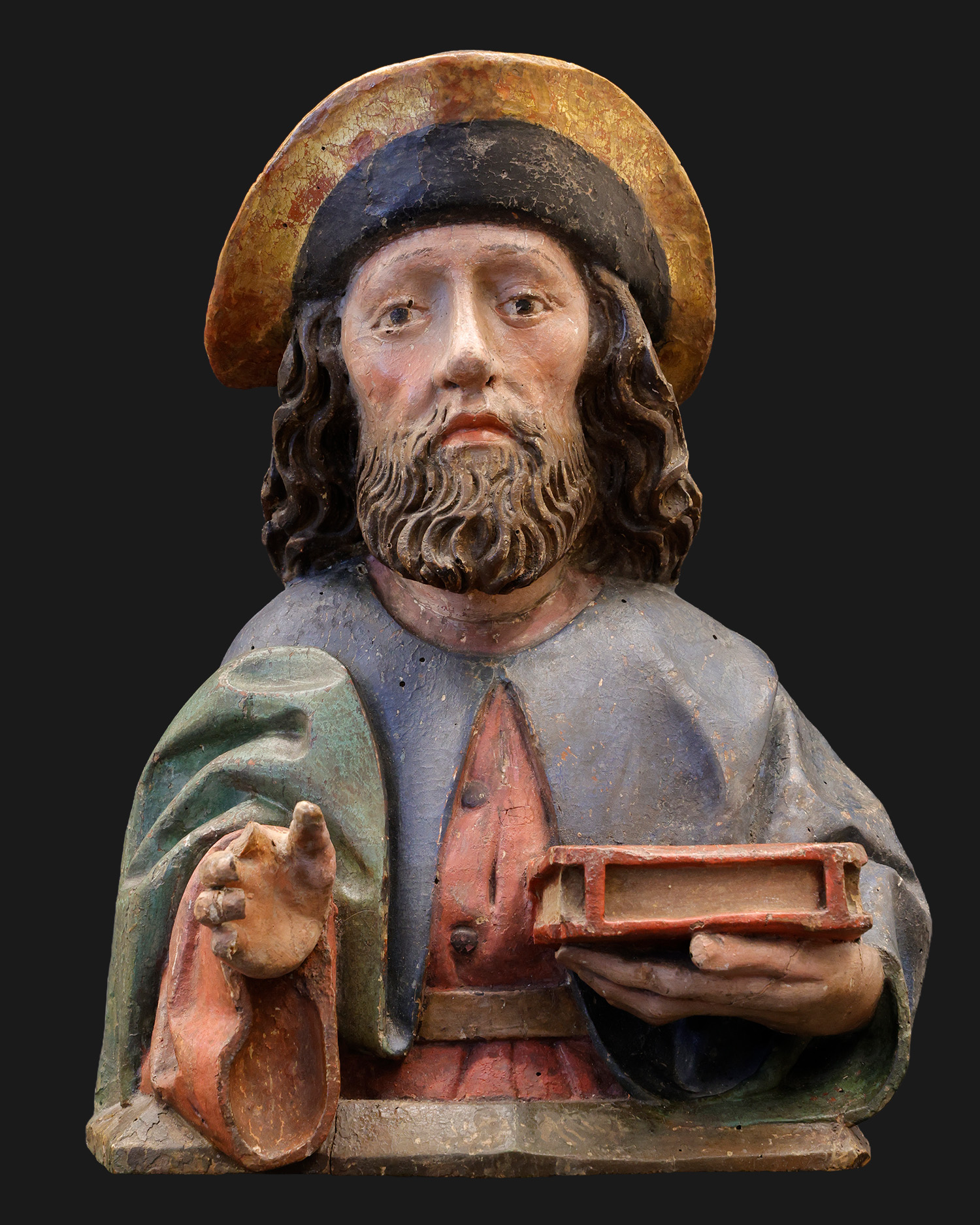
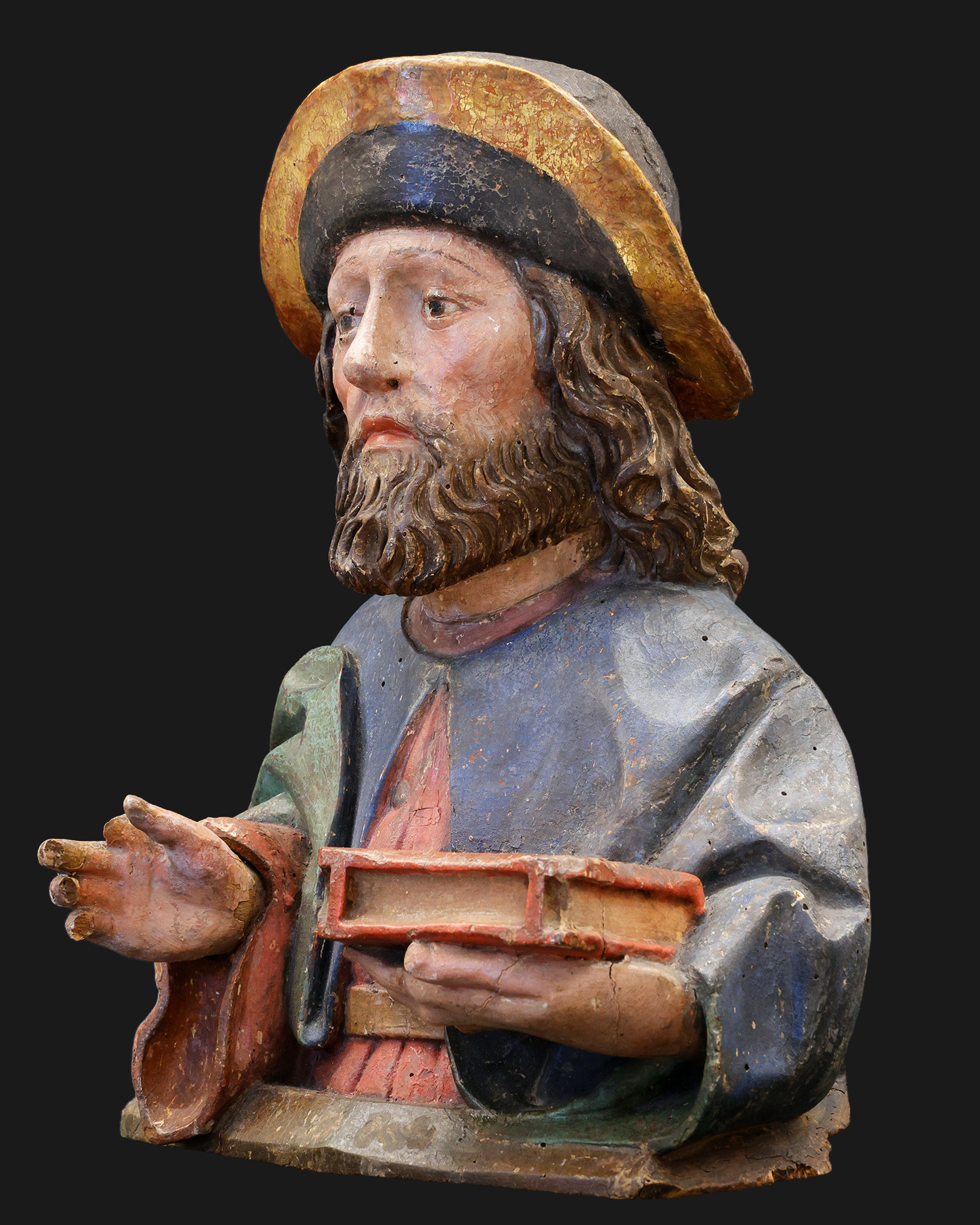
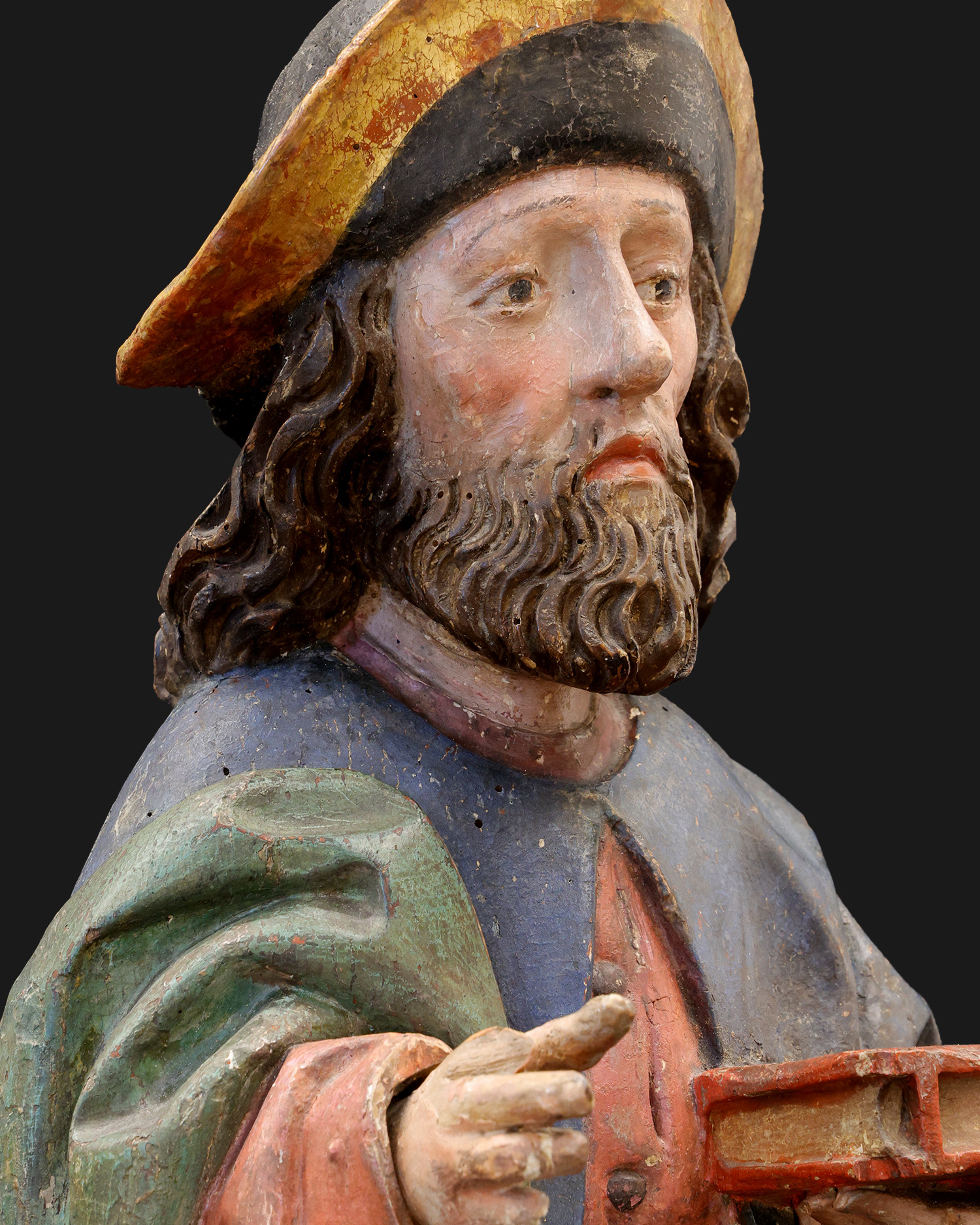
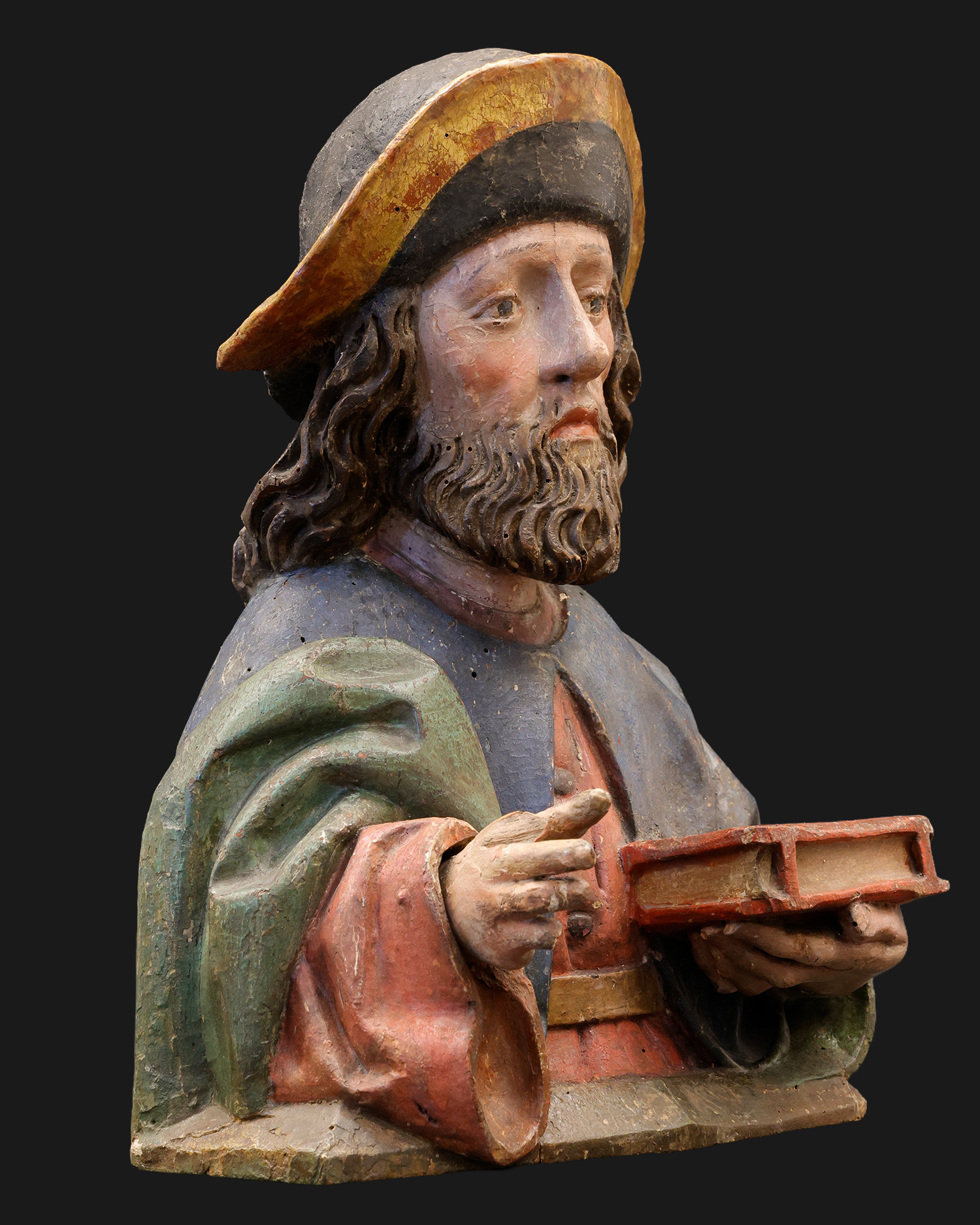
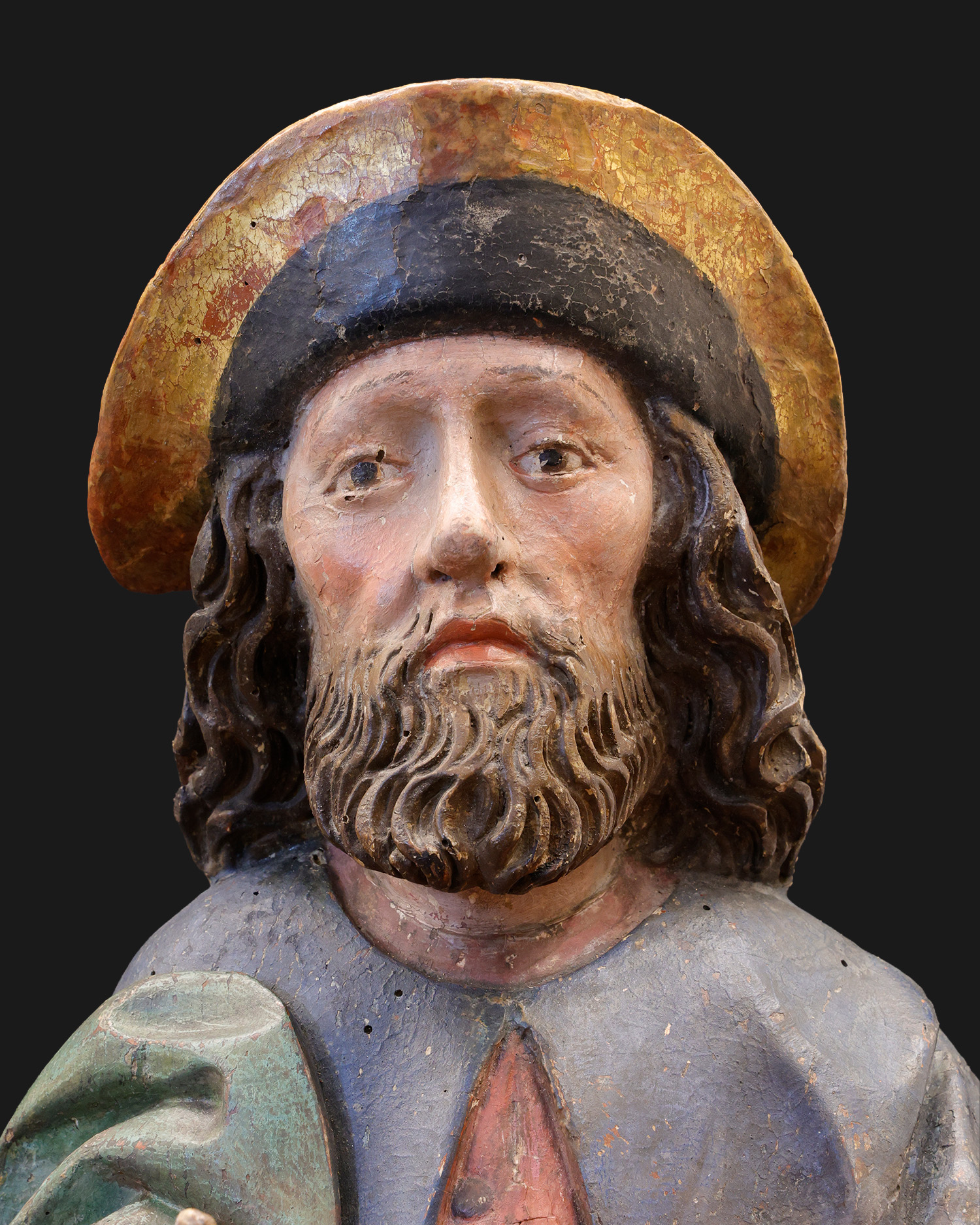

Altar Bust of Saint James the Greater, Linden Wood, Lower Silesia, Turn of the 15th/16th Century.
5000,00 zł
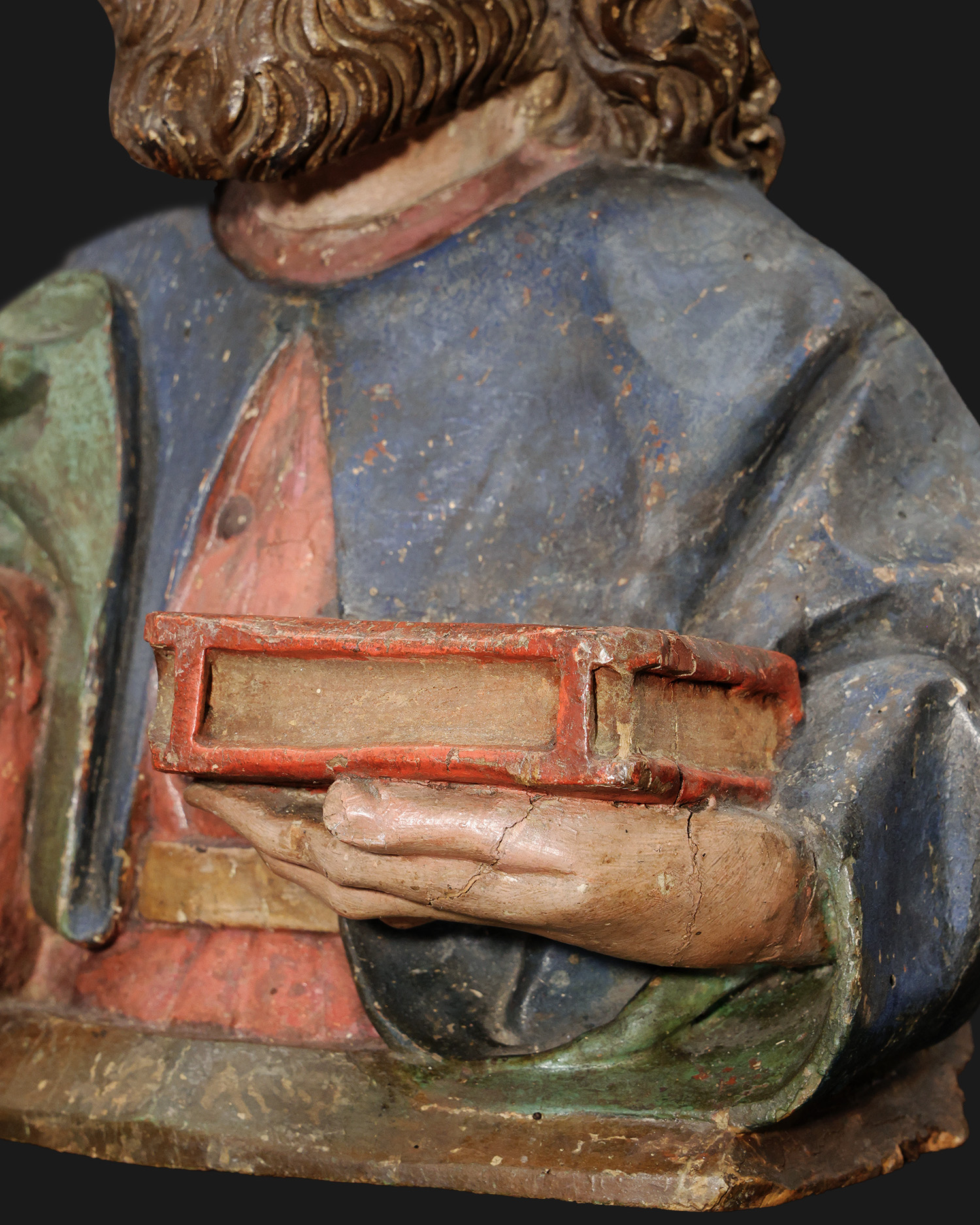
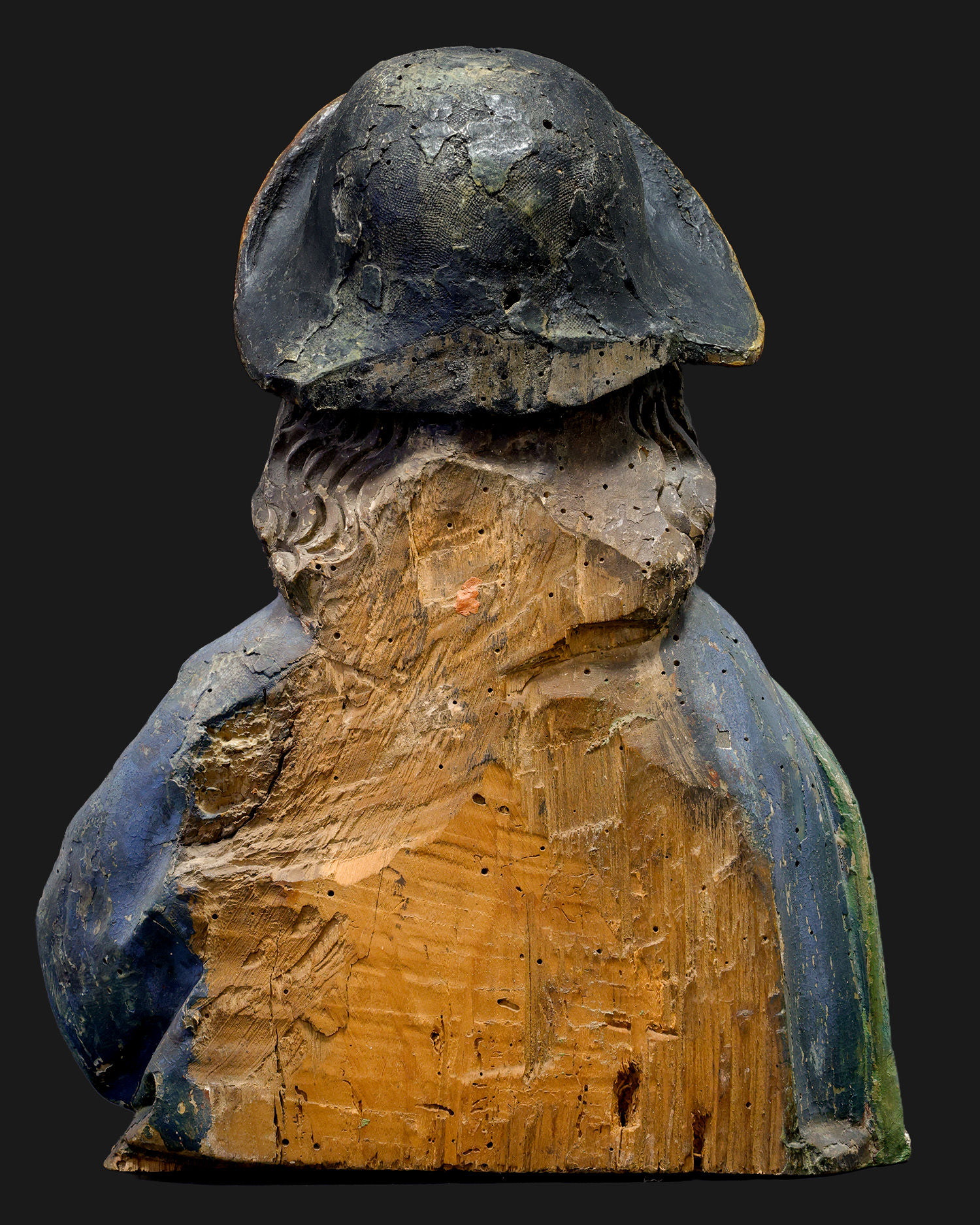
This Late Gothic altar bust depicting Saint James the Greater (the Apostle) was created at the turn of the 15th and 16th centuries, approximately between 1490 and 1510. It represents the mature guild craftsmanship associated with the Lower Silesia region, with a particular emphasis on the workshop circle active in Wrocław or Świdnica. The object’s flat-cut, raw reverse, bearing clear traces of medieval tools such as an adze or a profiling chisel, unequivocally confirms the sculpture’s original purpose for mounting in an altar cabinet or predella.
Height: 32 cm
Width: 24 cm
Depth: 16.5 cm
Weight: 1.99 kg
1 in stock
| Weight | 1,99 kg |
|---|---|
| Dimensions | 32 × 24 × 16,5 cm |
| Type |
Sculpture |
| Form |
Altar Bust |
| Materiał |
Gilding ,Lime wood ,Polychrome |
| Kolorystyka |
Blue ,Brown ,Flesh ,Gold ,Green ,Red |
| Technika |
Carving ,Gilding ,Polychrome |
| Czas powstania |
15th/16th Century |
| Era |
Late Middle Ages |
| Kraj pochodzenia |
Lower Silesia ,Poland |
| Autor |
Unknown |
| State of preservation |
Very good. The blue tunic and green cloak show natural abrasions revealing the chalk ground, and the hat bears faded traces of former gilding. The back and bottom of the bust have deep shrinkage cracks and a dense network of holes from past woodworm activity, hence the low weight of the object. The index finger is missing from the right hand, and the remaining fingers (except the thumb) have chipped tips. |
Related products
Bust of Krishna, marble, India, 19th century.
Ganesha, marble, India, 19th century.
Head of an angel (?), sandstone, France, ca. 1300
Krishna, marble, India, 19th century.
Saint John the Evangelist, late Gothic wooden sculpture, ca. 1500
The work may have been part of a winged altarpiece (retabulum), most likely in the Crucifixion group.
Singa Barong, polychrome wood, Indonesia, 19th century.
Vajrabhairava in Tantric Union (Yab-Yum) with Vajravetali, gilt and polychromed bronze, Tibet (?), 19th century
The sculpture depicts Vajrabhajrava, or more specifically, his Tantric form. The deity has three heads with angry expressions, crowned with a crown of skulls, symbolizing the direct destruction of illusion. Inside the crown, flames burst forth, a fire of wisdom burning away ignorance. Emerging from them is the head of a gentle animal - it belongs to Vajrabhajrava himself (his higher aspect).
The figure has six arms, symbolizing the multifaceted activity of the enlightened mind, and holds ritual attributes. The outstretched wings are a rarer but significant feature, representing a transcendental aspect and the overcoming of samsaric limitations. Vajrabhairava stands in a dynamic pose on a lotus base, trampling a male and female figure. These figures symbolize ignorance (avidya), attachment, anger, ego, and the illusion of duality.