


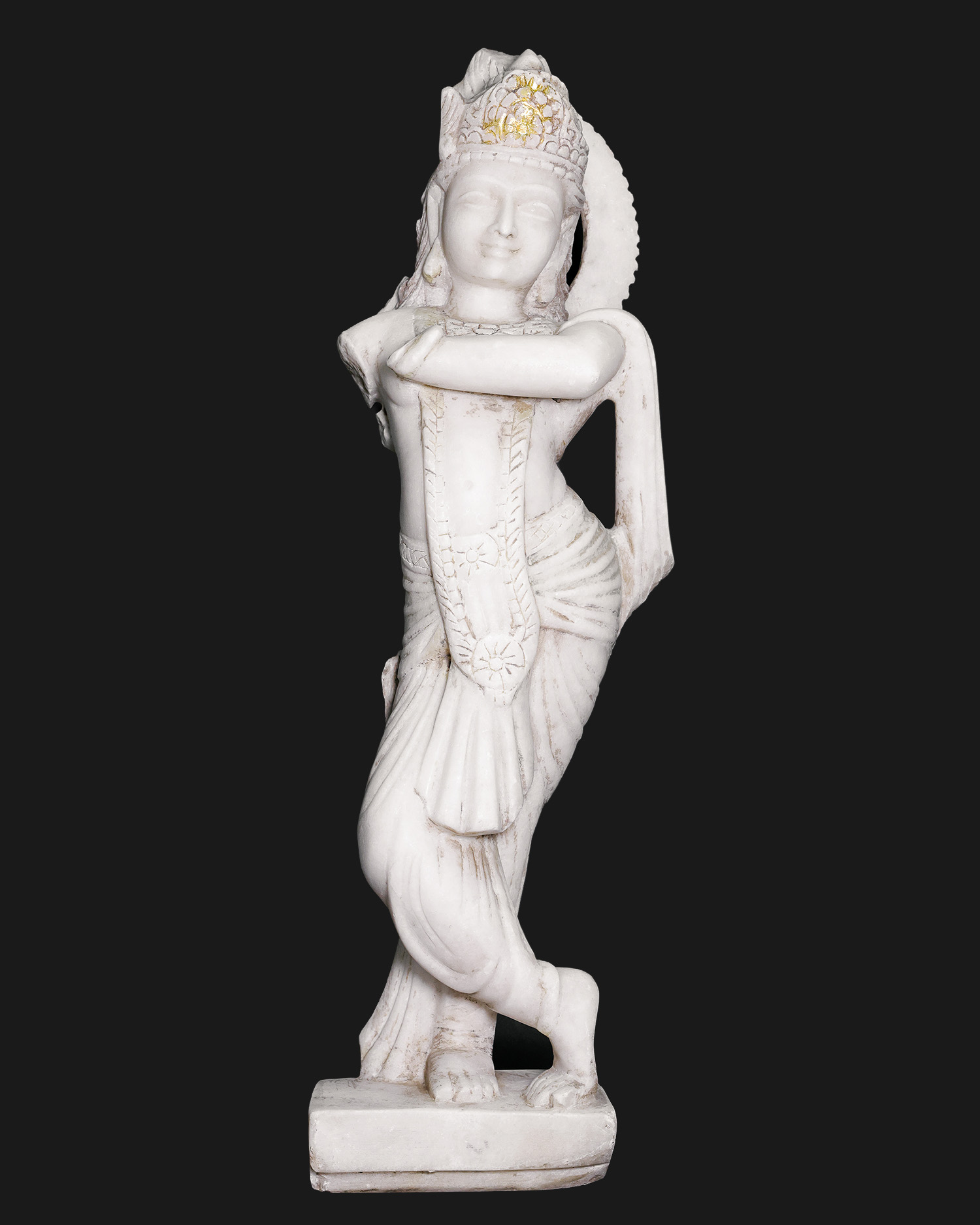
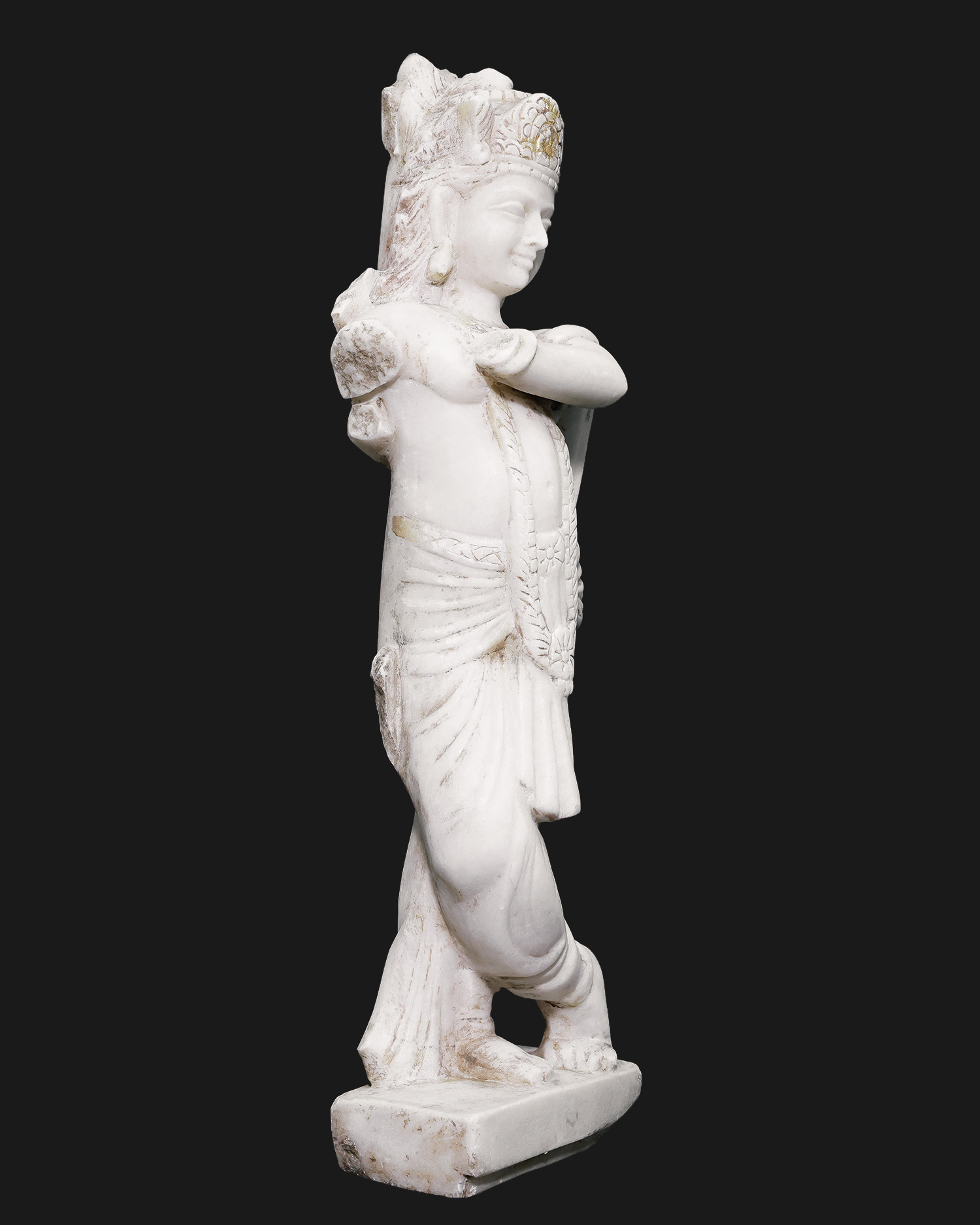
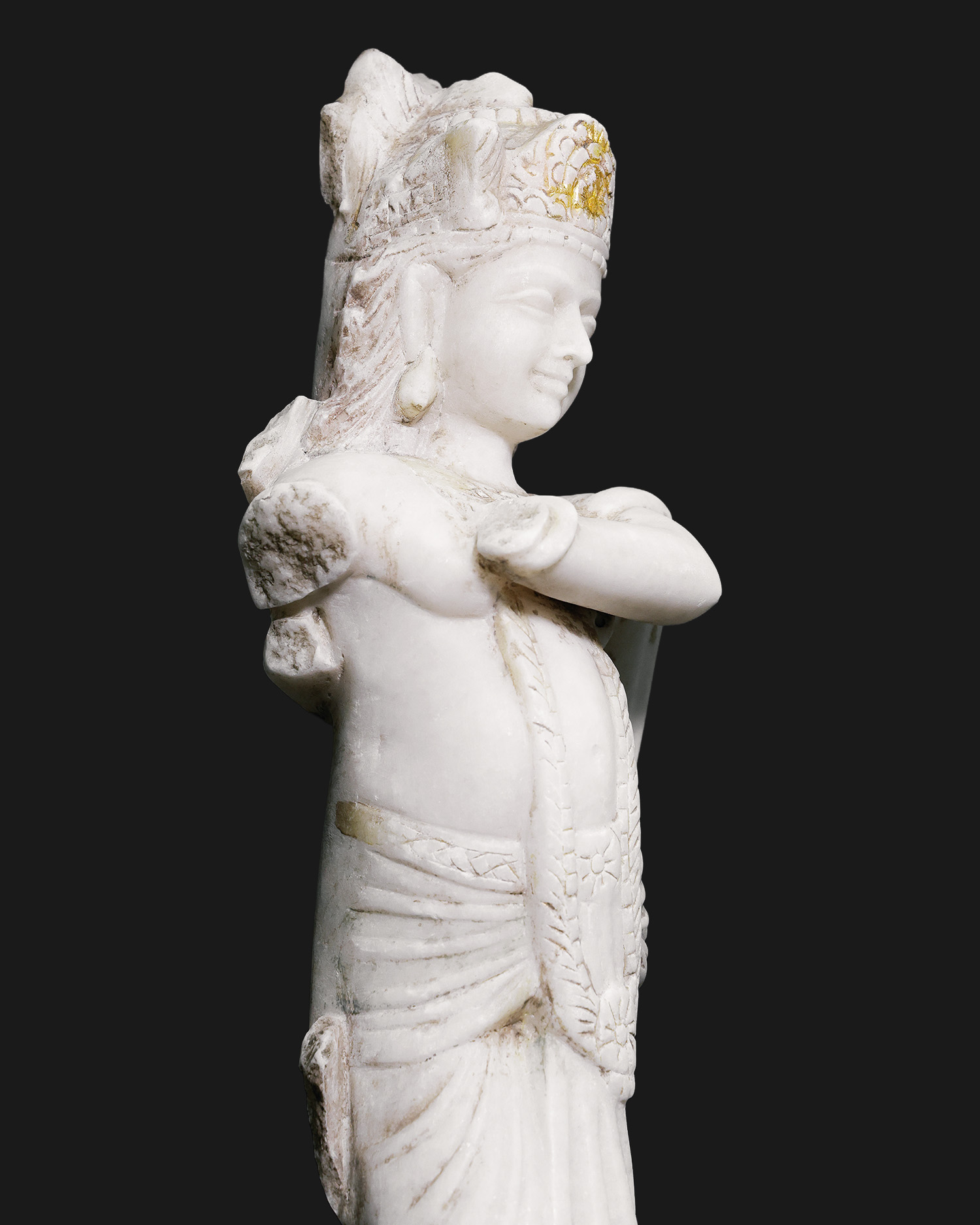
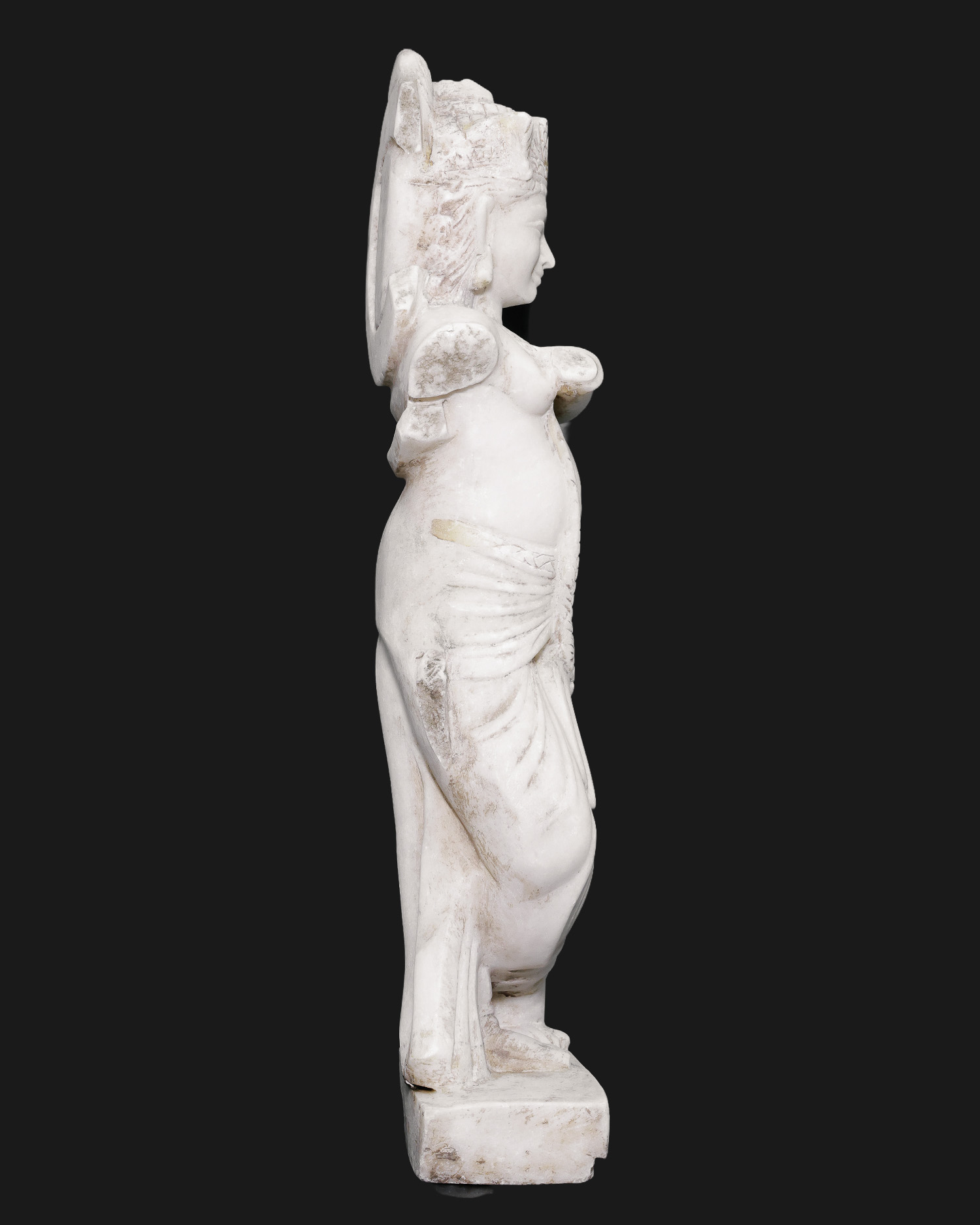
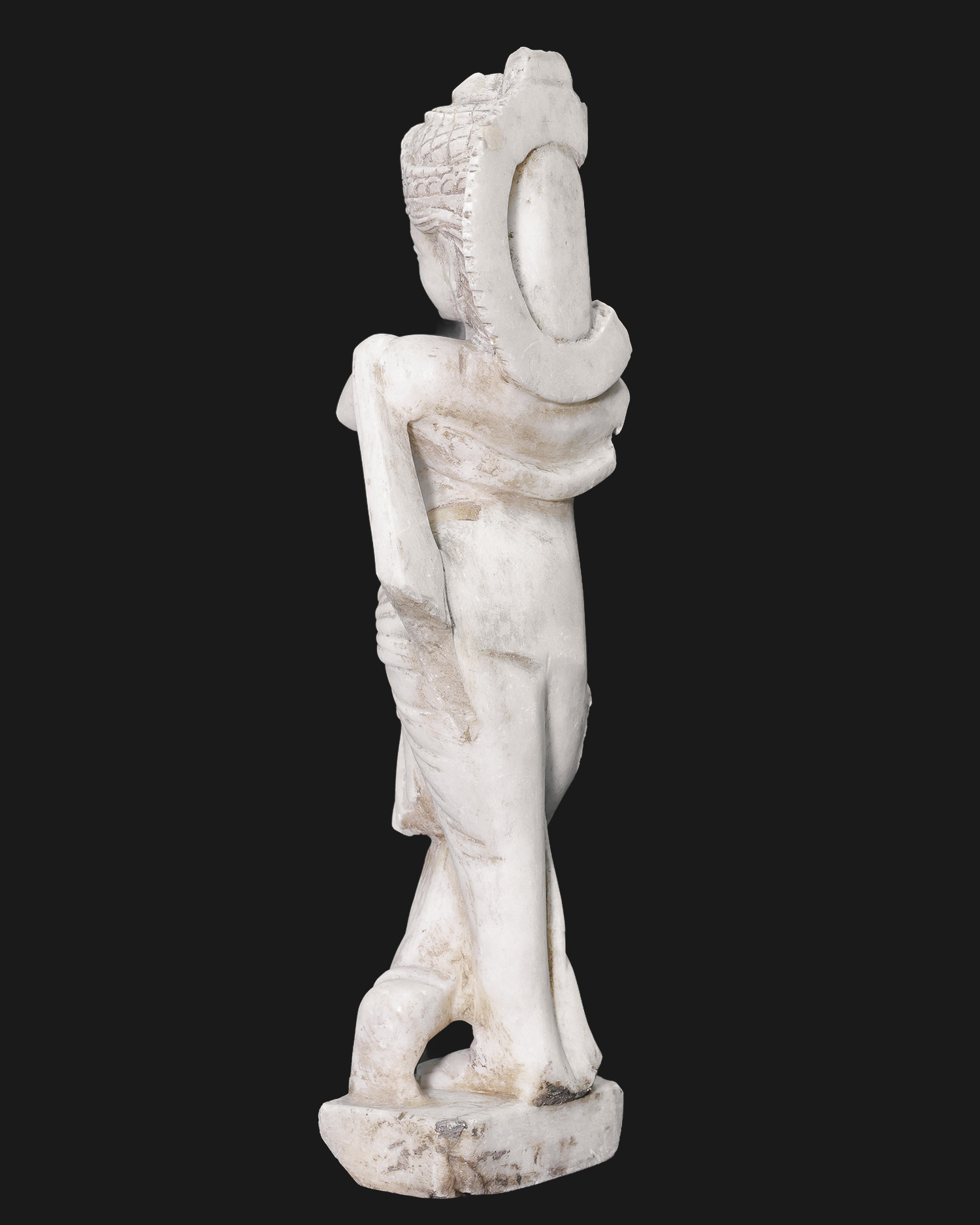
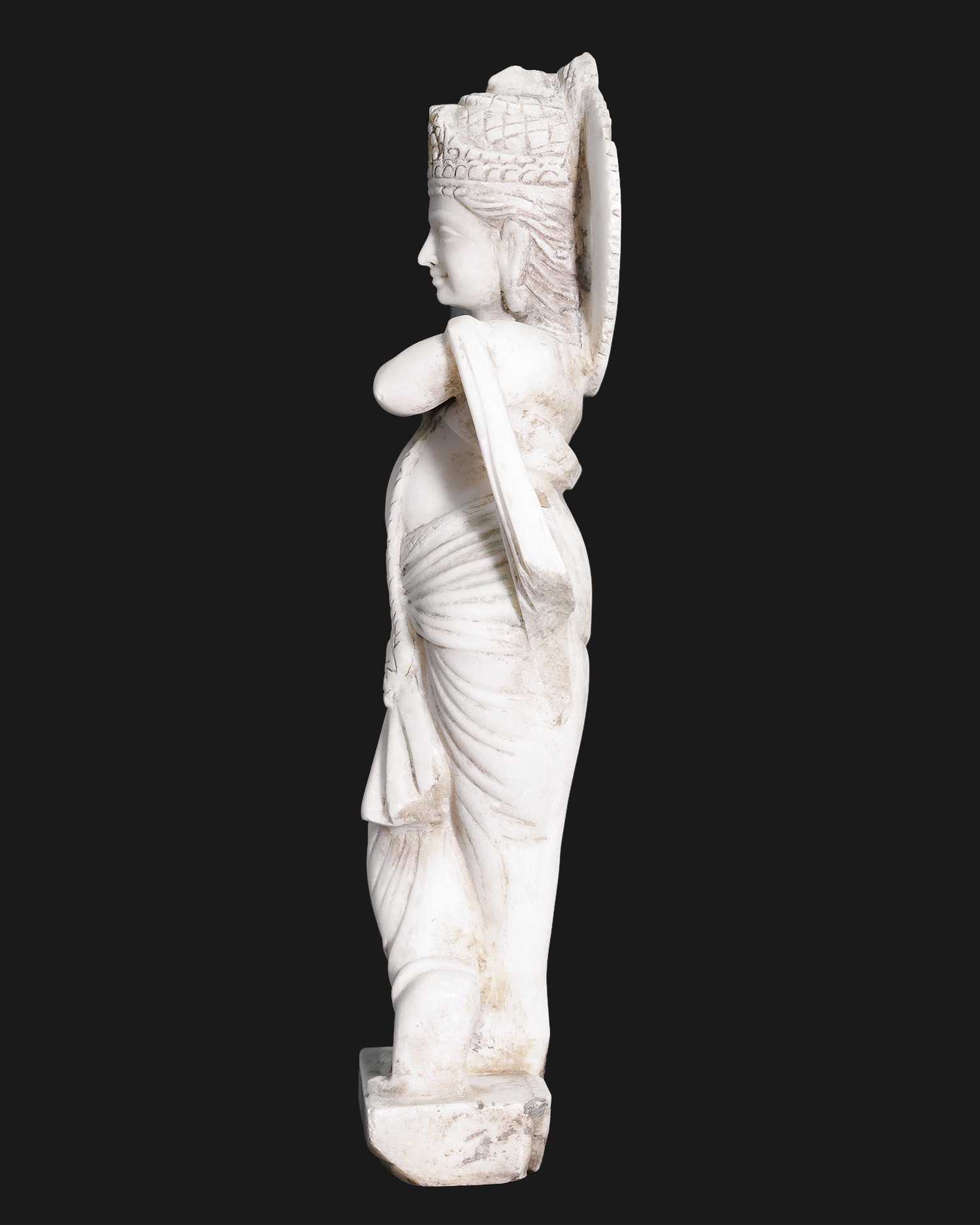
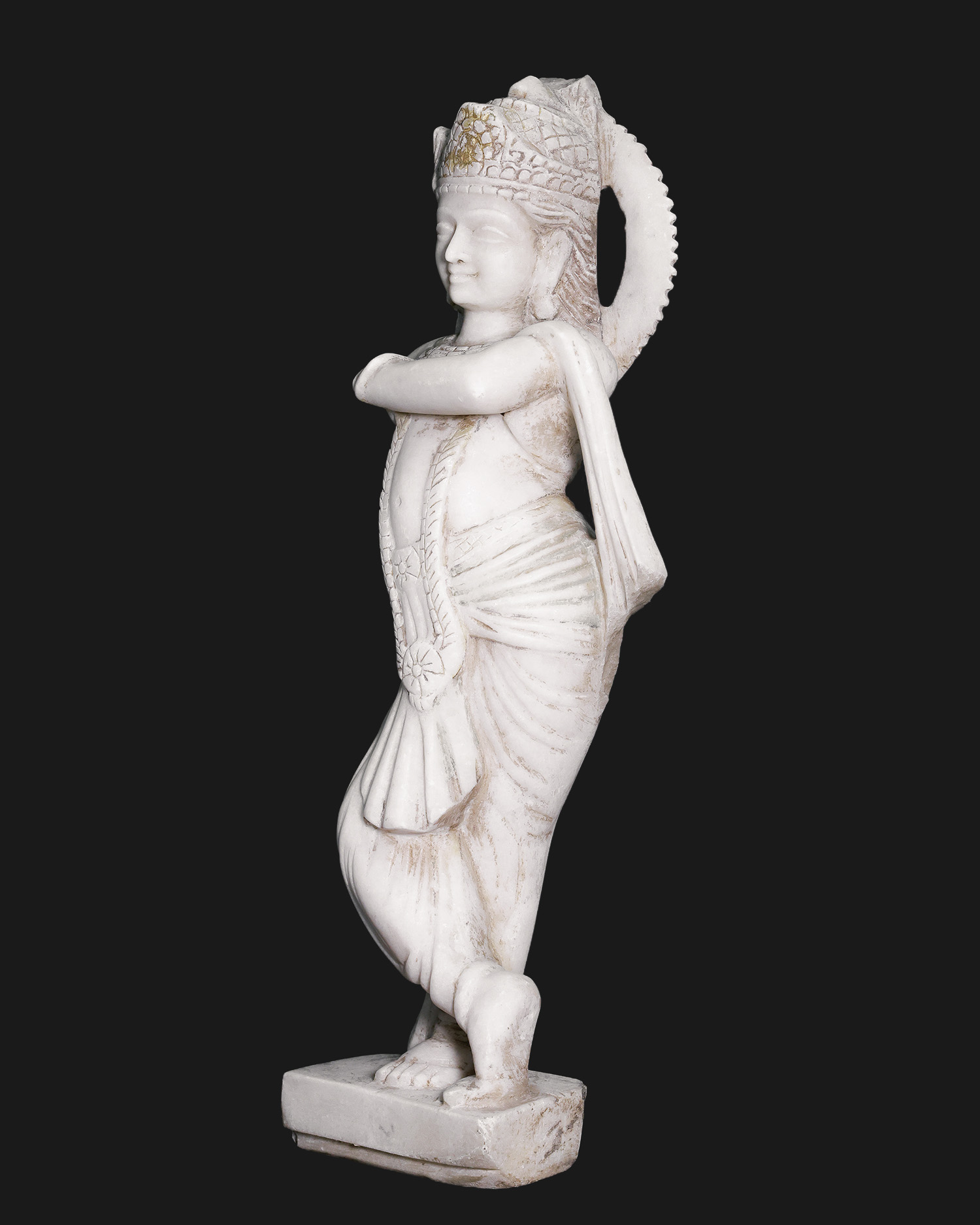
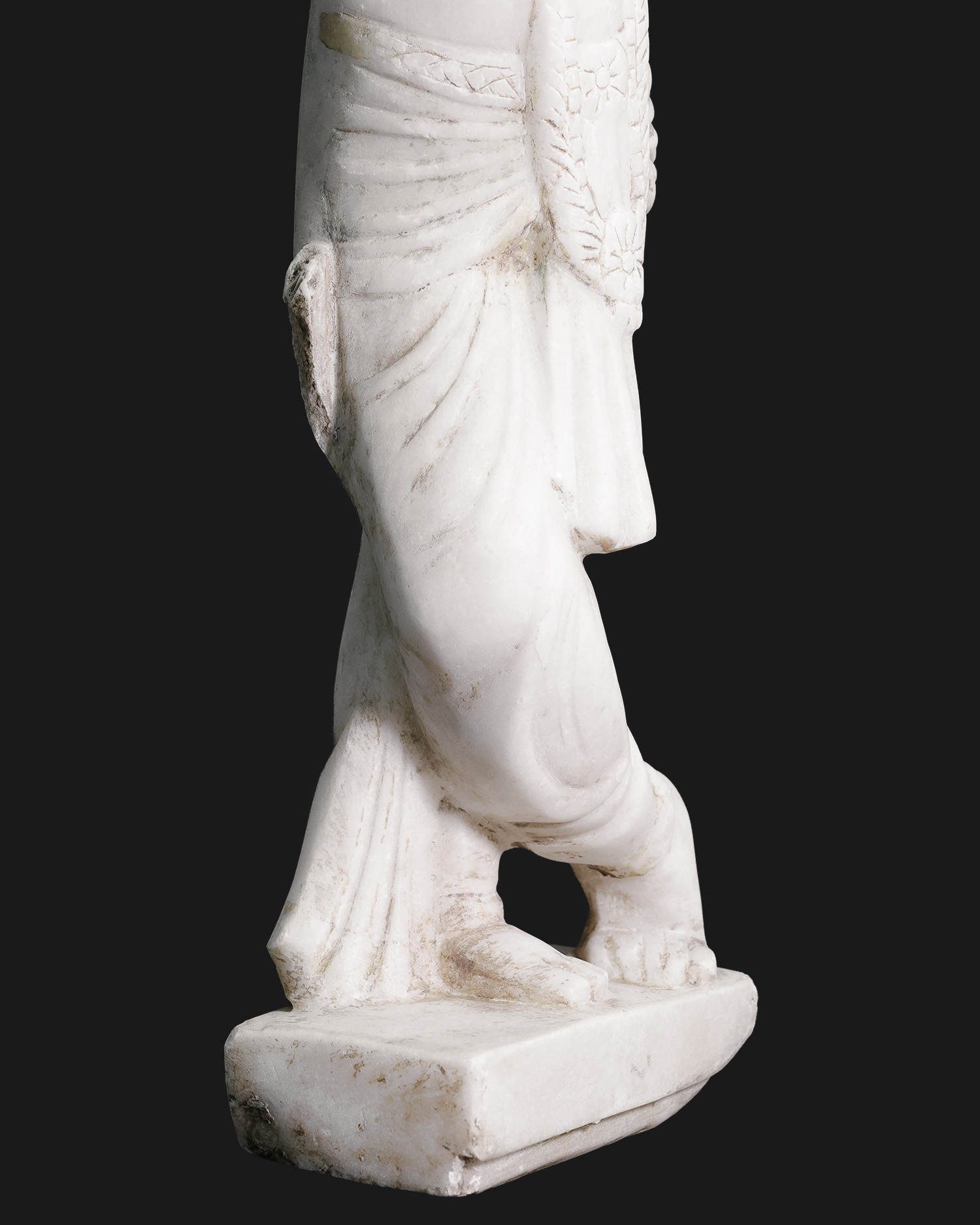
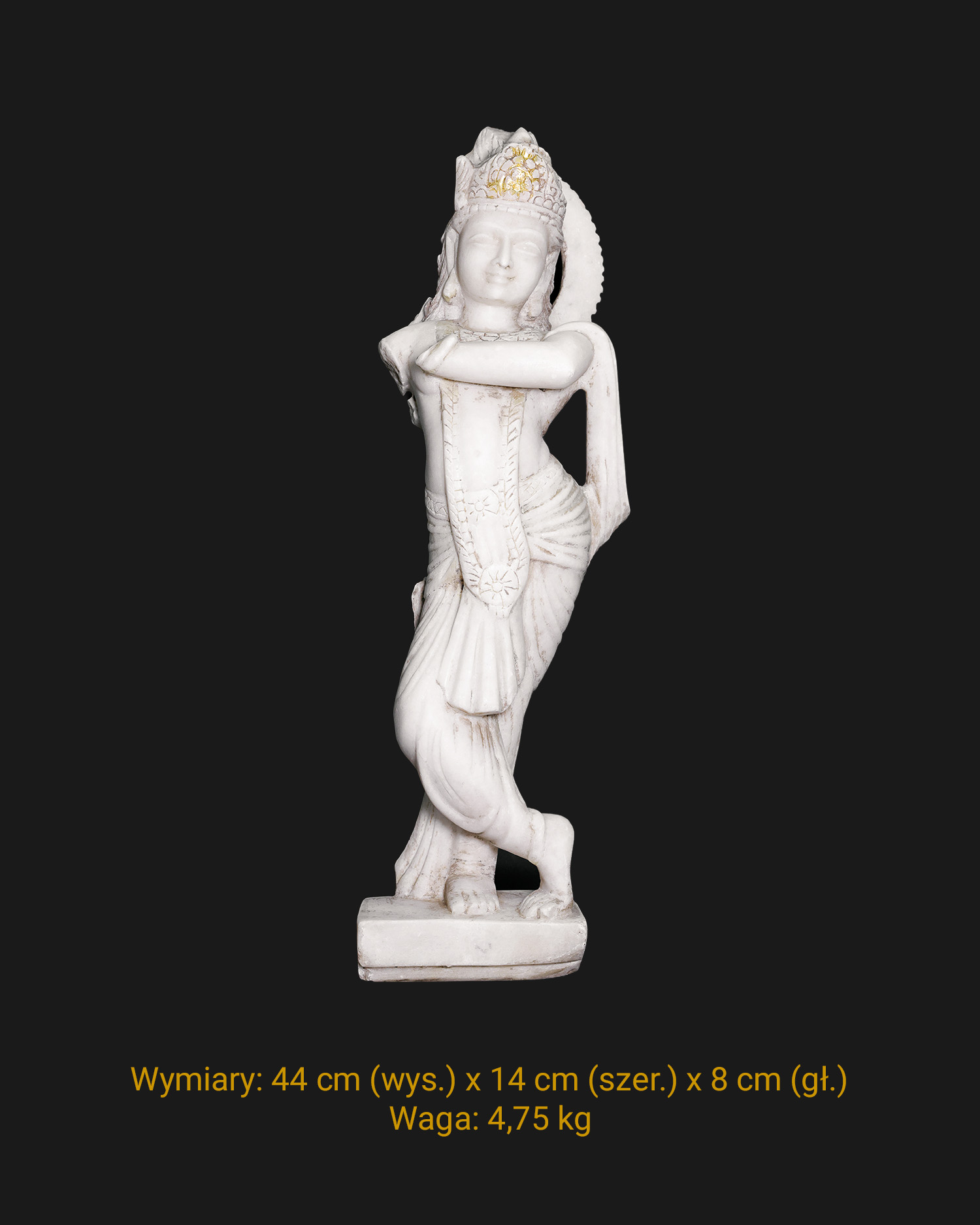

Krishna, marble, India, 19th century.
900,00 zł
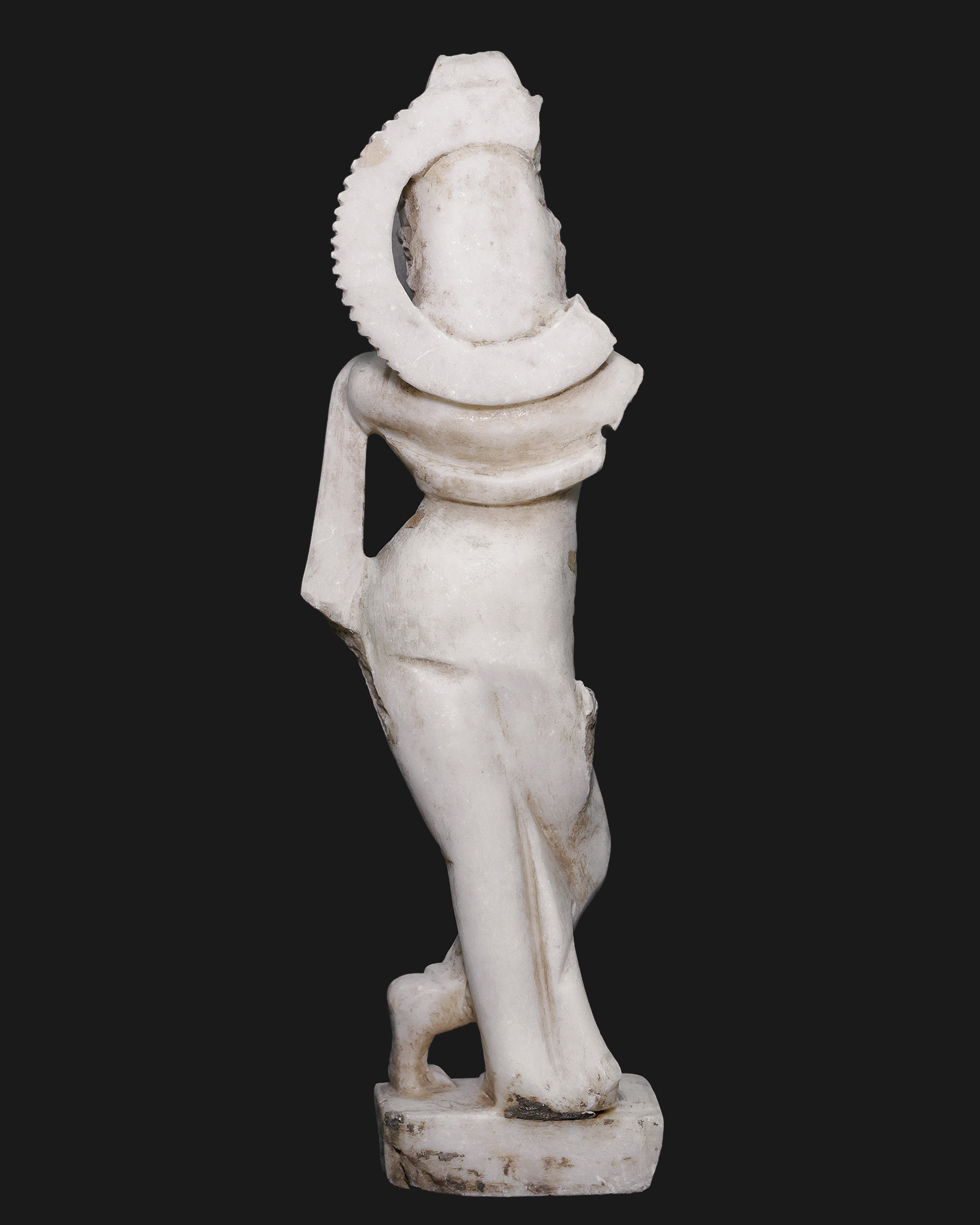
The sculpture depicts a full-figure image of the god Krishna in his most iconic, pastoral manifestation as Wenu-Gopal (playing the flute). The figure of the deity is framed in the classical Indian beauty canon of Tribhanga (triple bend of the body axis). The lines of the hips, chest and neck form a dynamic sigmoidal line. Krishna stands with her legs crossed at the ankles, resting her body weight on her left foot, while her right foot supports herself on her toes, giving the composition lightness and grace. The front and sides of the figure were developed with attention to the spatiality of pleats and jewelry. The back of the figure, the buttocks and the back of the halo are flat, crude and developed synthetically. This indicates that the object was intended to be placed directly against the altar wall or in a wall niche. The deity’s face exudes serenity, with characteristic almond-shaped eyes and a gentle smile. The head is crowned with a high crown, which in the front part has preserved fragments of the original thick flake gilding. A tall peacock feather (Mayur Pankh) is carved on the left side of the crown. The head is surrounded by a monolithic, serrated nimbus. The deity is clad in a traditional, thickly creased dhoti, fastened at the hips with an ornamental belt with floral rosette motifs. A long, carved sash is slung across her back and shoulders.
Dimensions: 44 cm (height) x 14 cm (width) x 8 cm (depth)
Weight: 4.75 kg
1 in stock
Related products
Brahma, marble, India, 19th century.
Christ Crucified, wood, Spain (Pyrenees?), 12th-13th century.
The sculpture impresses with the pronounced rigidity of the body, typical of early Roman depictions. The calm yet poignant expression of Christ's face is emphasized by huge, forward-facing eyes set in deep eye sockets.
His gaze, however, is slightly lowered, emphasized by a prominent nose and large, spreading ears that frame his face. His hair falls symmetrically on his shoulders; a peculiar hairstyle draws attention - the hair, separated by a parting on top of the head, is arranged in rollers covered with densely diagonal cuts. Very similarly arranged hair, resembling braids, has the famous statue of Christ of Mig Aran, located in the church of Sant Miquèu de Vielha (Val d'Aran valley). The beard and mustache end in artificial, volute curls.
Christ Salvator Mundi, polychrome wood, Poland, 19th century.
Deity or bodhisattva, marble, India, 19th century.