


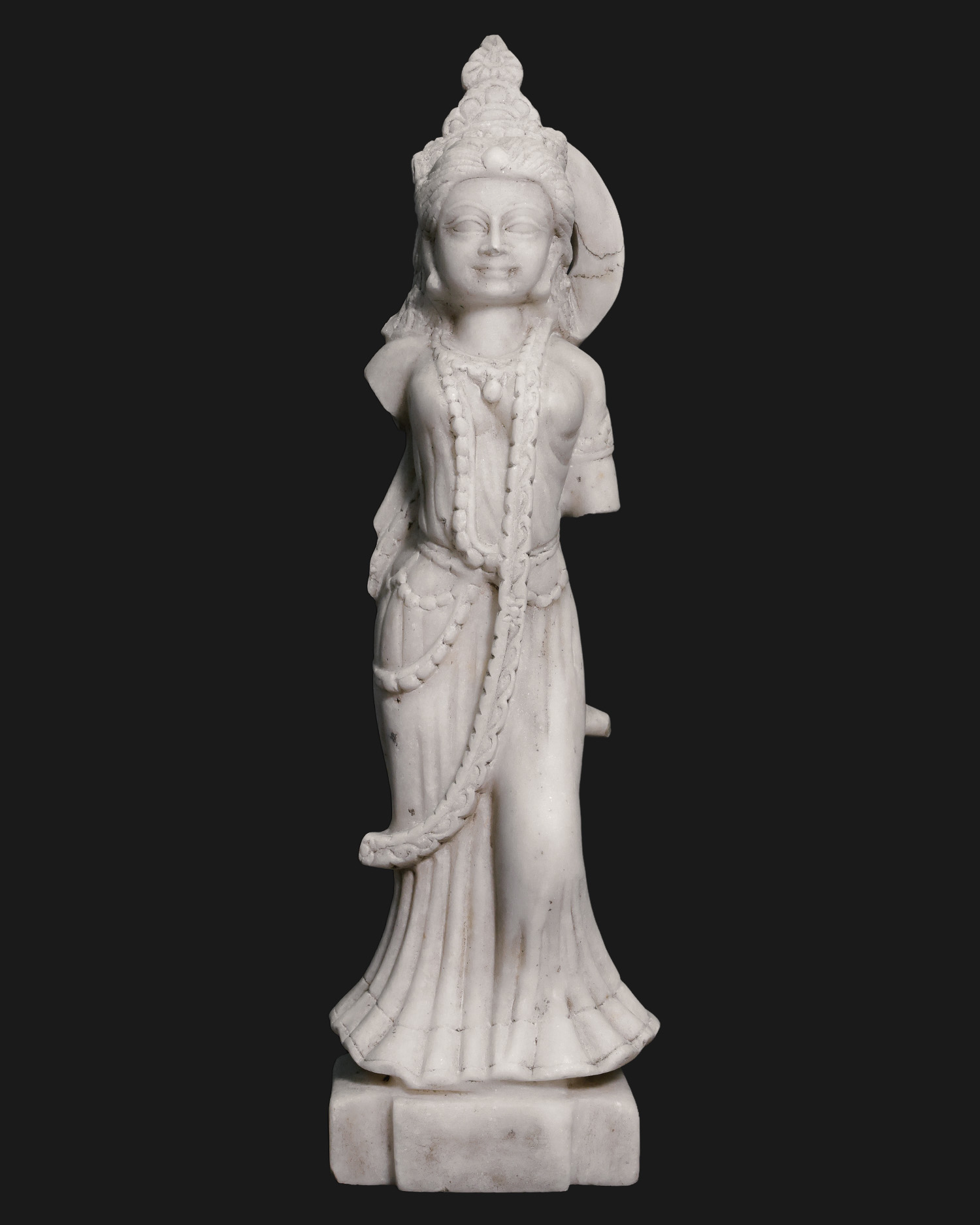
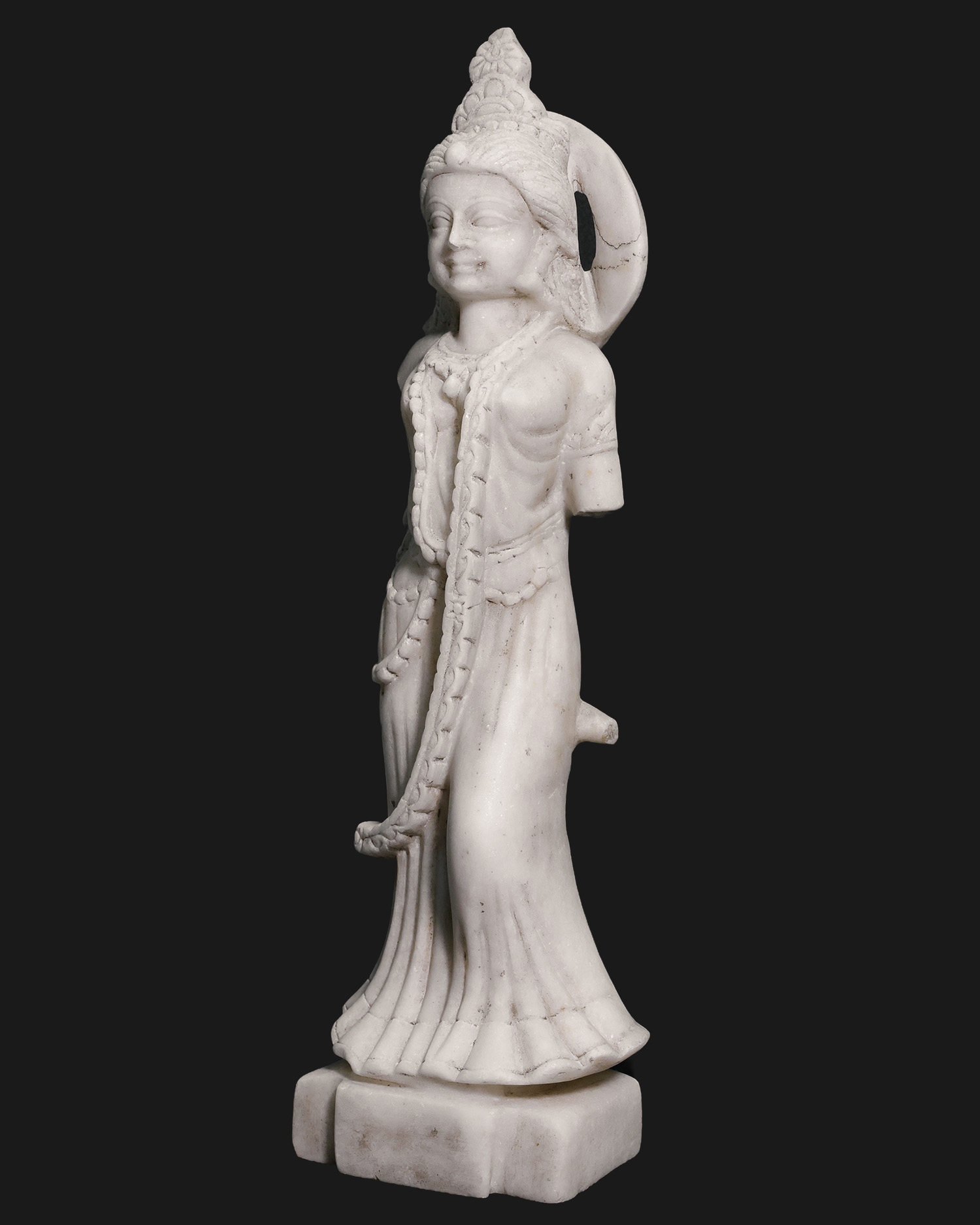
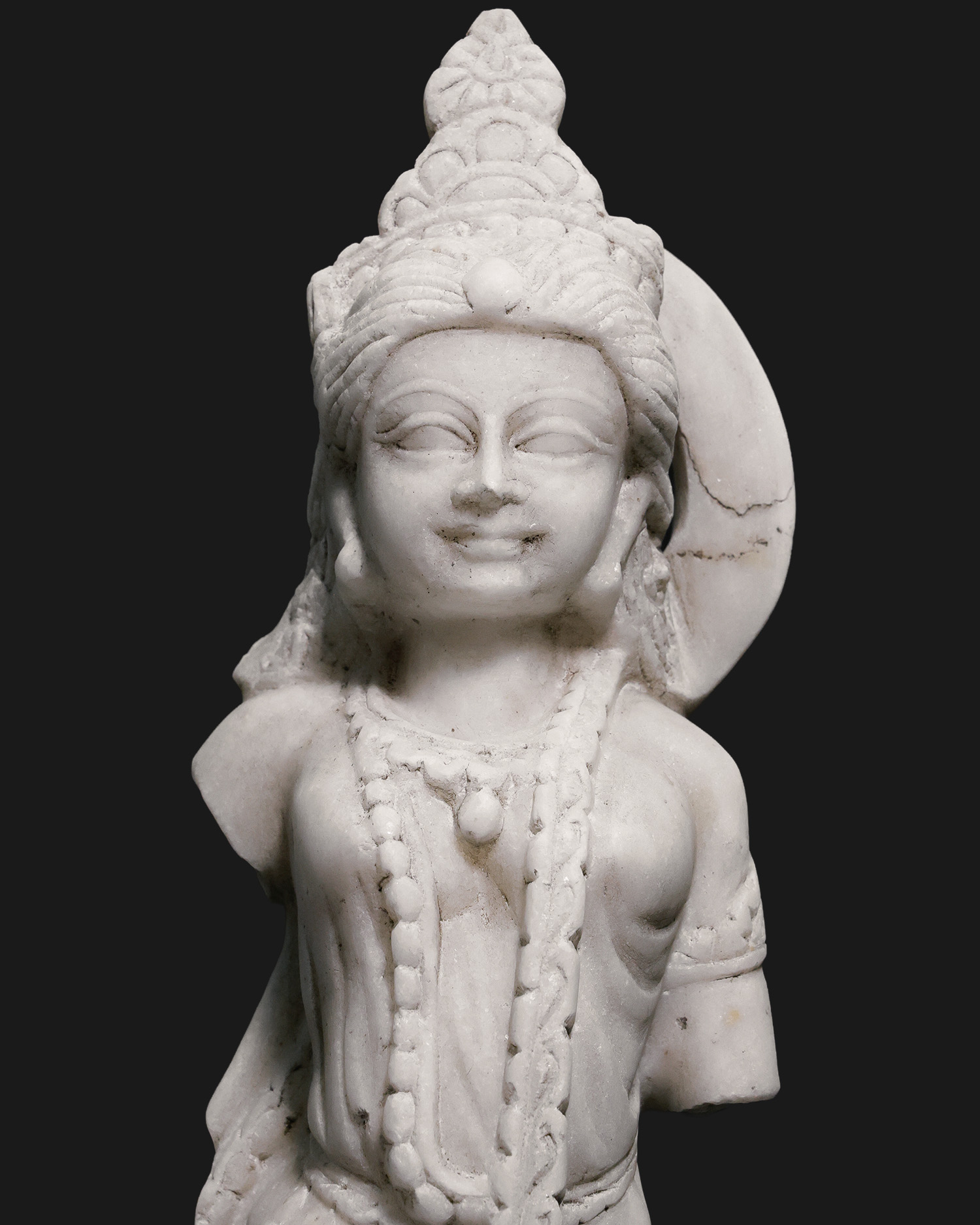
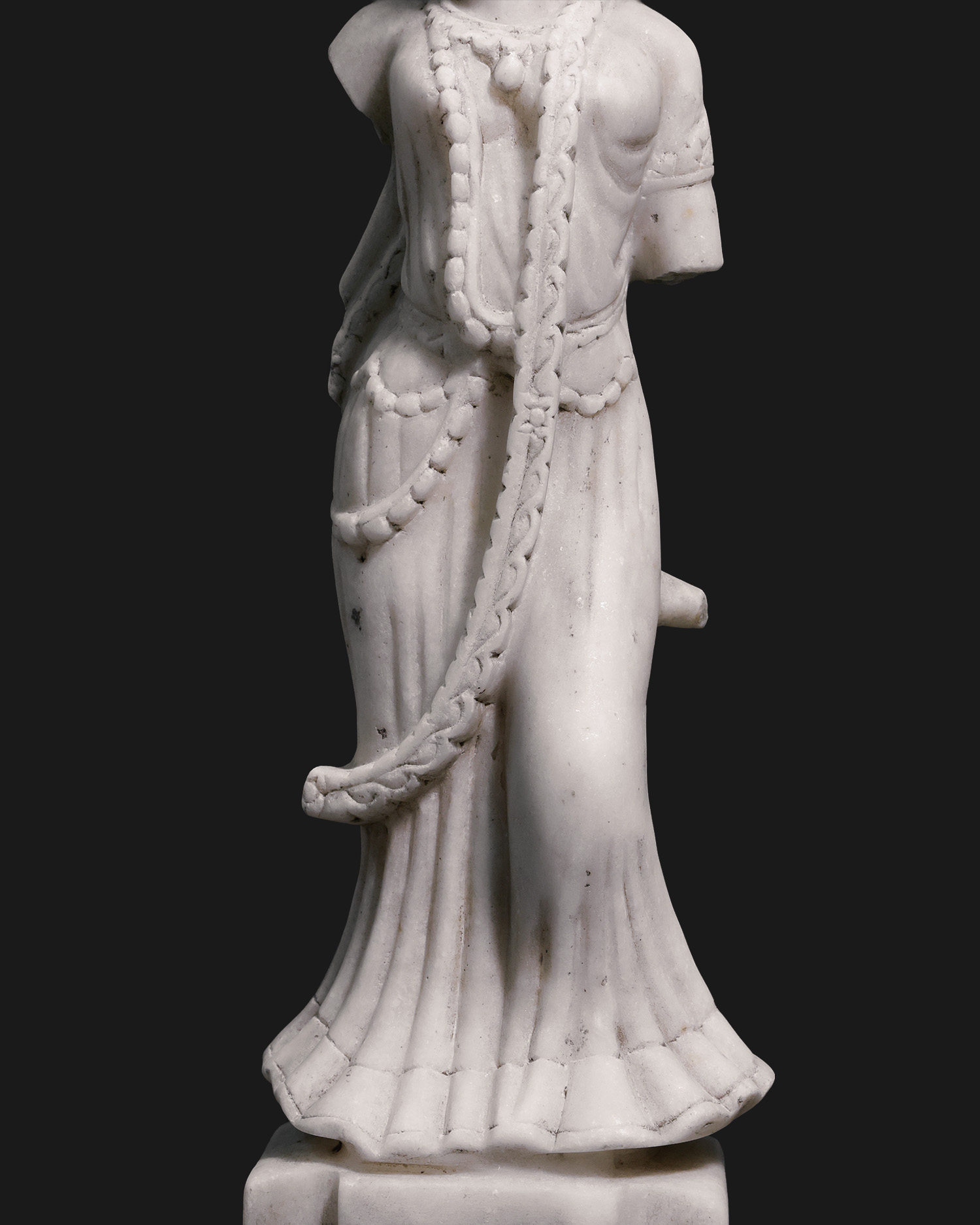
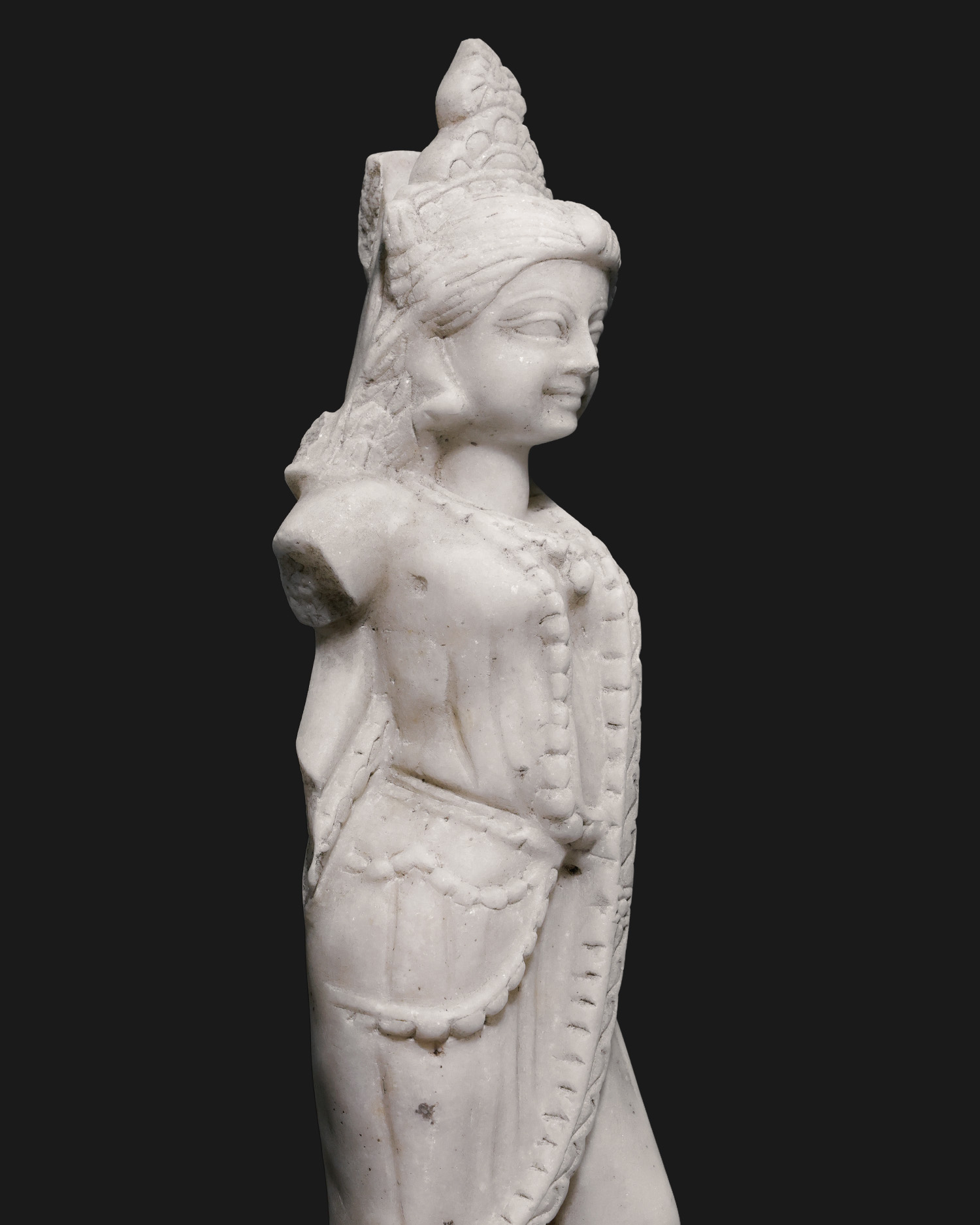
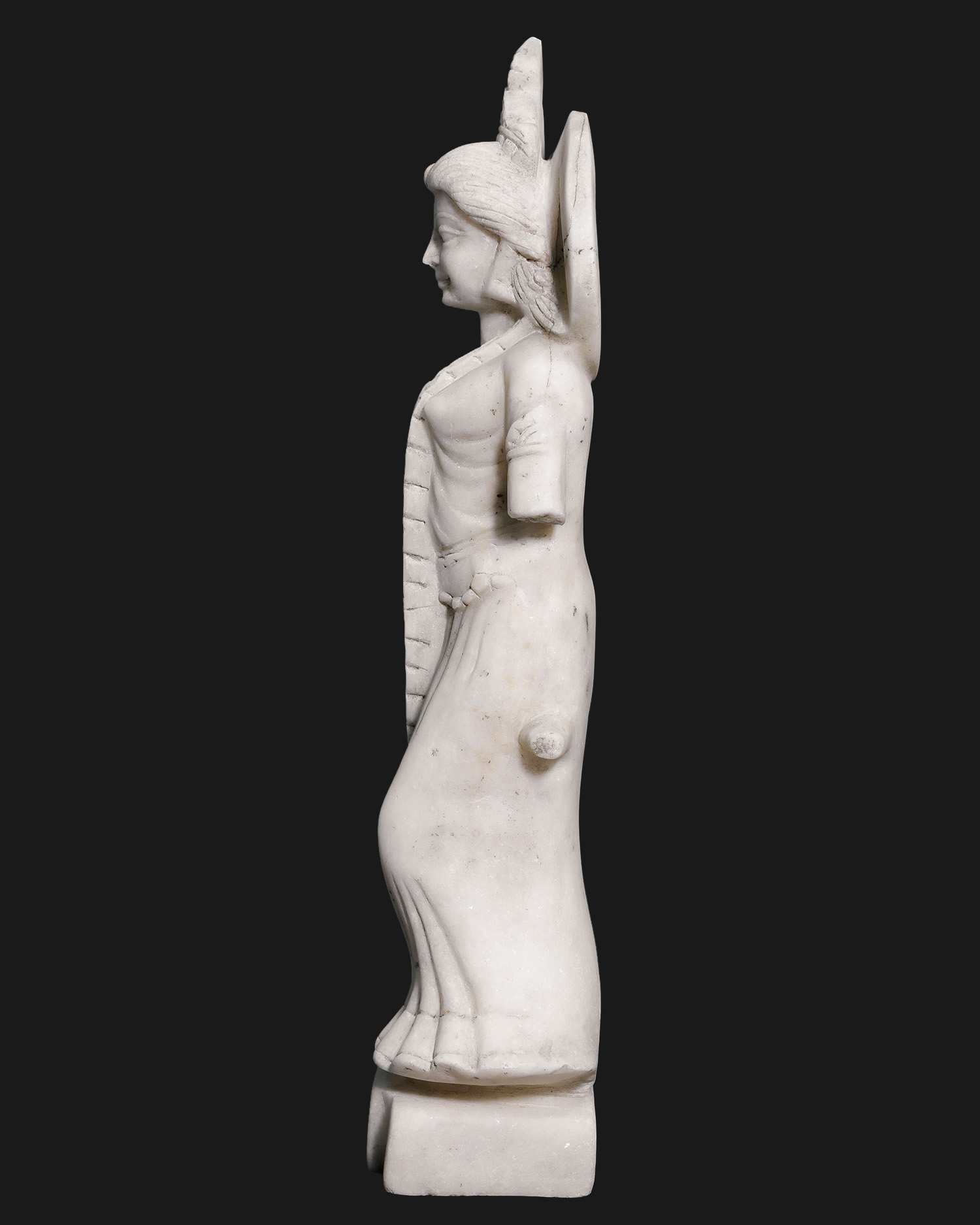
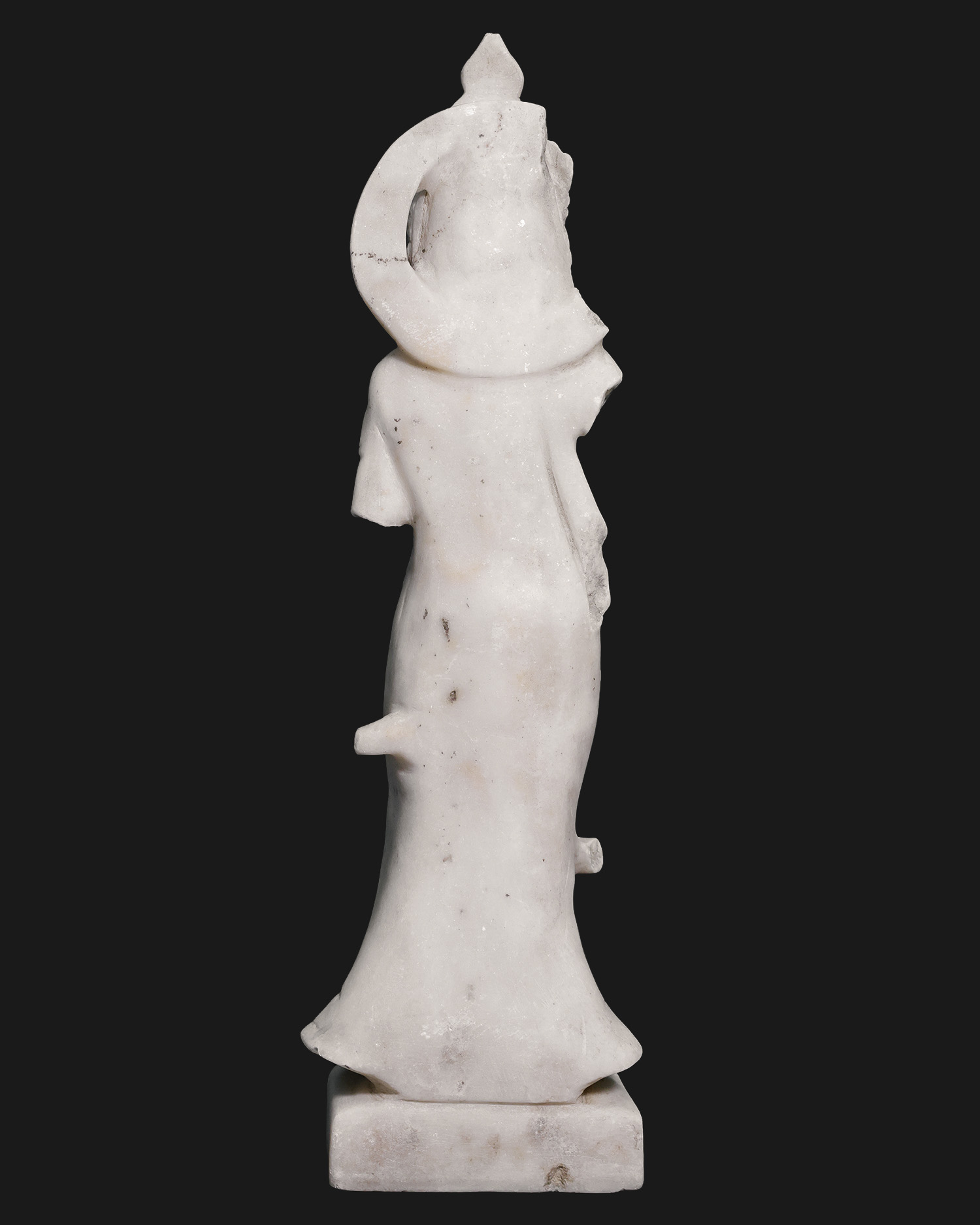
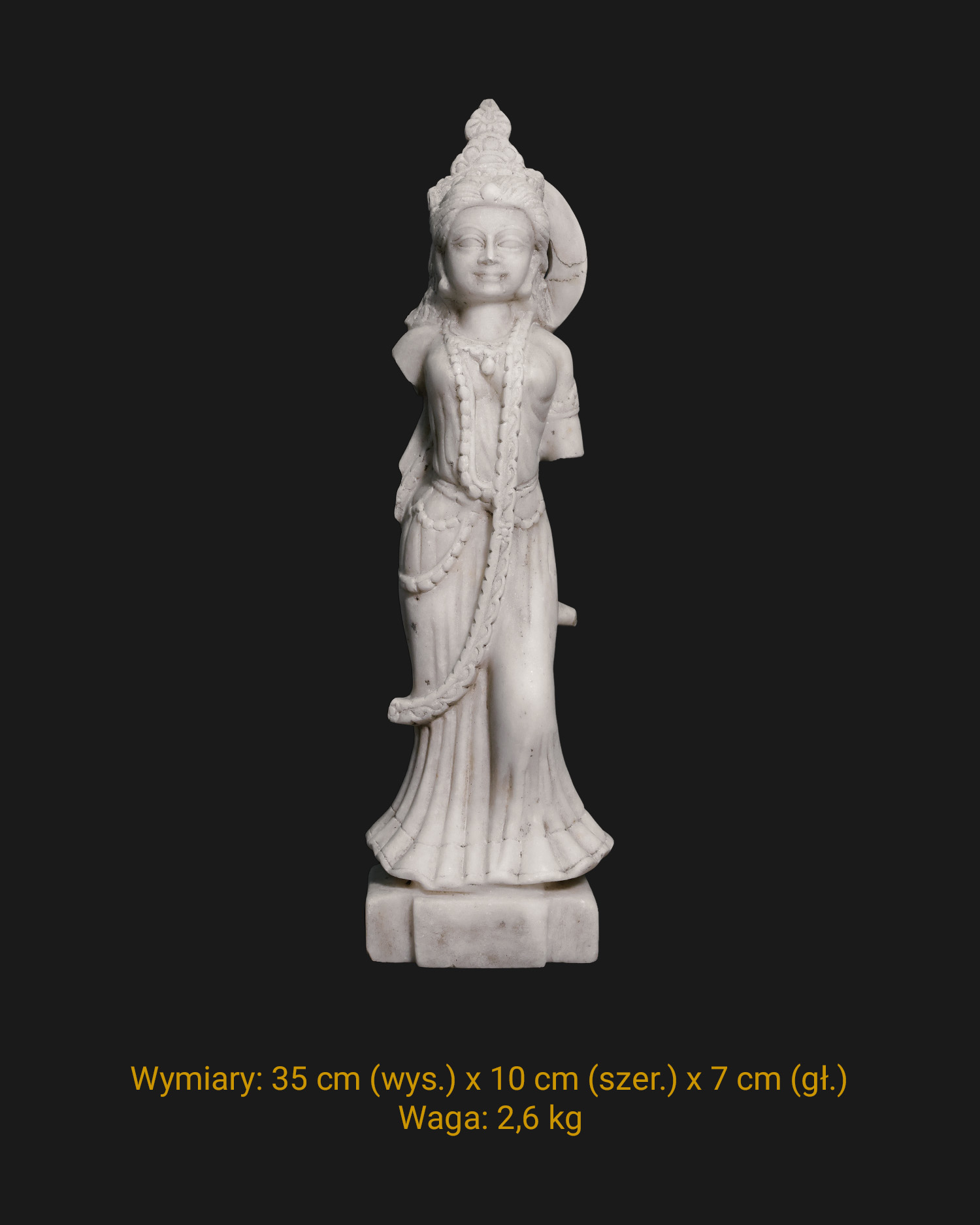

Apsara / Surasundari, marble, India, 19th century.
900,00 zł
The sculpture depicts Apsara (heavenly nymph) or Surasundari (heavenly beauty), personifying the perfection of divine creation, joy and prosperity. The figure’s face is characterized by full, round cheeks and a prominent chin. Almond-shaped eyes with well-defined eyelids are devoid of notched pupils. The face exudes a gentle, puzzled smile. The hair above the forehead has been carved into thick strands. Above them rises a stepped crown (mukut) with a structure decorated with concentric arches and geometric reliefs imitating pearls, topped with a floral bud. The figure wears a close-fitting skirt, with smooth sides and a deeply pleated front, expanding cup-like around the feet. A triple-length necklace flows over the chest and hips. A traditional epaulet (Bayuband) with geometric ornament is preserved on the broken off left shoulder. The figure is framed in a dancing and sensual twist of the body, which is a development of the classical Tribhang pose. The profile of the sculpture shows the forward extension of the abdomen and the retreat of the back line, which gives the composition fluidity and dynamism. The body of the sculpture was conceived exclusively for frontal and side display. The back of the figure and the back of the nimbus shield are completely flat, austere and devoid of details – this plane was directly adjacent to the wall or pillar of the temple.
Dimensions: 35 cm (height) x 10 cm (width) x 7 cm (depth)
Weight: 2.6 kg
1 in stock
Related products
Brahma, marble, India, 19th (?) century.
Gallo-Roman sculpture of the head of Eros (?), marble, 1st-3rd century A.D.
Head of an angel (?), sandstone, France, ca. 1300
Saint John the Evangelist, late Gothic wooden sculpture, ca. 1500
The work may have been part of a winged altarpiece (retabulum), most likely in the Crucifixion group.