


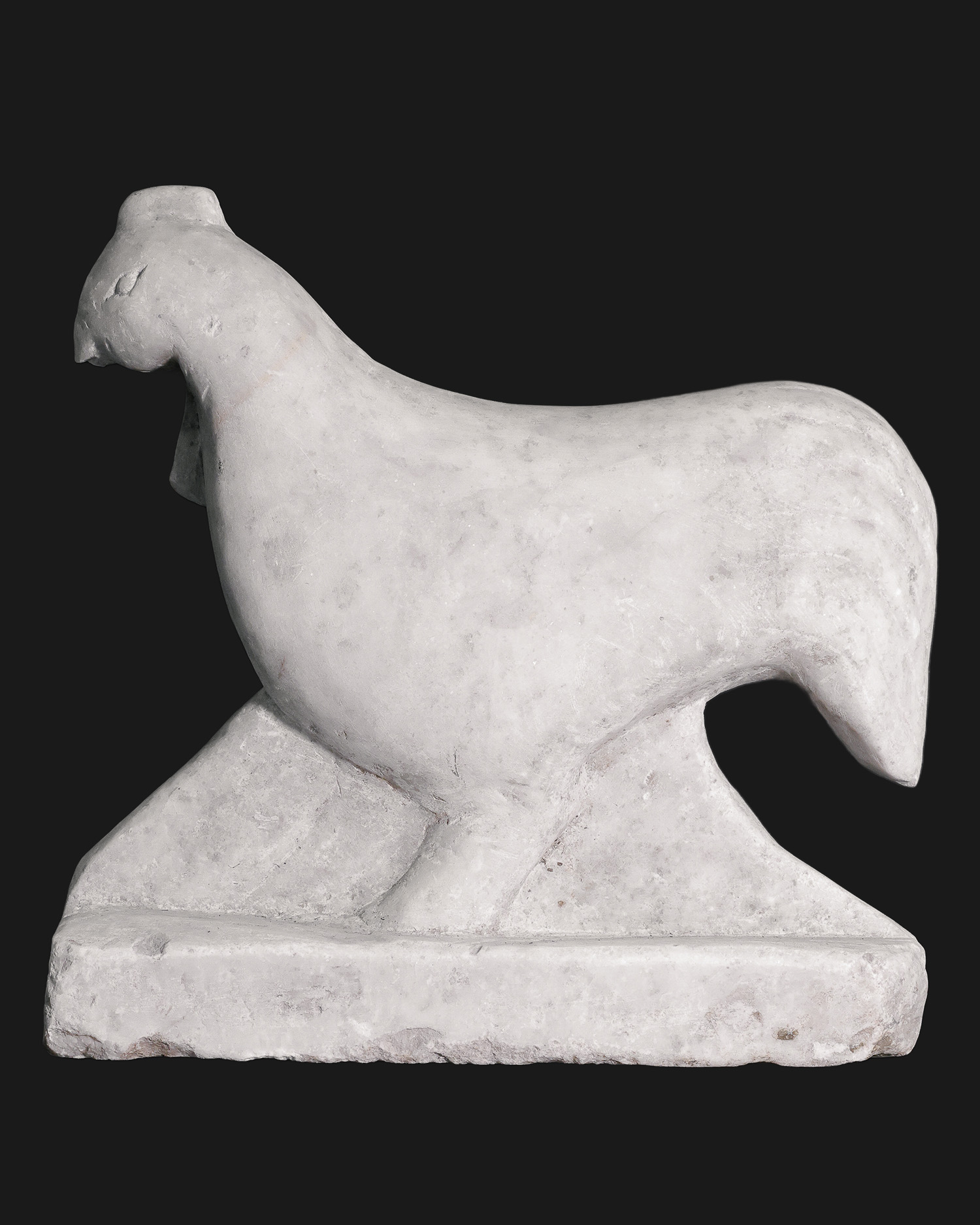
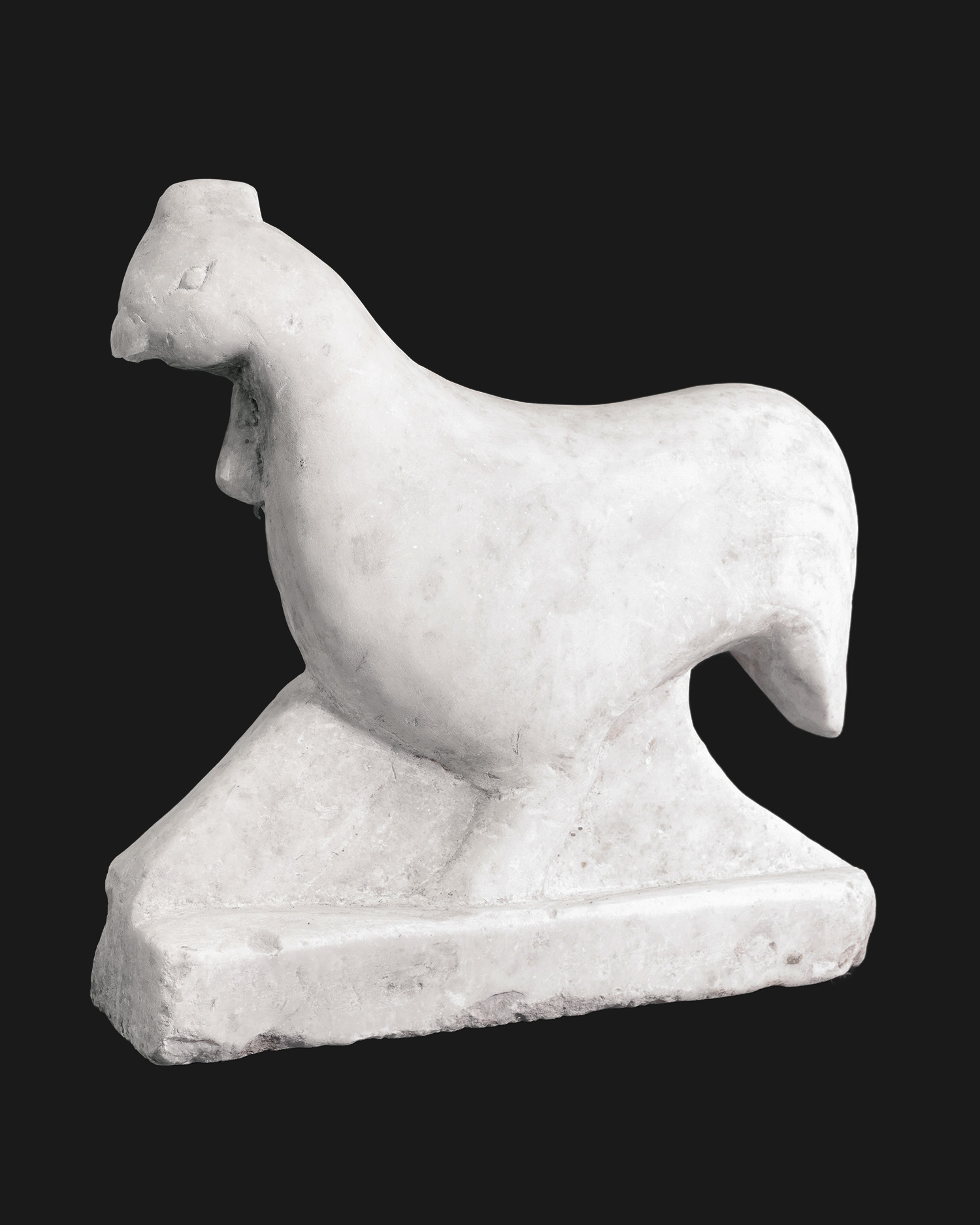
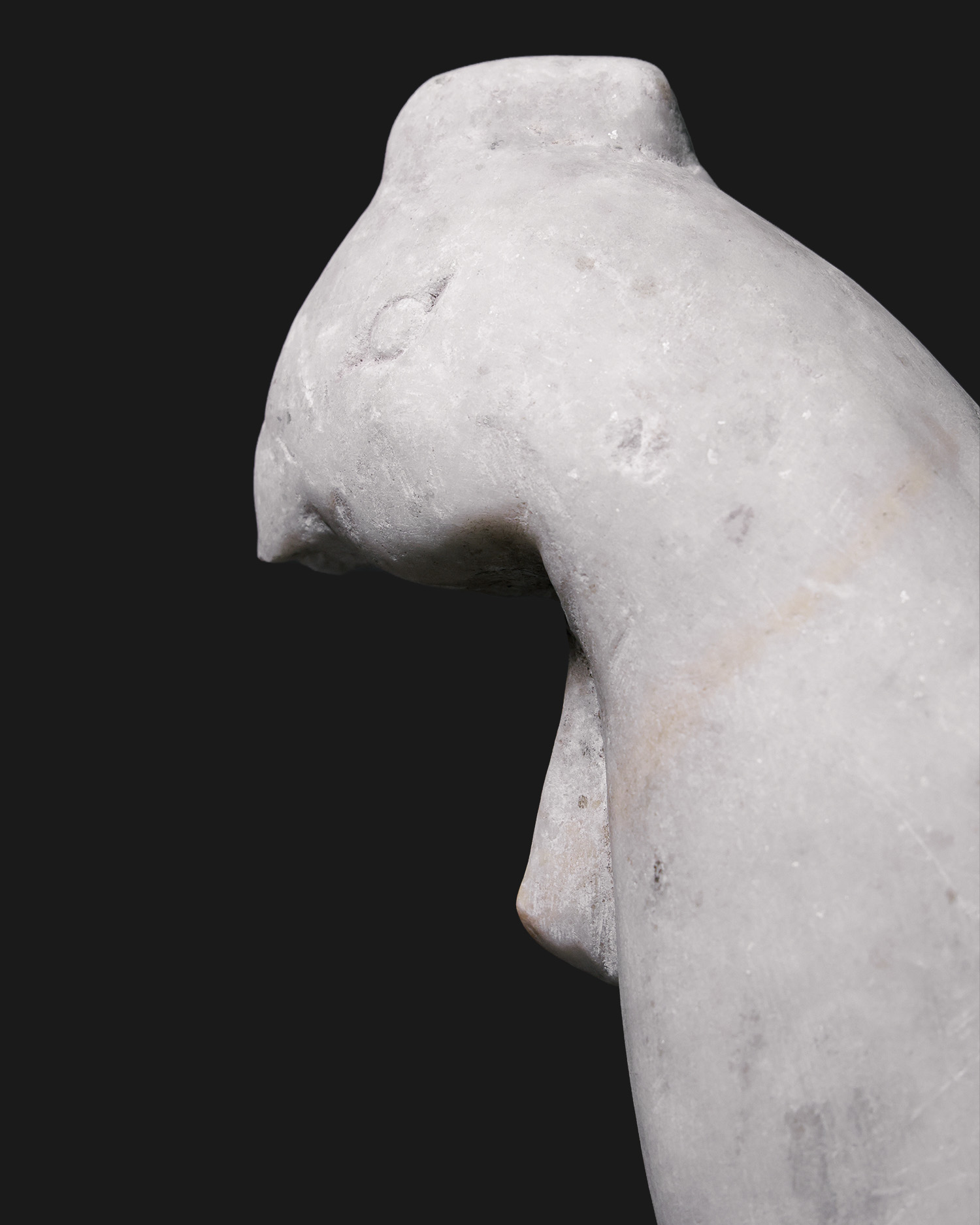
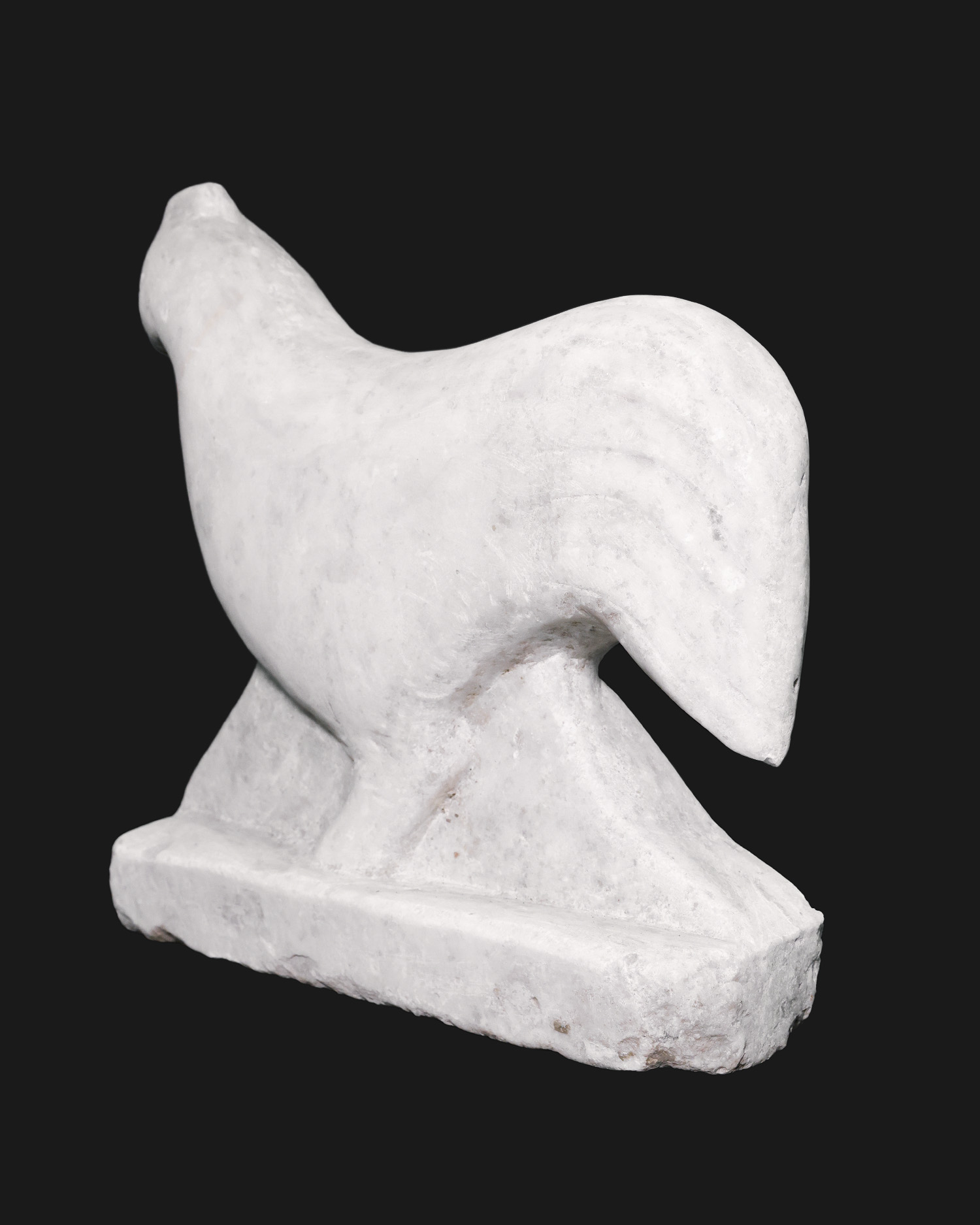
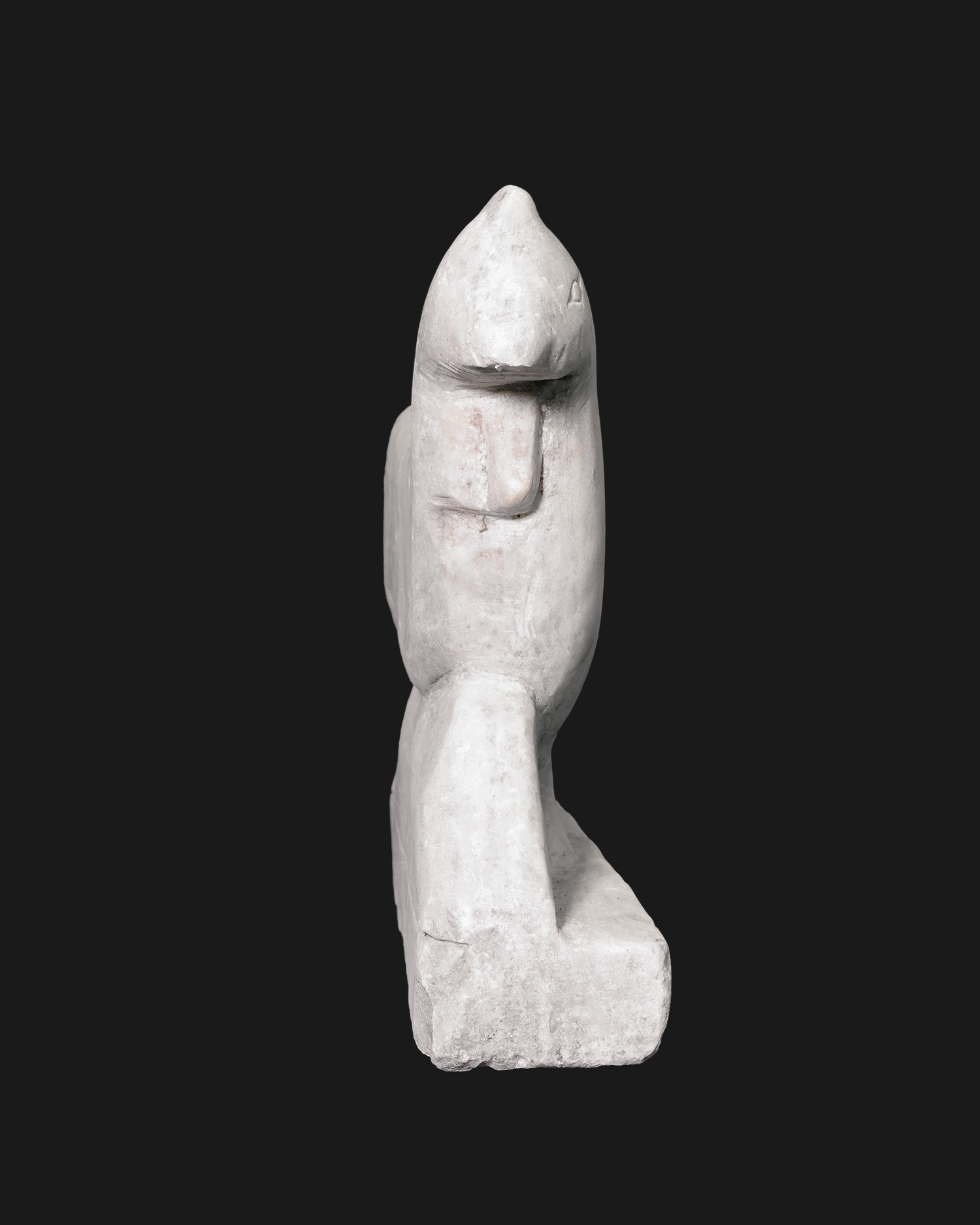
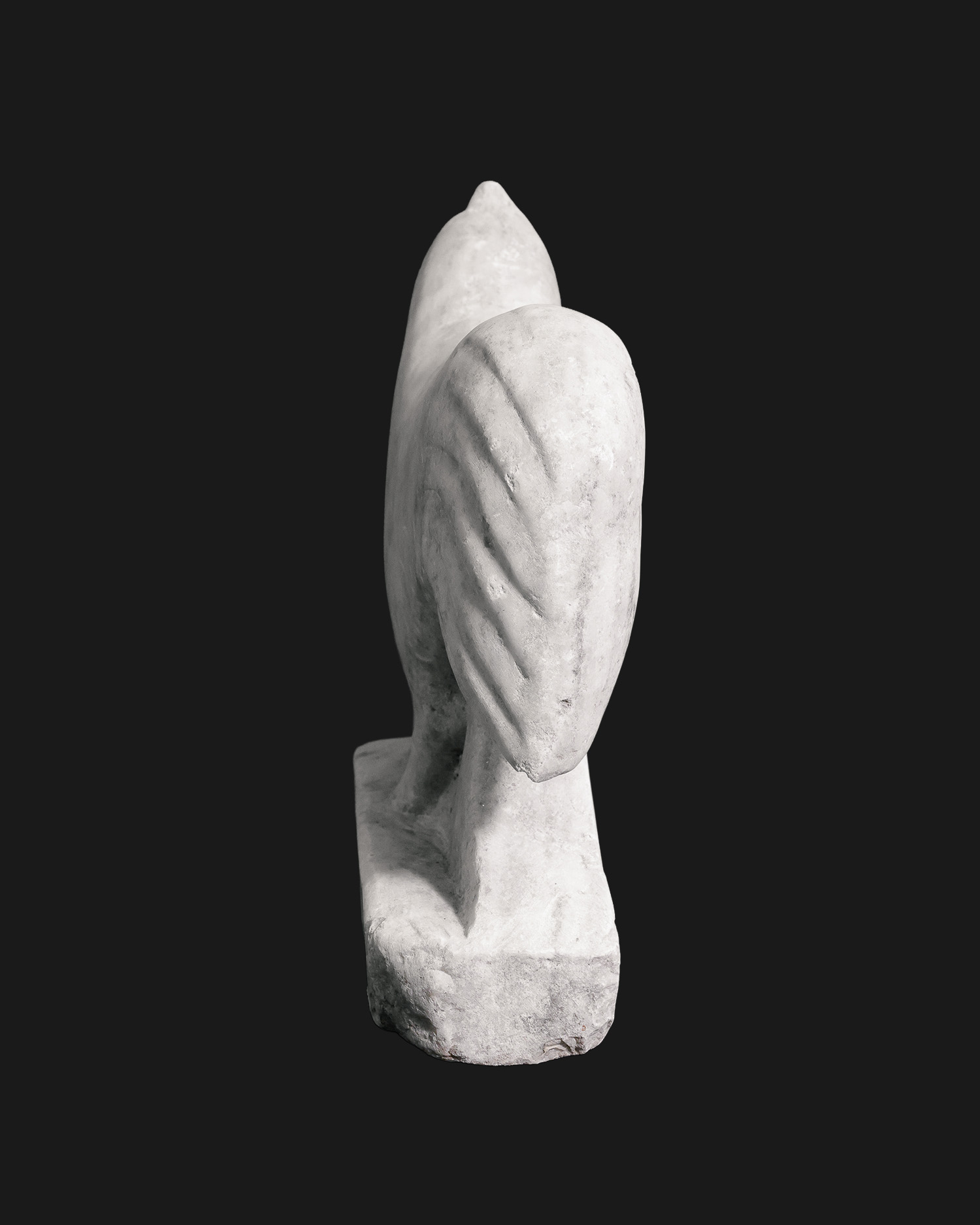
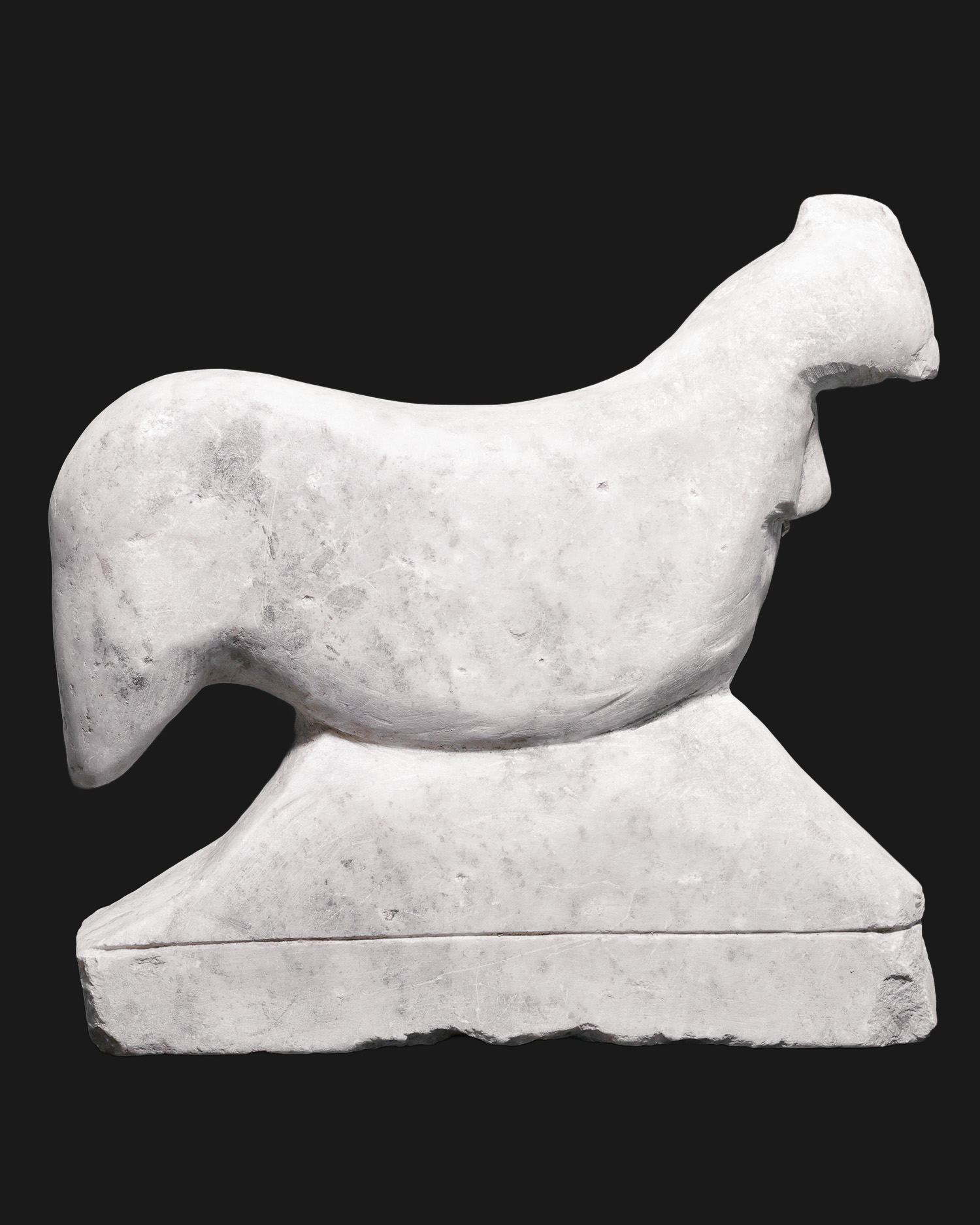
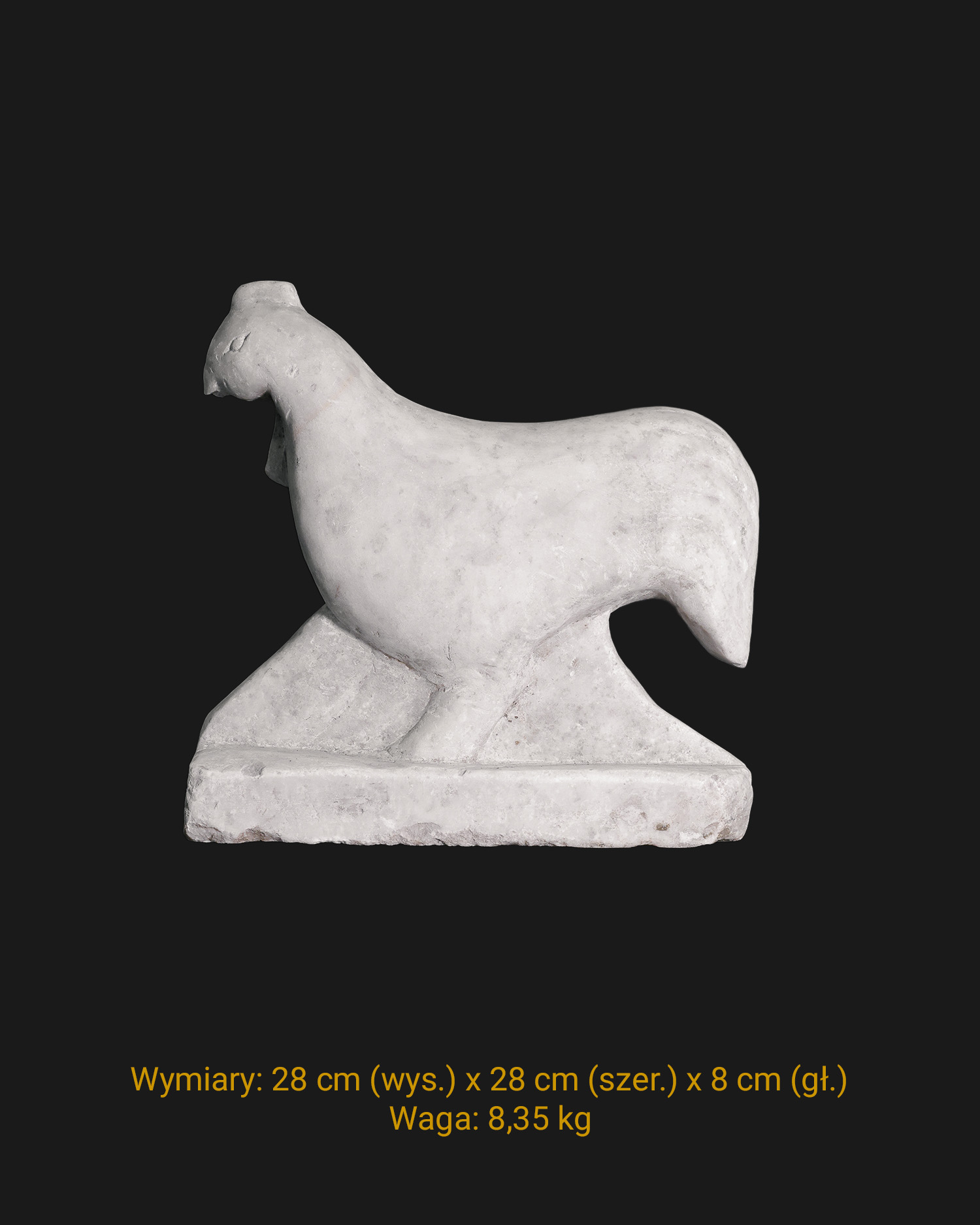

Temple rooster, marble, India, 19th century.
500,00 zł
The sculpture depicts a simplified, synthetic silhouette of a rooster (Kukkuta), which is an integral architectural element of a Hindu sacred structure. The object is characterized by a compact body. The space between the bird’s legs and the base has not been cut, forming a solid block of stone. The lower part of the sculpture transitions into a regular trapezoidal pedestal with a wedge shape. The lower edge of the base bears traces of rough carving, which facilitated installation in mortar. The sculptural details (deep incisions of the eye, outline of the tail feathers) have been developed in a legible way only on one of the flanks of the sculpture. The other profile of the object is flattened and rougher. This indicates that the sculpture was intended for lateral display – as a cornice support (madal), a decorative element of a staircase balustrade (vedika) or a niche frieze. The form is in keeping with the trend of Indian animalistic art and folk art. The sculptor abandoned meticulous anatomical realism in favor of strong geometric lines, which ensured the mechanical durability of the structural element. Only the key features of the species were clearly marked: the high crest and the obtuse throat (coral).
In Hindu iconography, the rooster is not just a decorative motif, but has an important religious function. It is the sacred mount (wahana) of the god of war Kartikeya (known in southern India as Murugan), son of Shiva.
Dimensions: 28 cm (height) x 28 cm (width) x 8 cm (depth)
Weight: 8.35 kg
1 in stock
Related products
Christ Salvator Mundi, polychrome wood, Poland, 19th century.
Gallo-Roman male portrait head, marble, Roman Empire, Province of Gaul (area of modern France), 1st-3rd century after Chr.
Head of an Angel (Putta), gilded linden wood, Poland, 1st half of the 18th century.
Hercules, bronze, marble, northern Italy (?), 16th century (?).
Madonna and Child, polychrome wood, gilded, Central Europe, 18th/19th century
Rama, marble, India, 19th century.
A sculpture depicting Rama, one of the most important deities of Hinduism, considered the seventh avatar of Vishnu. The object was hand-carved in white marble in India, probably in the 19th century.
The figure is depicted standing, facing forward. The face has a gentle expression with a soft smile and slightly closed eyes. The head is crowned with a decorative crown, and long necklaces are visible on the chest.
The figure is dressed in a draped robe with clearly marked folds. On its back is a quiver with arrows, characteristic of Rama's depictions.
The hands of the sculpture are not preserved, originally in one of them the figure held a bow - a characteristic element of representations of this deity. Further about these cavities do not write that they are consistent.
Rama is the hero of the epic Ramayana and in the Hindu tradition symbolizes righteousness and fidelity to the principle of dharma. His images occupy an important place in Indian sacred art, although full-figure marble sculptures of this scale are less common.
The object is preserved in good condition, with clear legibility of form and detail.
Saint John the Evangelist, late Gothic wooden sculpture, ca. 1500
The work may have been part of a winged altarpiece (retabulum), most likely in the Crucifixion group.