


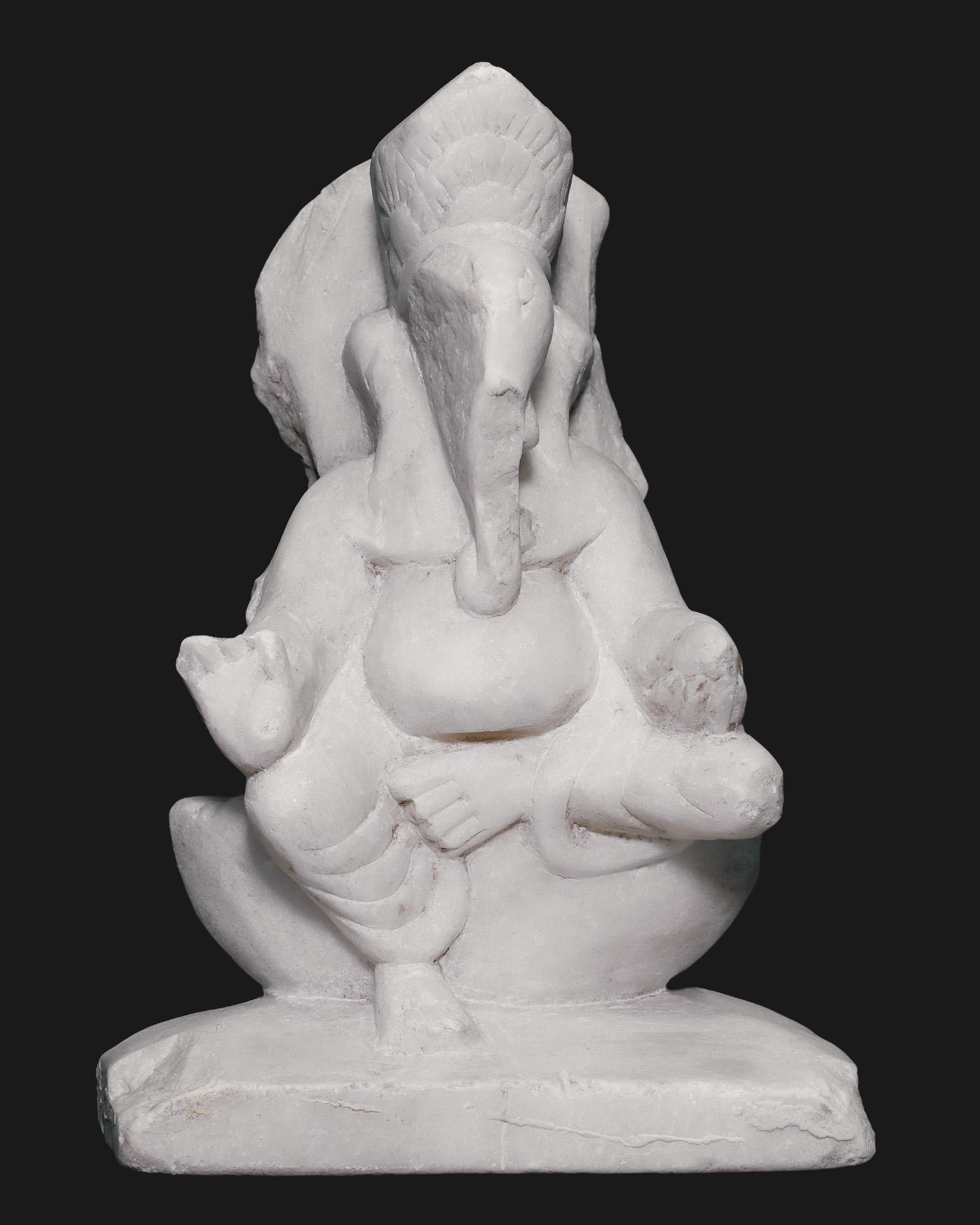
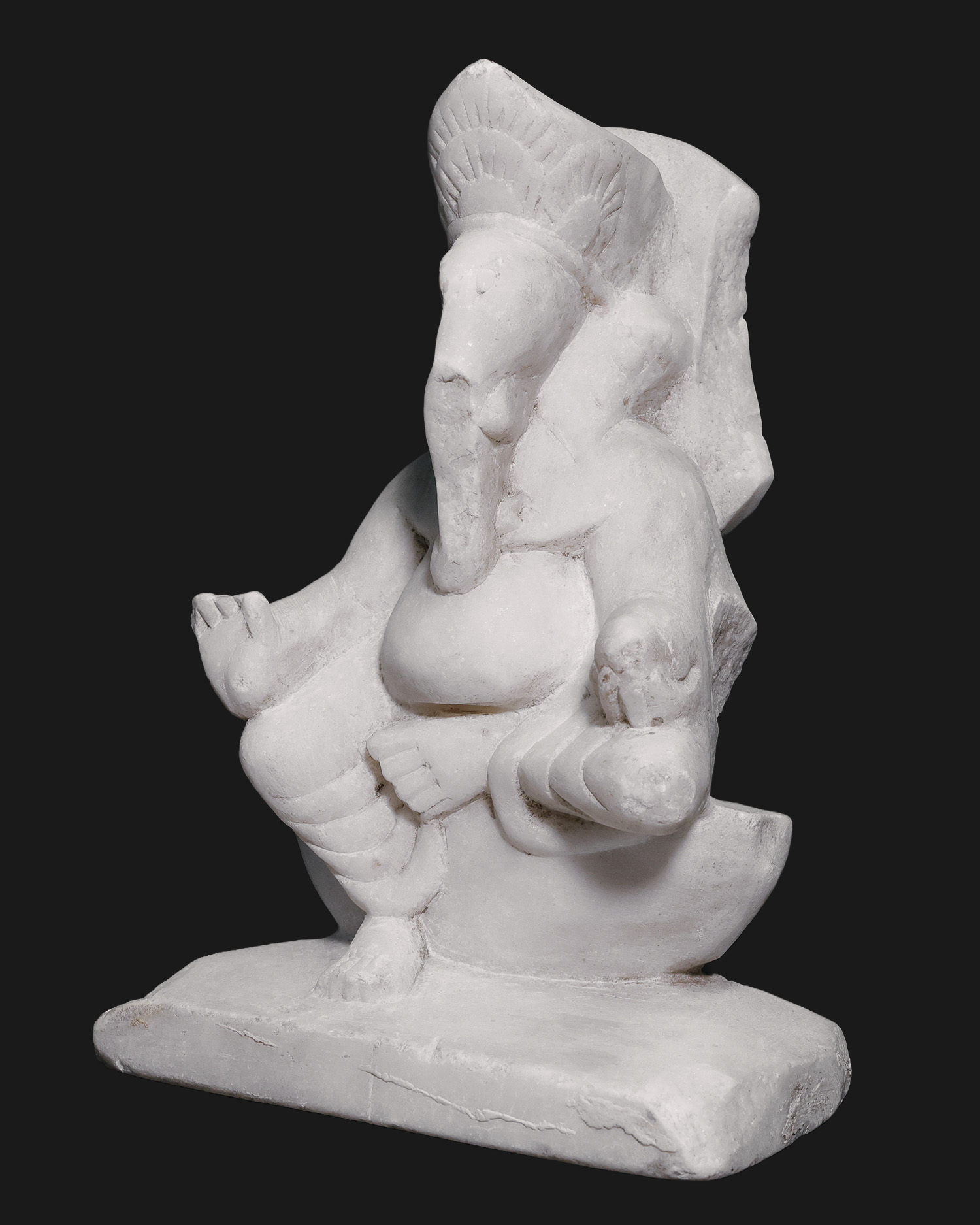
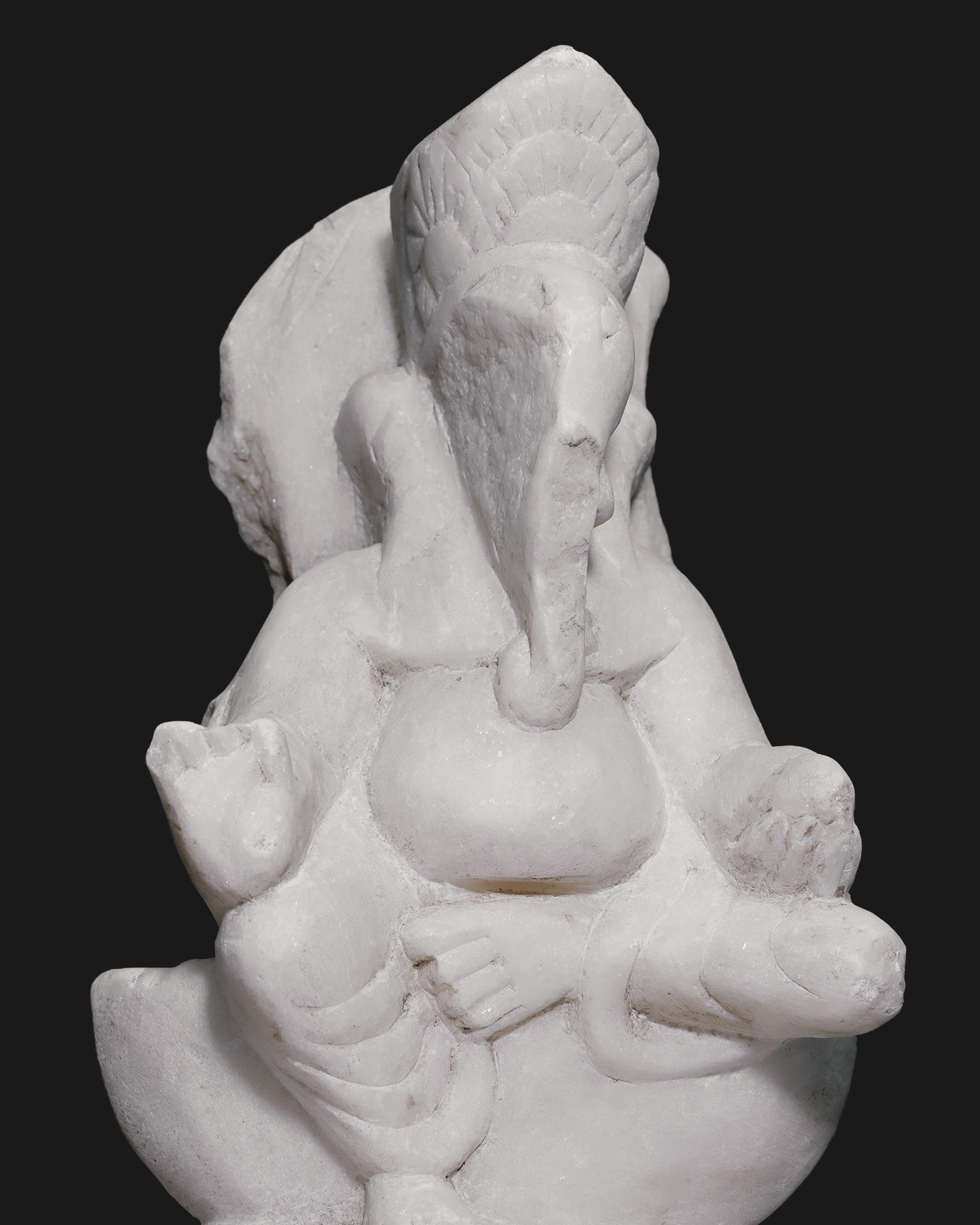
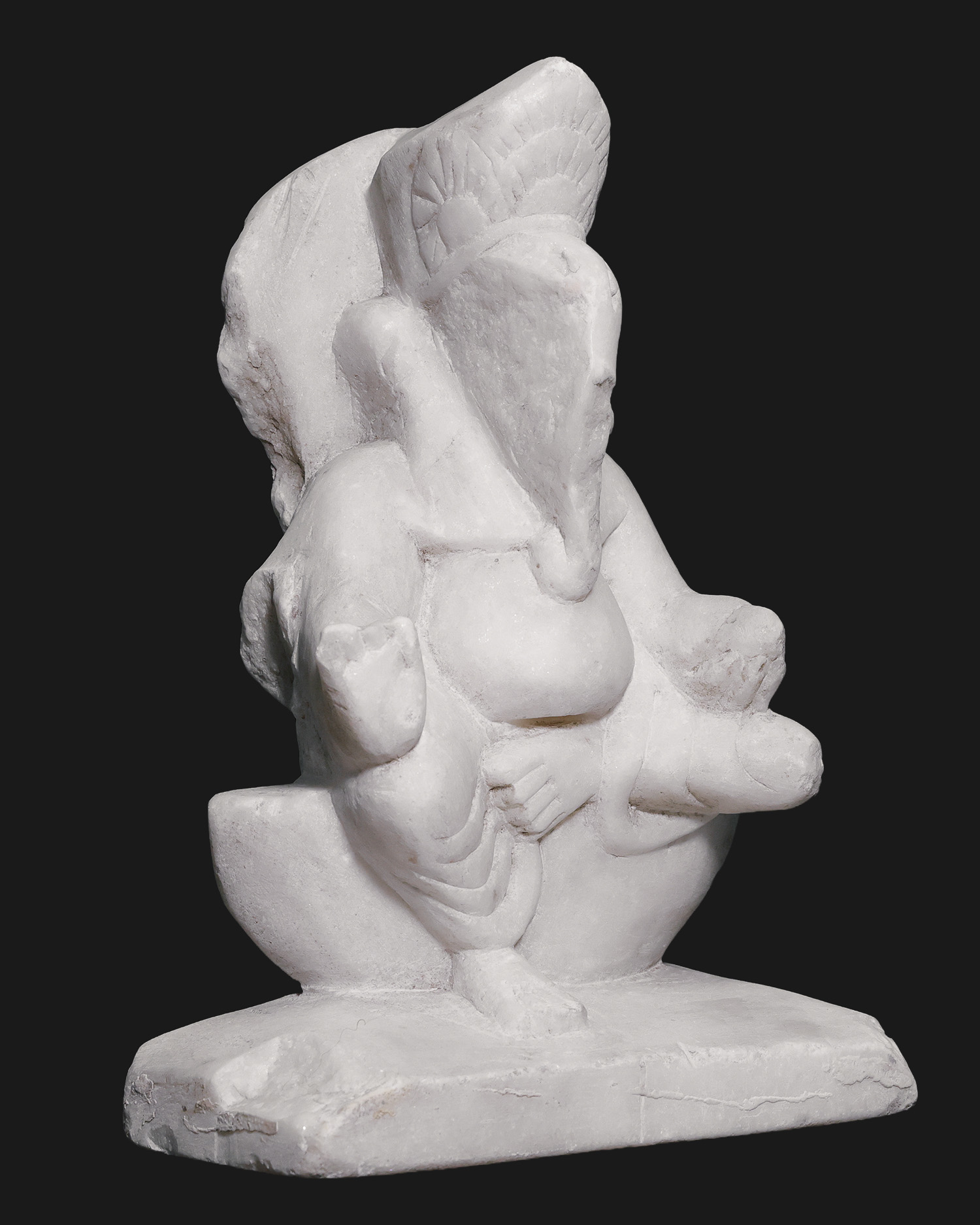
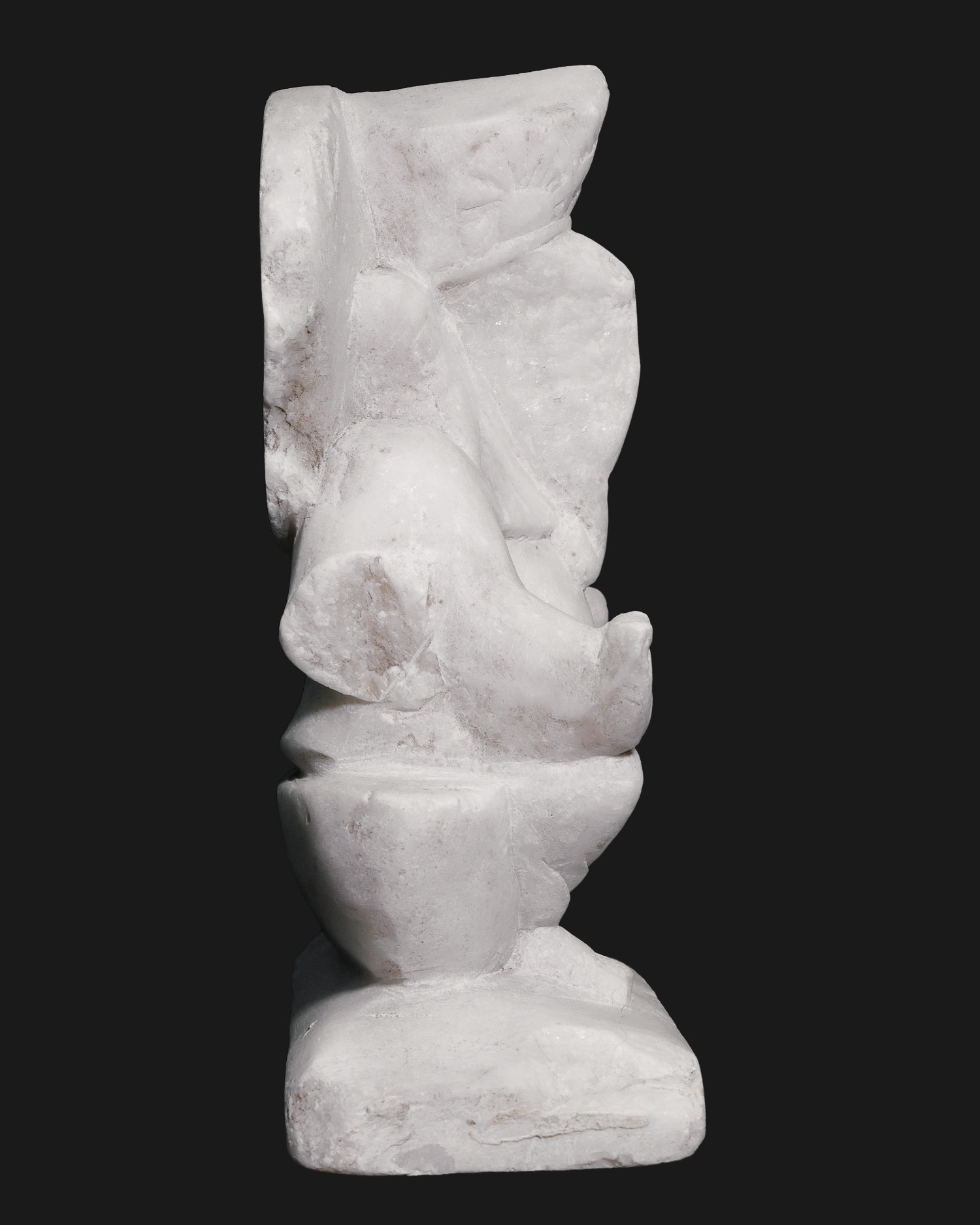
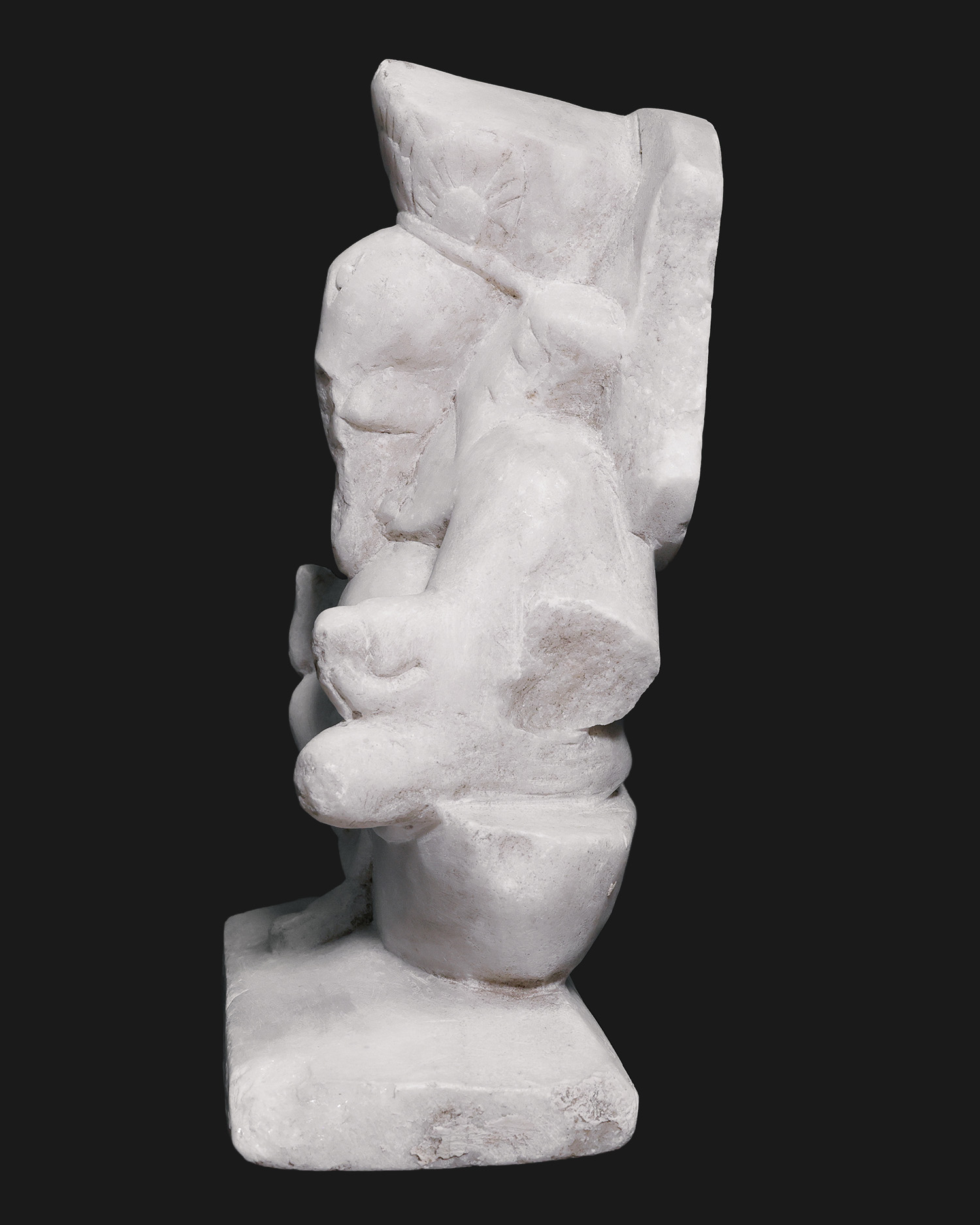
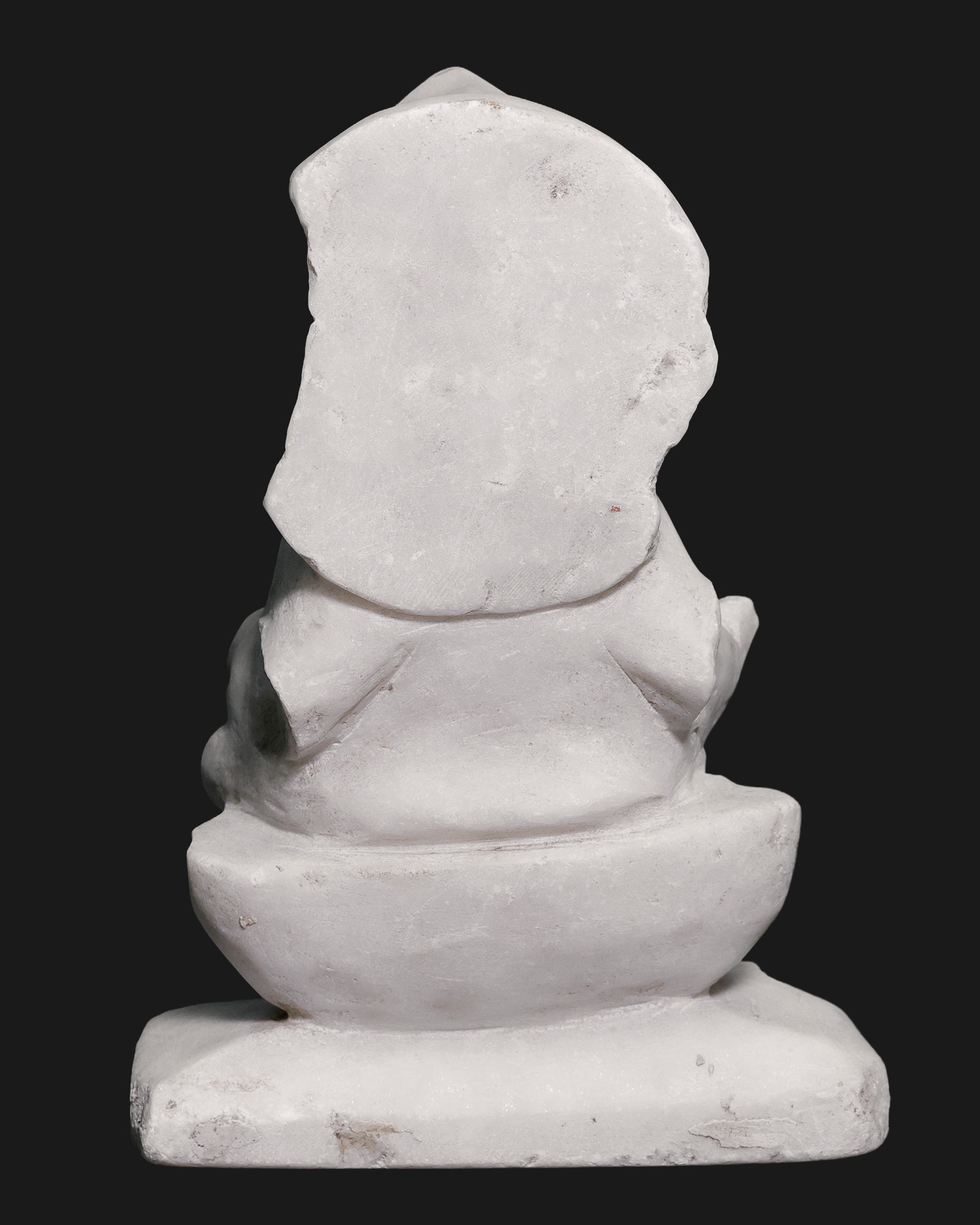
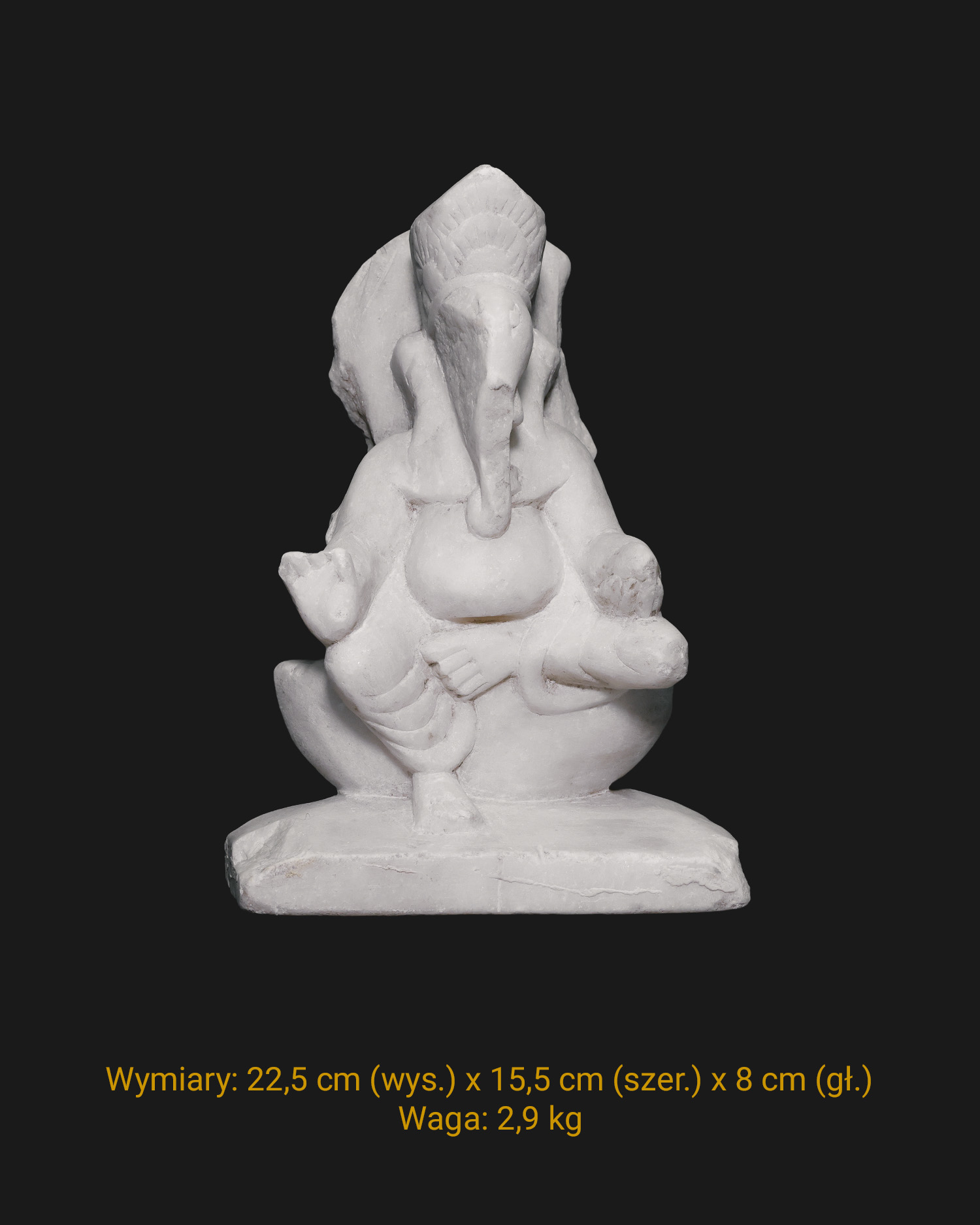

Ganesha, marble, India, 19th century.
500,00 zł
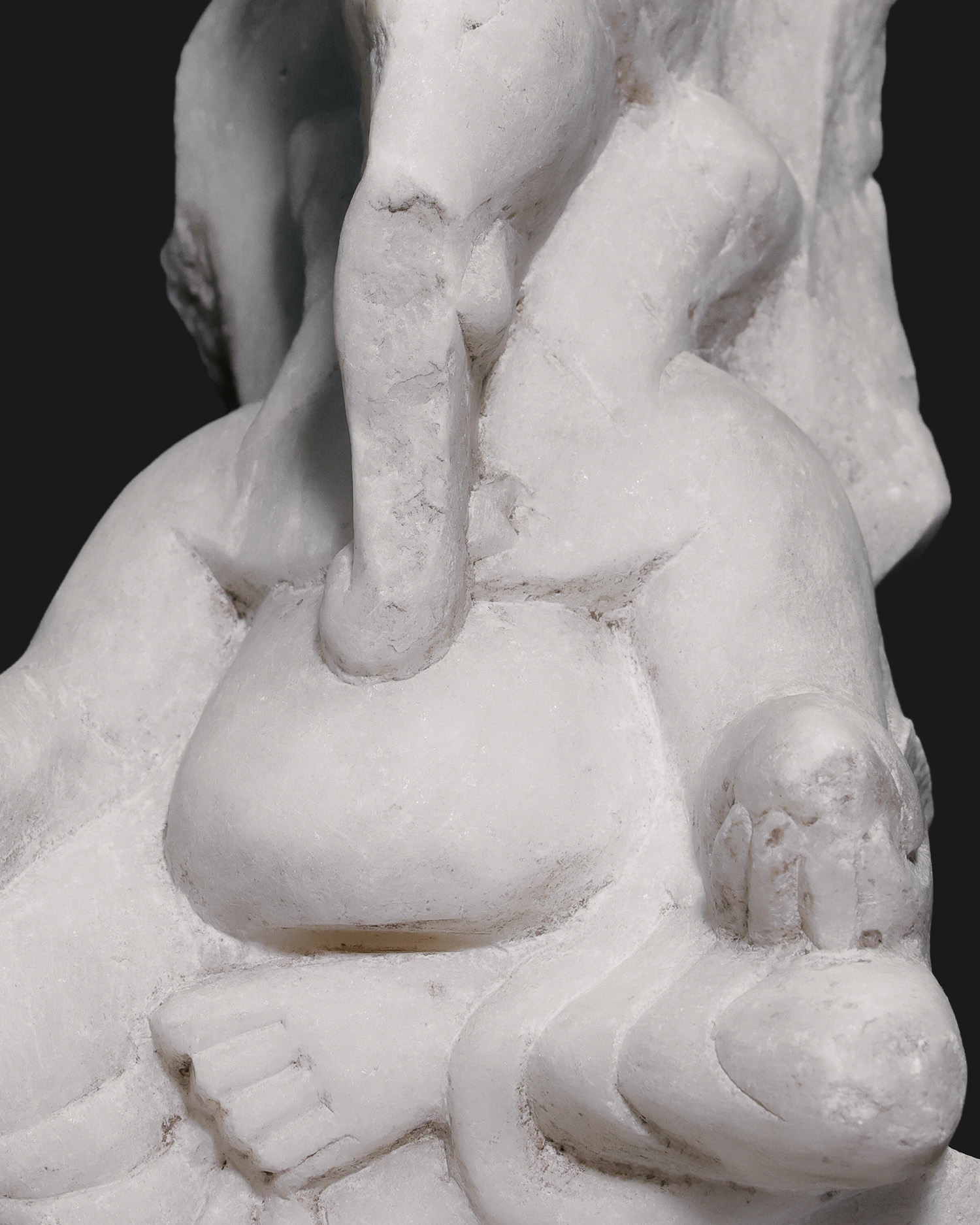
Full-plastic sculpture depicting the god Ganesha – one of the most important deities of the Hindu pantheon, removing all obstacles and patronizing new beginnings. The deity is shown in the traditional hieratic seated position of the Lalitasana type (position of royal relaxation), in which the bent, left leg rests flat and the right leg is lowered down, resting with the foot on the ground. This arrangement in Indian iconography symbolizes the perfect balance between the spiritual world and earthly activity. The figure is characterized by a rounded belly signifying prosperity and abundance. The entire composition is set on an integral, massive plinth (base) with an austere rectangular design. The right hand is raised in the symbolic gesture of abhaya mudra (a gesture of care and dispelling of fear). In his left hand resting on his knee, the deity holds the traditional modaka sweet, which is his attribute. This is the deity’s favorite sweet and symbolizes the supreme sweetness of spiritual enlightenment, pure wisdom and the inner joy that awaits a person after overcoming all of life’s obstacles and one’s own ego. Ganesha’s head is crowned by a tall mukut-type crown with a radial linear ornament, and the structure is capped by a large nimbus merged with the throne backrest. The sculpture has a damaged nimbus, trunk and part of the face.
Dimensions: 22.5 cm (height) x 15.5 cm (width) x 8 cm (depth)
Weight: 2.9 kg
1 in stock
| Weight | 2,9 kg |
|---|---|
| Dimensions | 22,5 × 15,5 × 8 cm |
| Type |
Sculpture |
| Form |
Full figure sculpture |
| Materiał |
Marble |
| Kolorystyka |
White-Gray |
| Technika |
Carving |
| Czas powstania |
XIX century. |
| Kraj pochodzenia |
India |
| Autor |
Unknown |
| State of preservation |
Damage to the nimbus, trunk and parts of the face |
Related products
Brahma, marble, India, 19th (?) century.
Brahma, marble, India, 19th century.
Brahma, marble, India, 19th century.
Bust of Krishna, marble, India, 19th century.
Christ Crucified, wood, Spain (Pyrenees?), 12th-13th century.
The sculpture impresses with the pronounced rigidity of the body, typical of early Roman depictions. The calm yet poignant expression of Christ's face is emphasized by huge, forward-facing eyes set in deep eye sockets.
His gaze, however, is slightly lowered, emphasized by a prominent nose and large, spreading ears that frame his face. His hair falls symmetrically on his shoulders; a peculiar hairstyle draws attention - the hair, separated by a parting on top of the head, is arranged in rollers covered with densely diagonal cuts. Very similarly arranged hair, resembling braids, has the famous statue of Christ of Mig Aran, located in the church of Sant Miquèu de Vielha (Val d'Aran valley). The beard and mustache end in artificial, volute curls.
Hercules, bronze, marble, northern Italy (?), 16th century (?).