


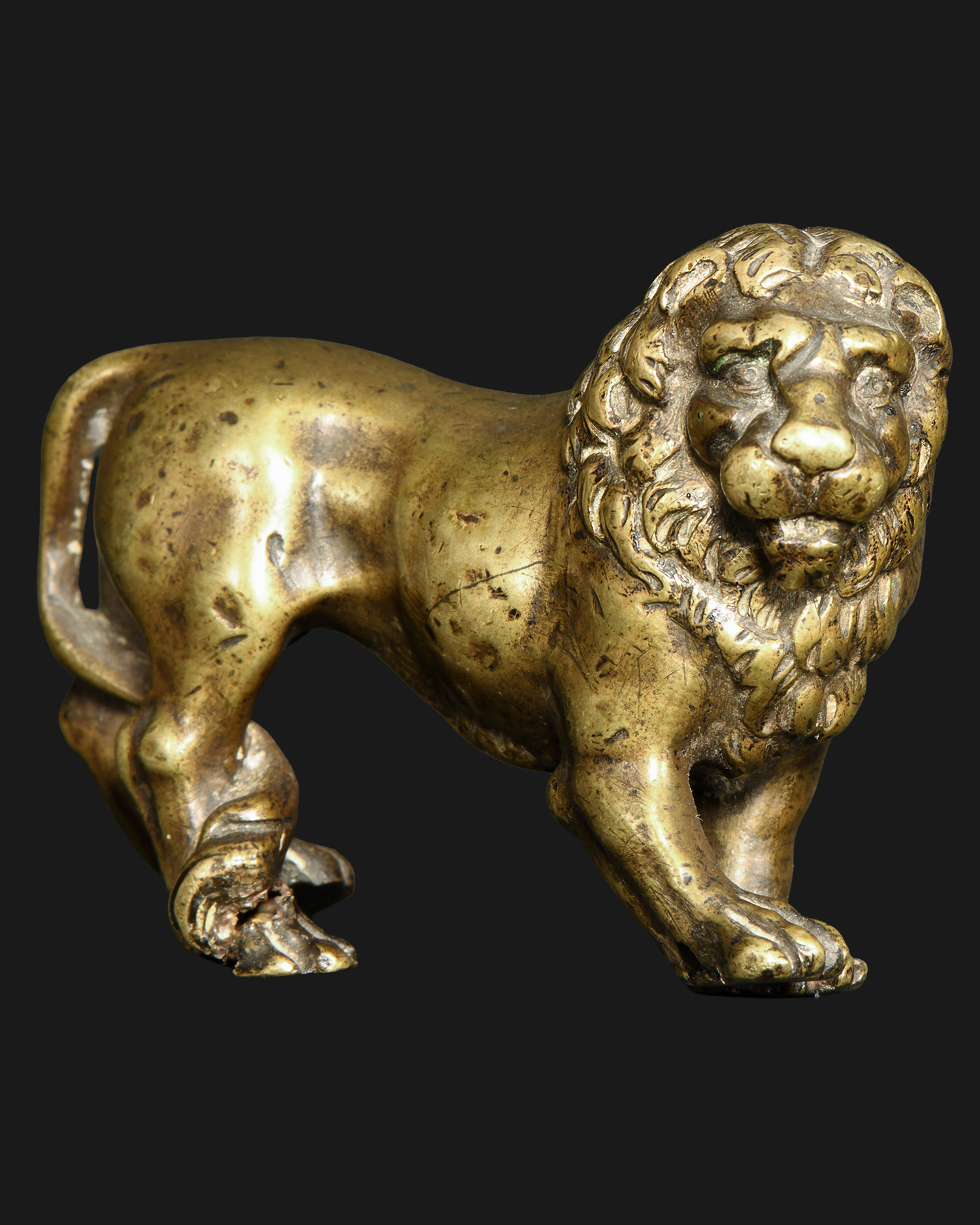
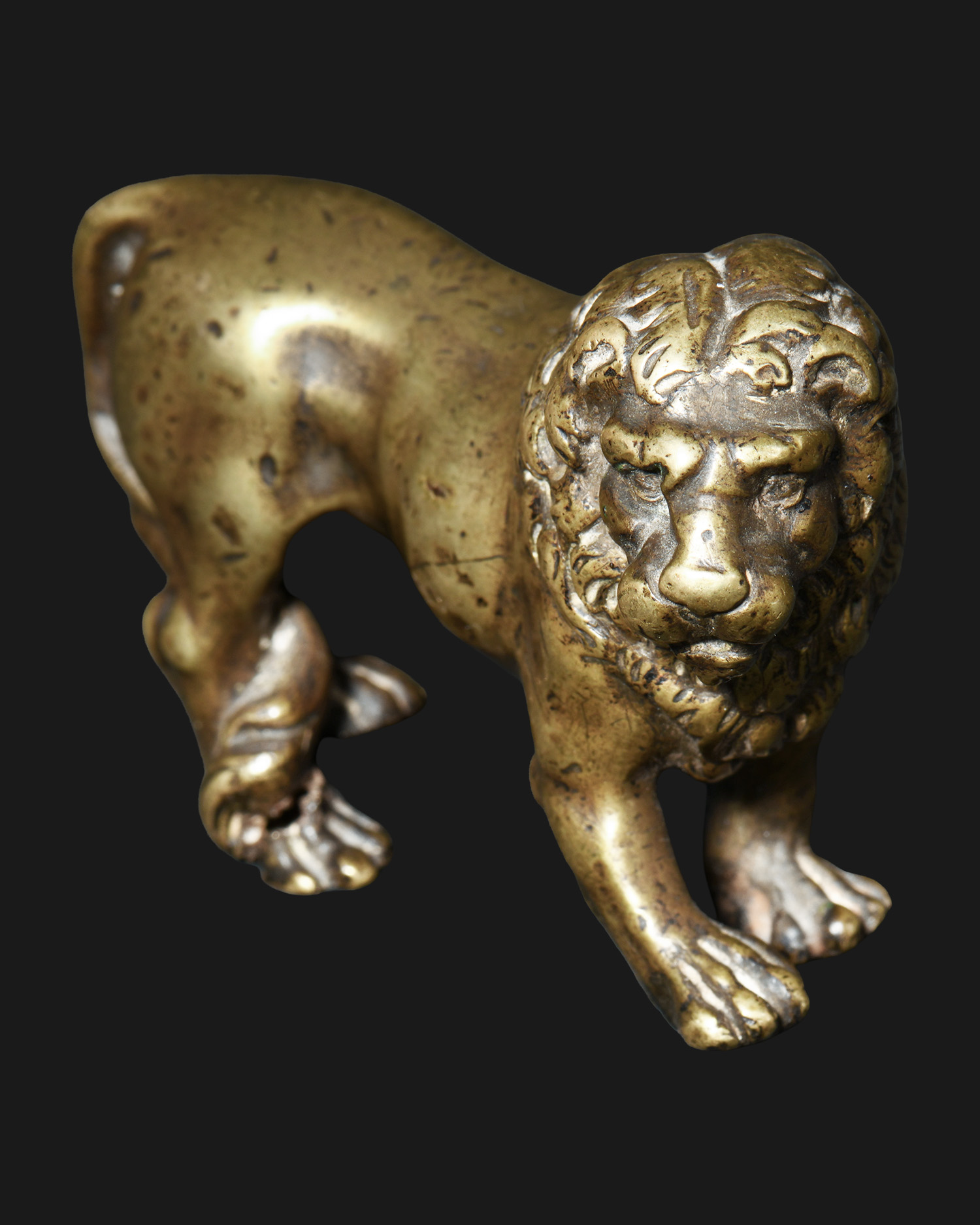
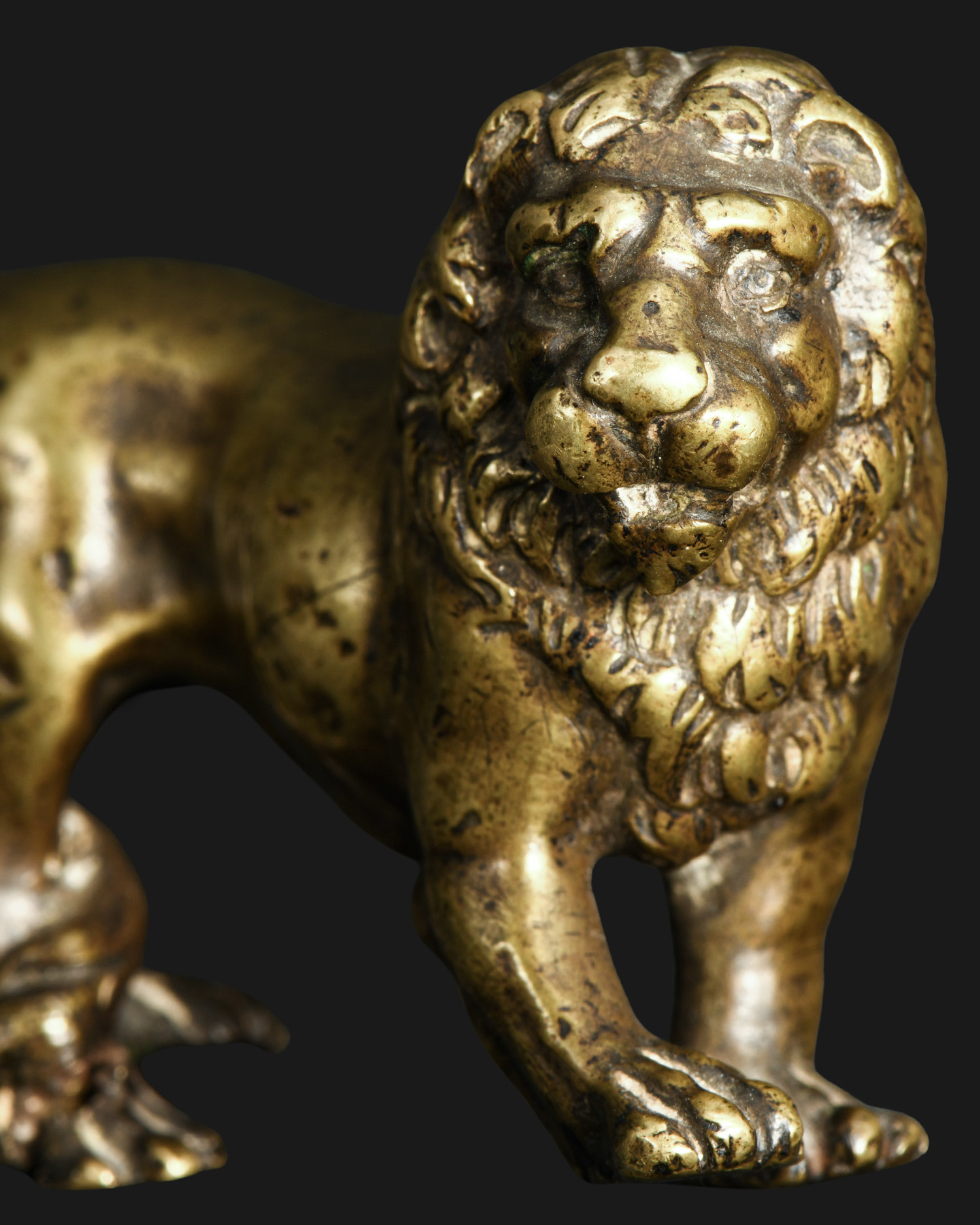
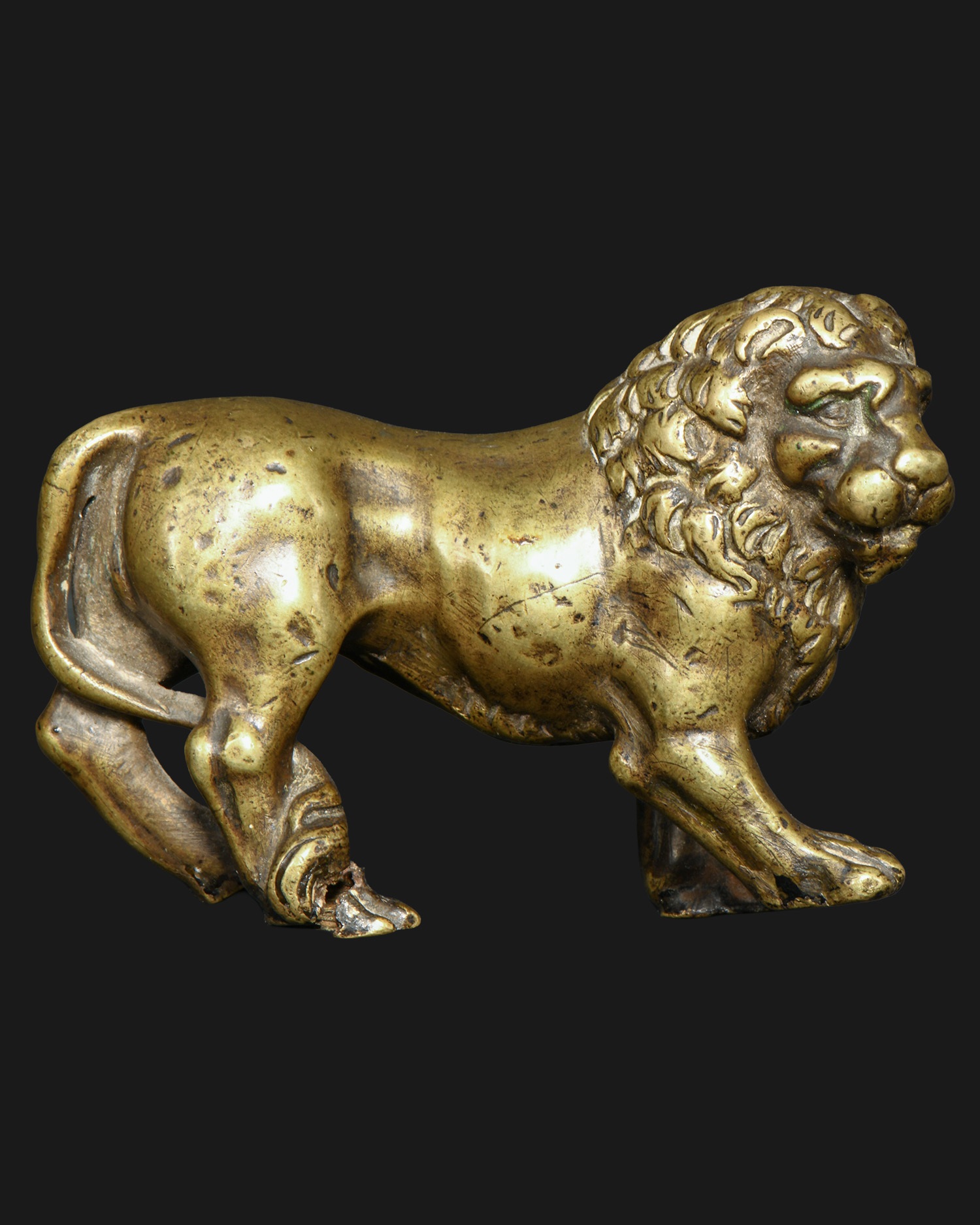
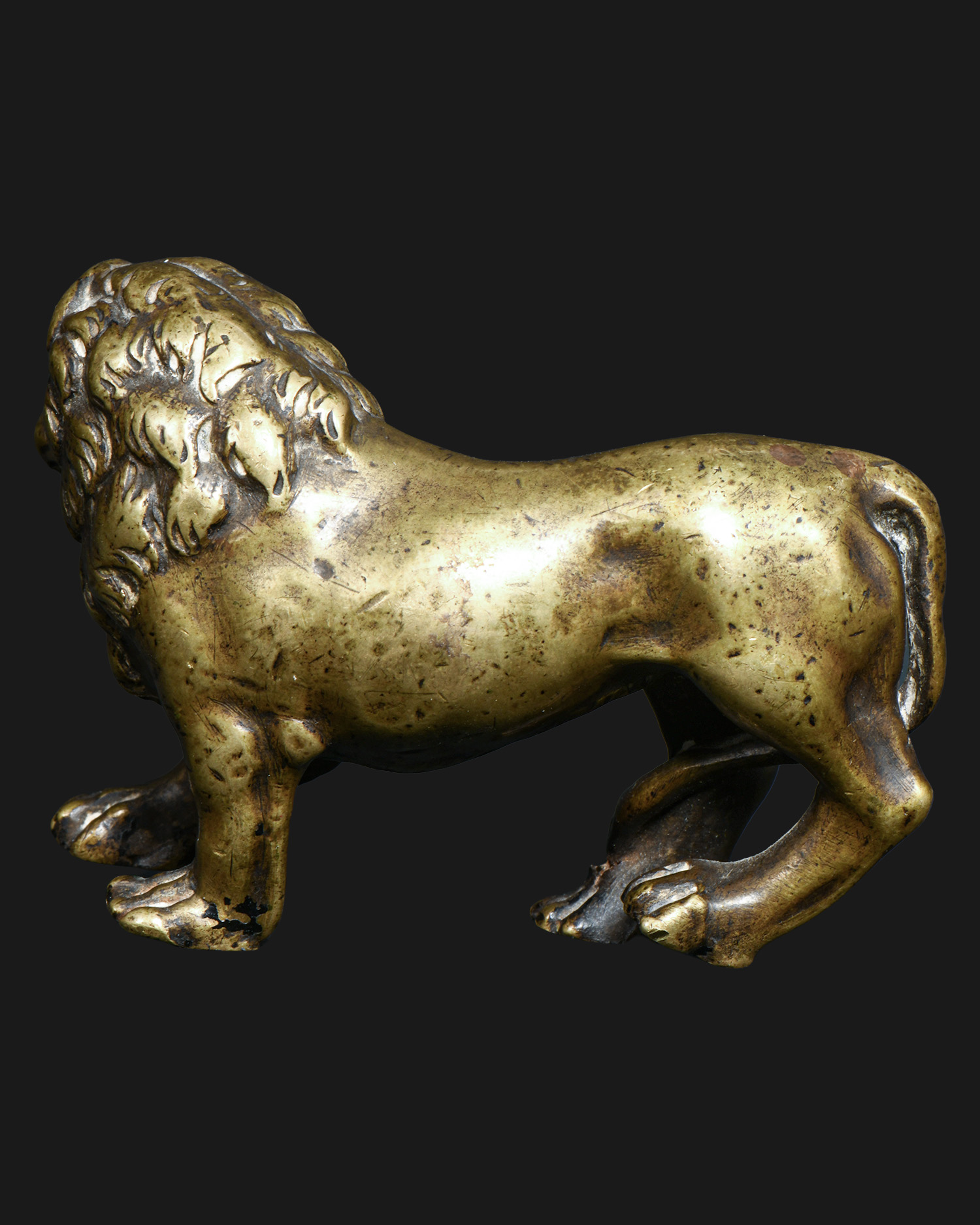
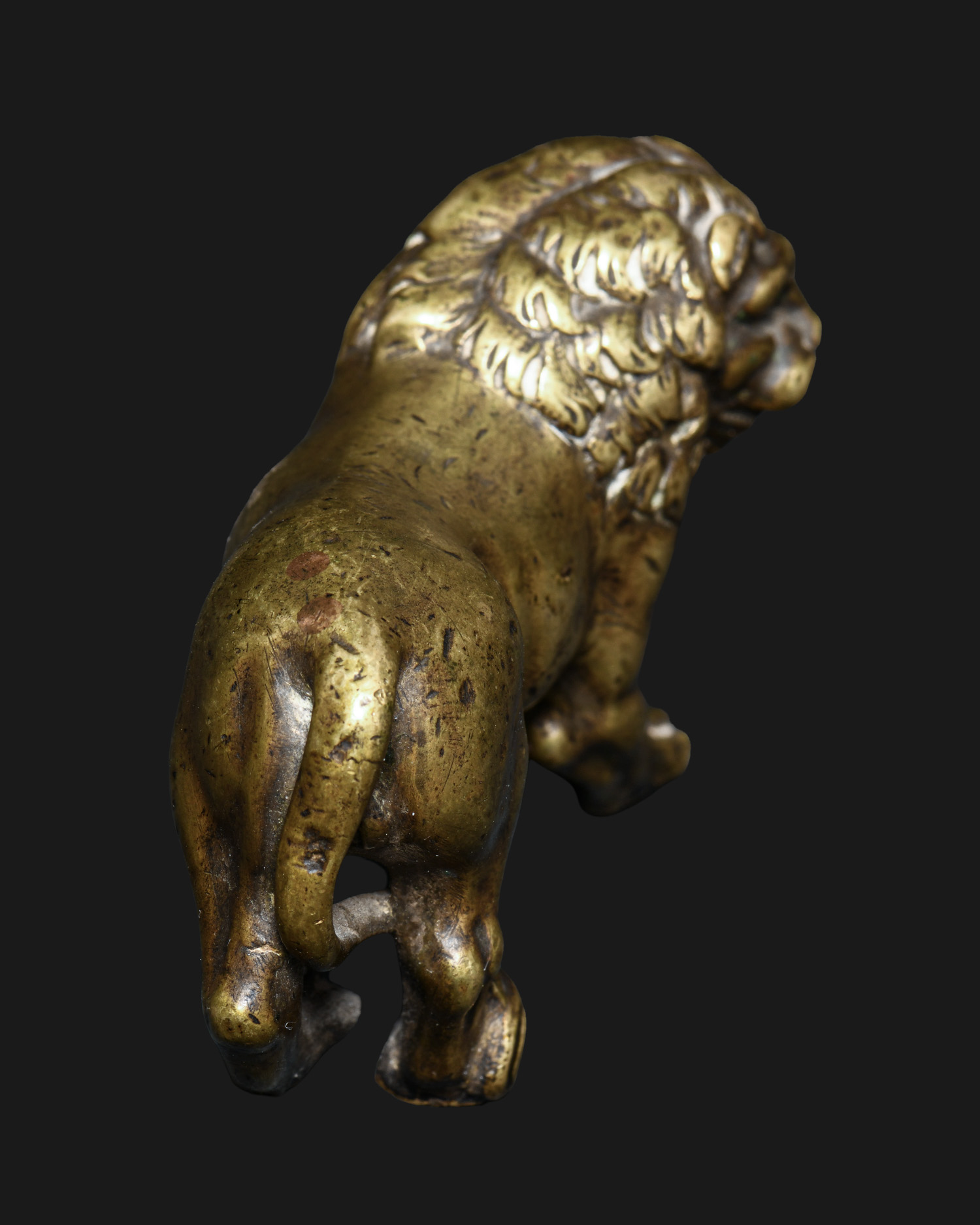
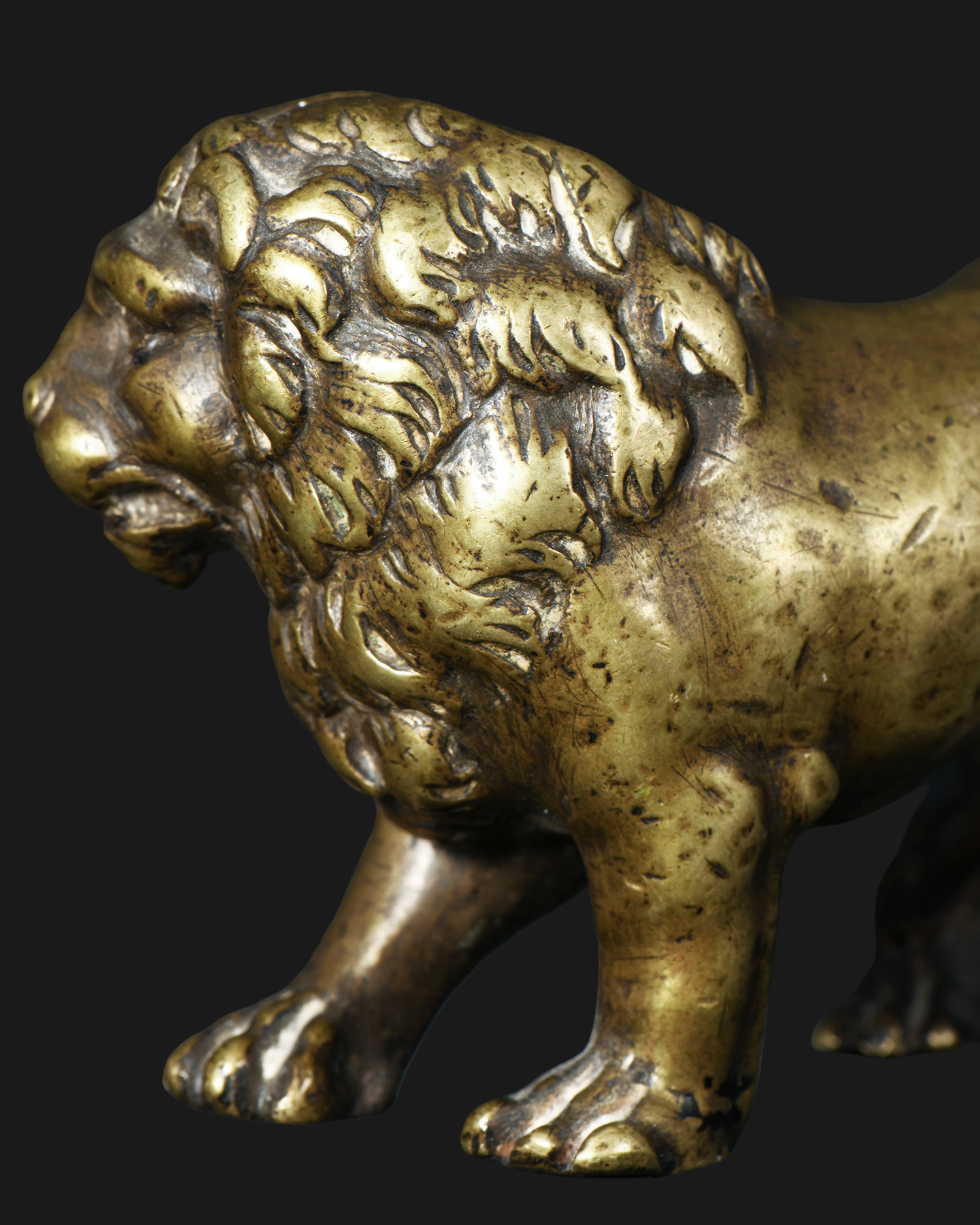
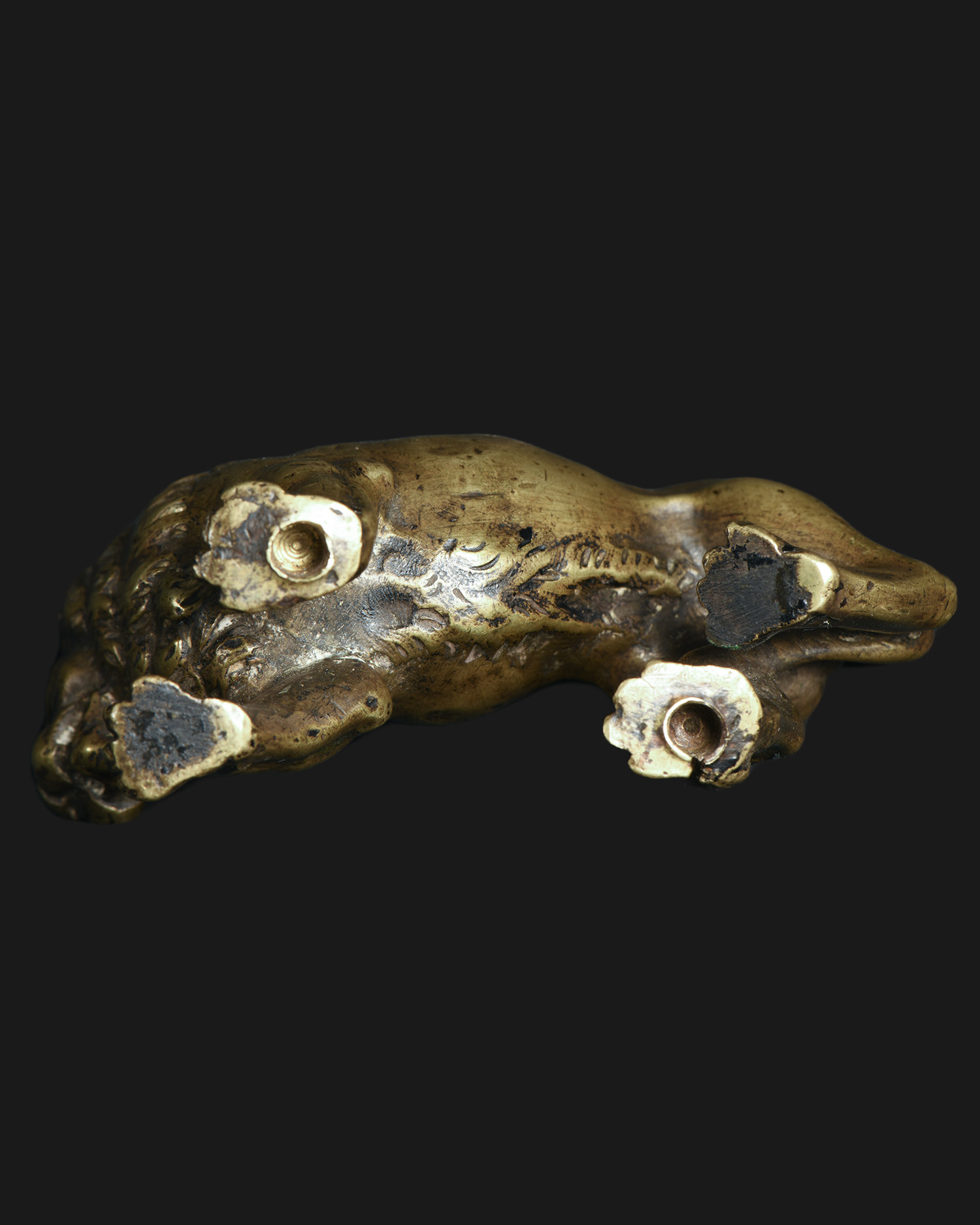

Striding Lion – desk ornament, bronze/brass, northern Italy or southern Germany, 16th century
1200,00 zł
Length: 6.8 cm
Width: 3.3 cm
Height: 4.6 cm
Weight: 225 g
1 in stock
| Weight | 0,225 kg |
|---|---|
| Dimensions | 6,8 × 3,3 × 4,6 cm |
| Type |
Sculpture |
| Form |
Full-plastic sculpture |
| Materiał |
Antique copper alloy (sculptural bronze / old-style brass) |
| Kolorystyka |
Brass ,Dark Gold |
| Technika |
Full lost-wax casting |
| Czas powstania |
16th century |
| Era |
Renaissance |
| Kraj pochodzenia |
northern Italy or southern Germany |
| Autor |
Unknown |
| State of preservation |
Very good |
Related products
Brahma, marble, India, 19th century.
Capital with Figural Decoration, Sandstone, France, 12th-14th Century
Ganesha, marble, India, 19th century.
Krishna, marble, India, 19th century.
Saint John the Evangelist, late Gothic wooden sculpture, ca. 1500
The work may have been part of a winged altarpiece (retabulum), most likely in the Crucifixion group.
St. Augustine reliquary with Ex Ossibus relic, polychrome wood, gilded, Italy, 18th century.
Vajrabhairava in Tantric Union (Yab-Yum) with Vajravetali, gilt and polychromed bronze, Tibet (?), 19th century
The sculpture depicts Vajrabhajrava, or more specifically, his Tantric form. The deity has three heads with angry expressions, crowned with a crown of skulls, symbolizing the direct destruction of illusion. Inside the crown, flames burst forth, a fire of wisdom burning away ignorance. Emerging from them is the head of a gentle animal - it belongs to Vajrabhajrava himself (his higher aspect).
The figure has six arms, symbolizing the multifaceted activity of the enlightened mind, and holds ritual attributes. The outstretched wings are a rarer but significant feature, representing a transcendental aspect and the overcoming of samsaric limitations. Vajrabhairava stands in a dynamic pose on a lotus base, trampling a male and female figure. These figures symbolize ignorance (avidya), attachment, anger, ego, and the illusion of duality.