


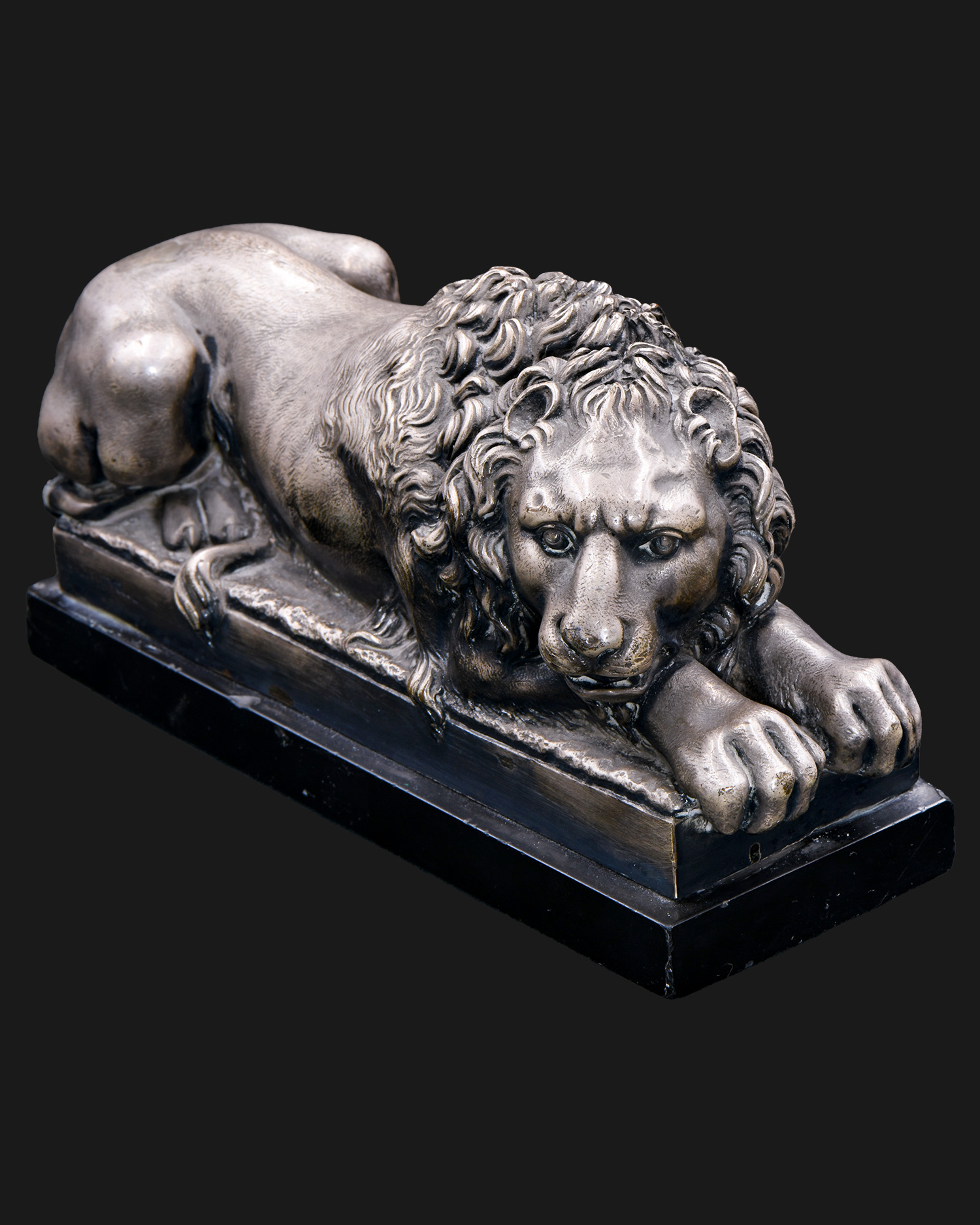
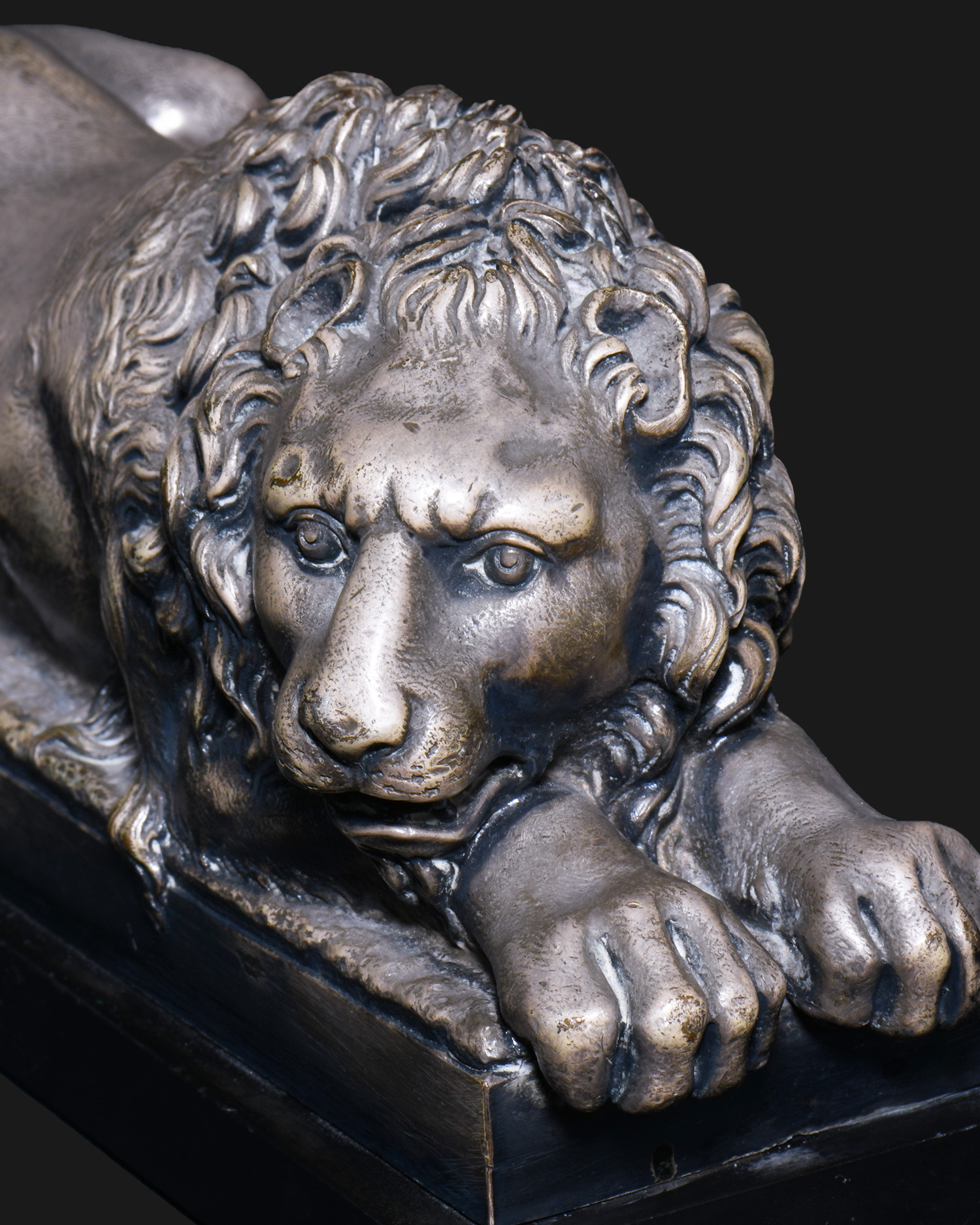
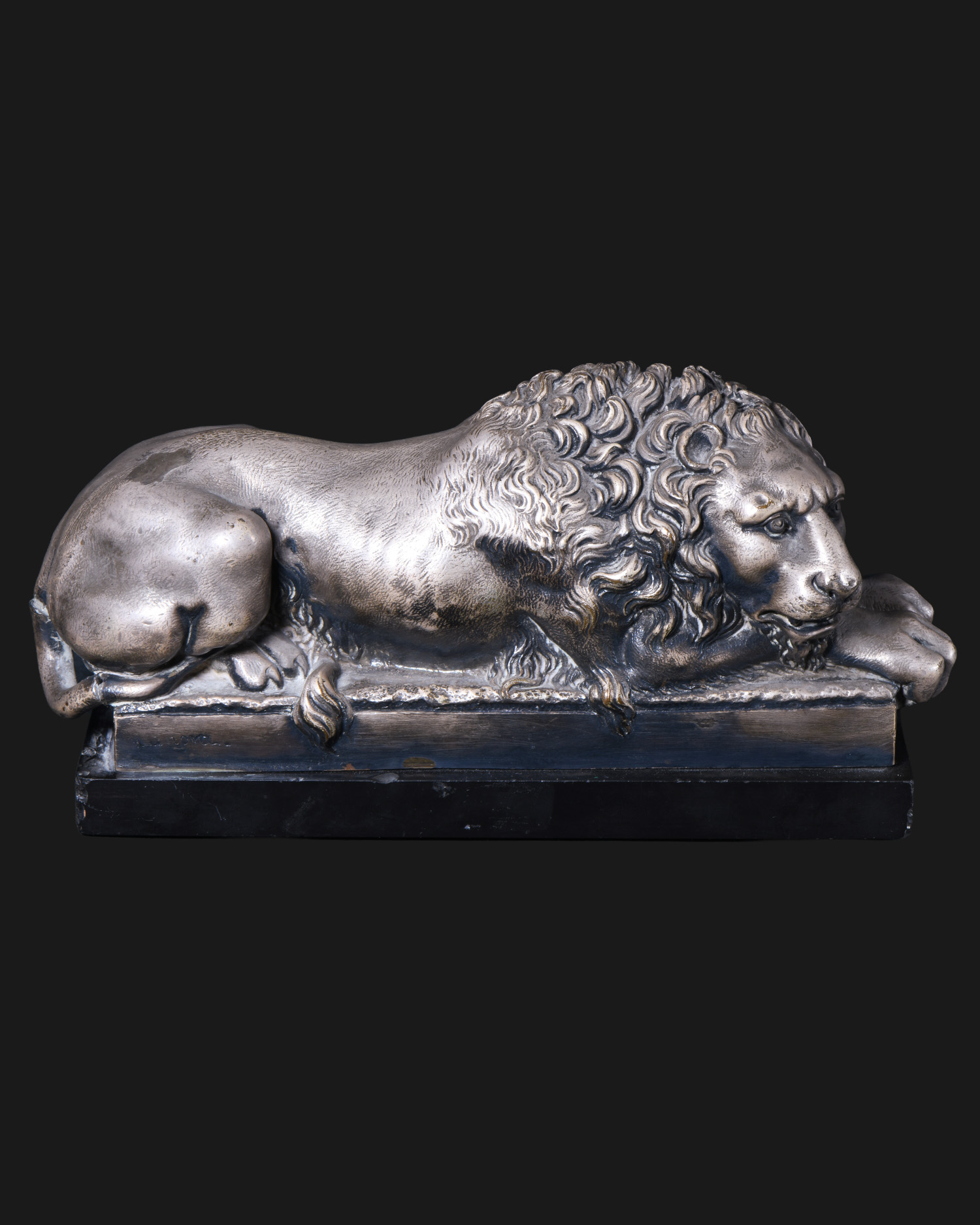
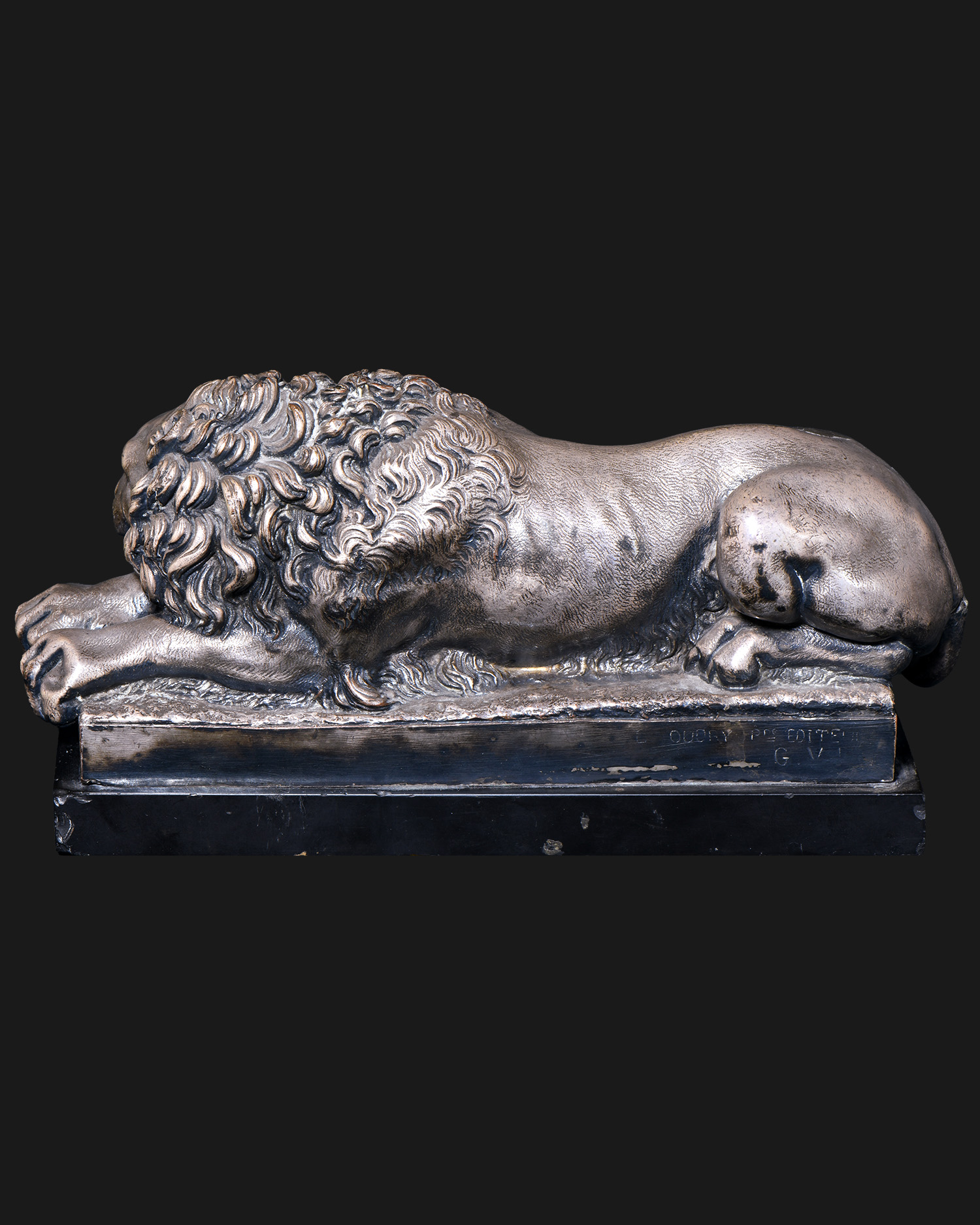
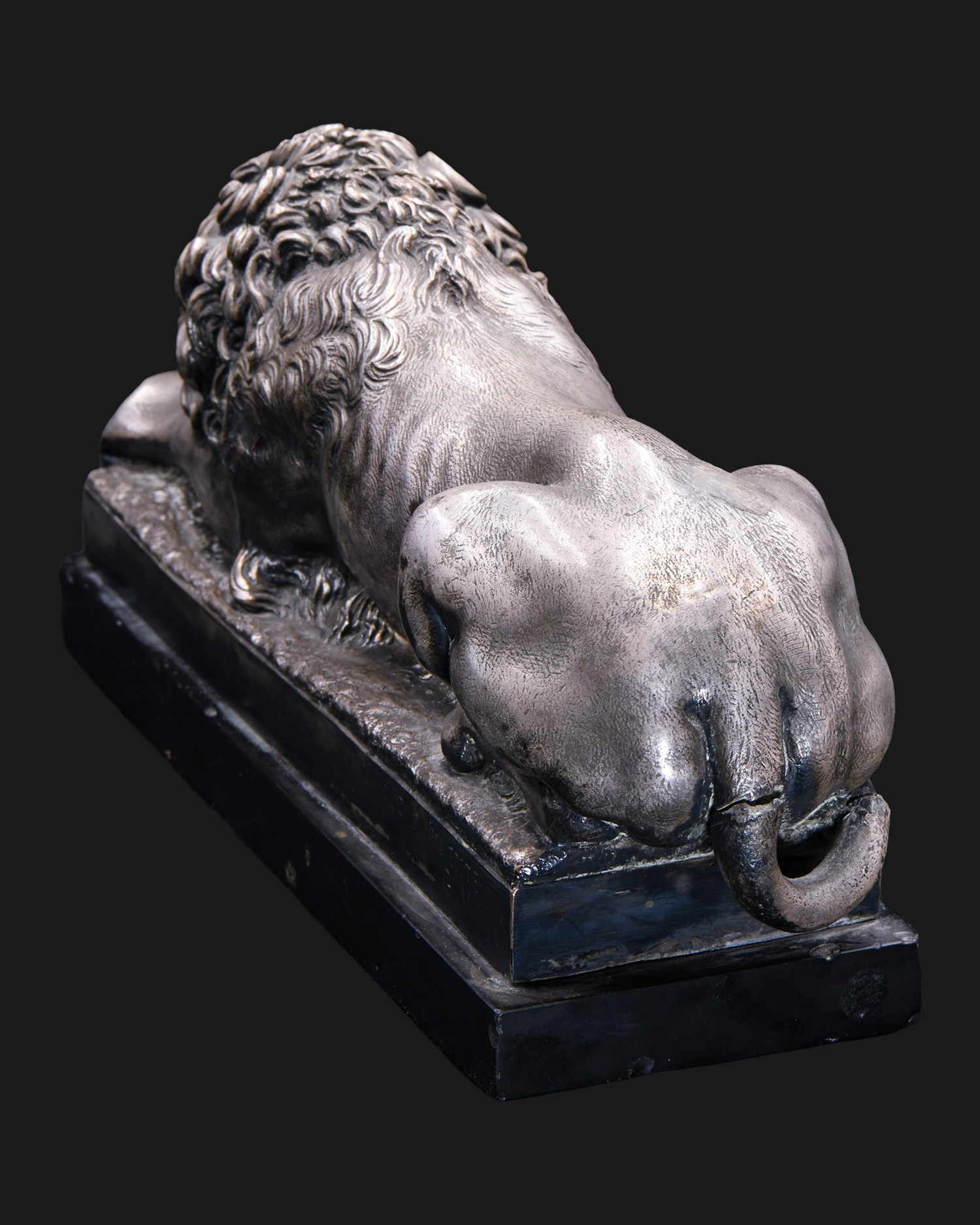
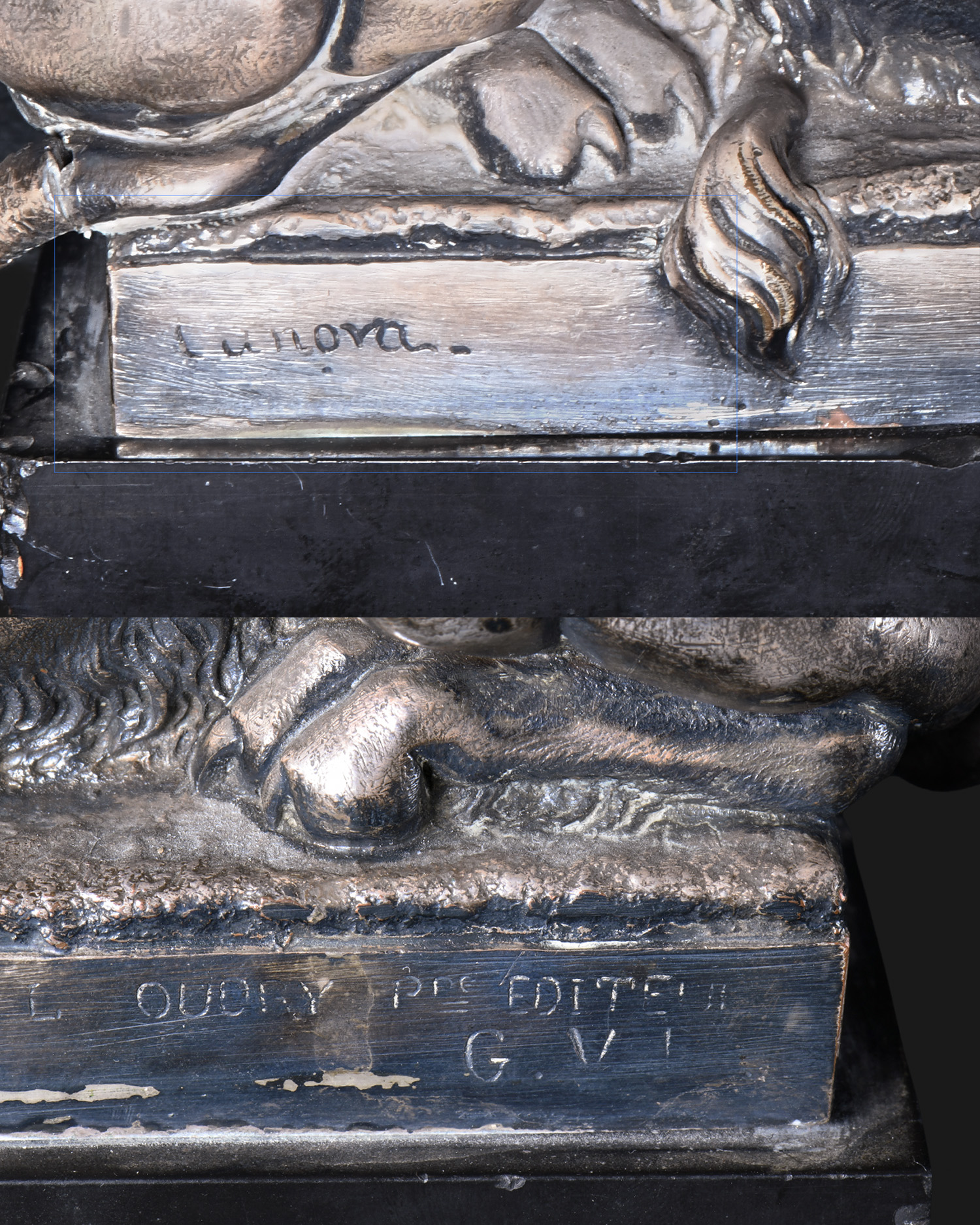
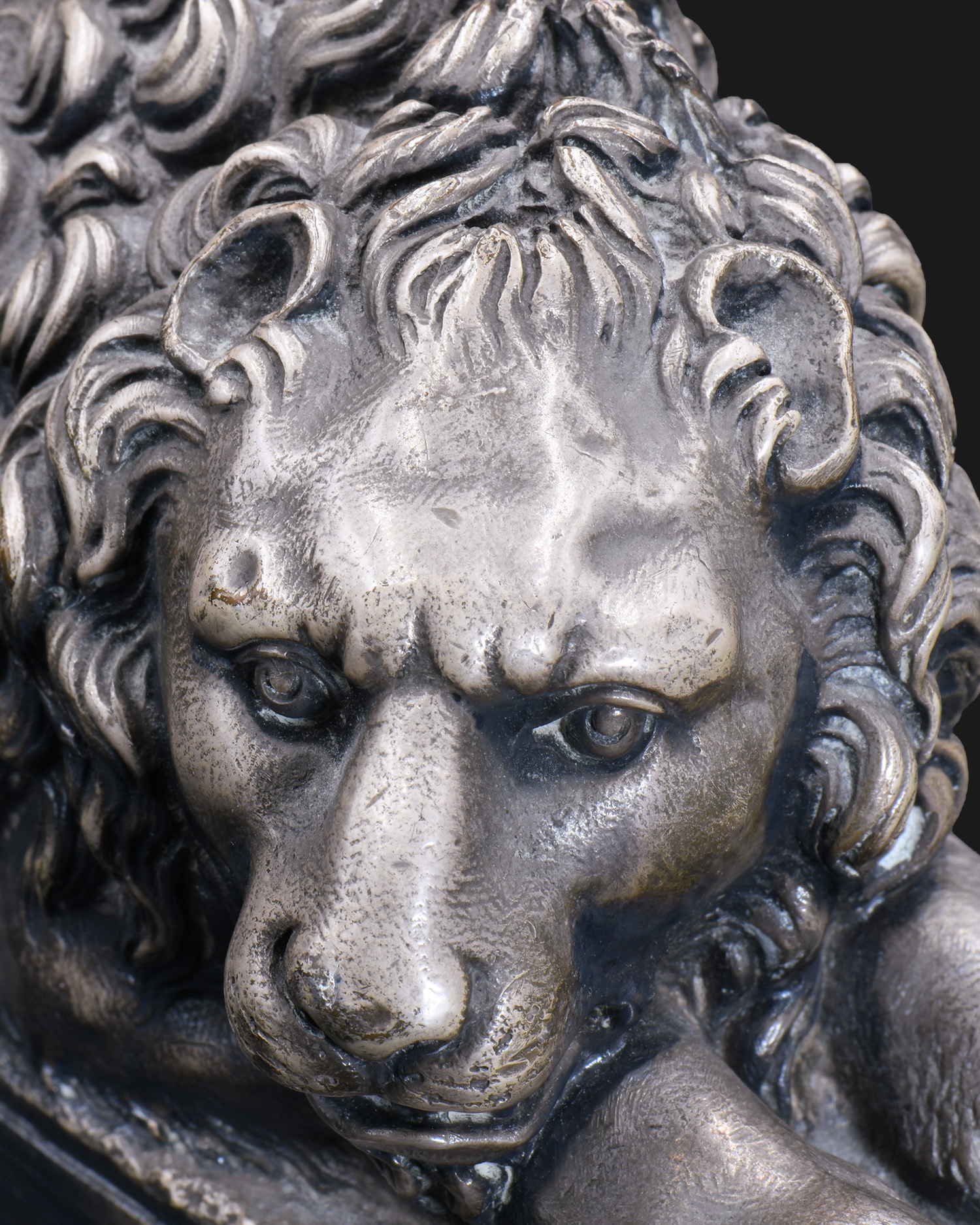

A Watchful Lion by Canova, silver-plated bronze, Paris, ca. 1860–1880
2800,00 zł
Length: 21 cm
Height: 10.5 cm
Width: 6.7 cm
Weight: 2.09 kg
1 in stock
| Weight | 2,09 kg |
|---|---|
| Dimensions | 21 × 10,5 × 6,7 cm |
| Type |
Sculpture |
| Form |
Full-plastic sculpture |
| Materiał |
Marble ,Silver-plated bronze |
| Kolorystyka |
Black ,Silver |
| Technika |
Chiseled casting |
| Czas powstania |
ca. 1860–1880 |
| Kraj pochodzenia |
France |
| Autor |
Léopold Oudry & Cie, a French manufacturer based in Paris |
| State of preservation |
Very good, beautiful old patina |
Related products
Bust of Krishna, marble, India, 19th century.
Ganesha, marble, India, 19th century.
Krishna, marble, India, 19th century.
Krishna, marble, India, 19th century.
Madonna and Child, polychrome wood, gilded, Central Europe, 18th/19th century
Singa Barong, polychrome wood, Indonesia, 19th century.
St. Augustine reliquary with Ex Ossibus relic, polychrome wood, gilded, Italy, 18th century.
Vajrabhairava in Tantric Union (Yab-Yum) with Vajravetali, gilt and polychromed bronze, Tibet (?), 19th century
The sculpture depicts Vajrabhajrava, or more specifically, his Tantric form. The deity has three heads with angry expressions, crowned with a crown of skulls, symbolizing the direct destruction of illusion. Inside the crown, flames burst forth, a fire of wisdom burning away ignorance. Emerging from them is the head of a gentle animal - it belongs to Vajrabhajrava himself (his higher aspect).
The figure has six arms, symbolizing the multifaceted activity of the enlightened mind, and holds ritual attributes. The outstretched wings are a rarer but significant feature, representing a transcendental aspect and the overcoming of samsaric limitations. Vajrabhairava stands in a dynamic pose on a lotus base, trampling a male and female figure. These figures symbolize ignorance (avidya), attachment, anger, ego, and the illusion of duality.