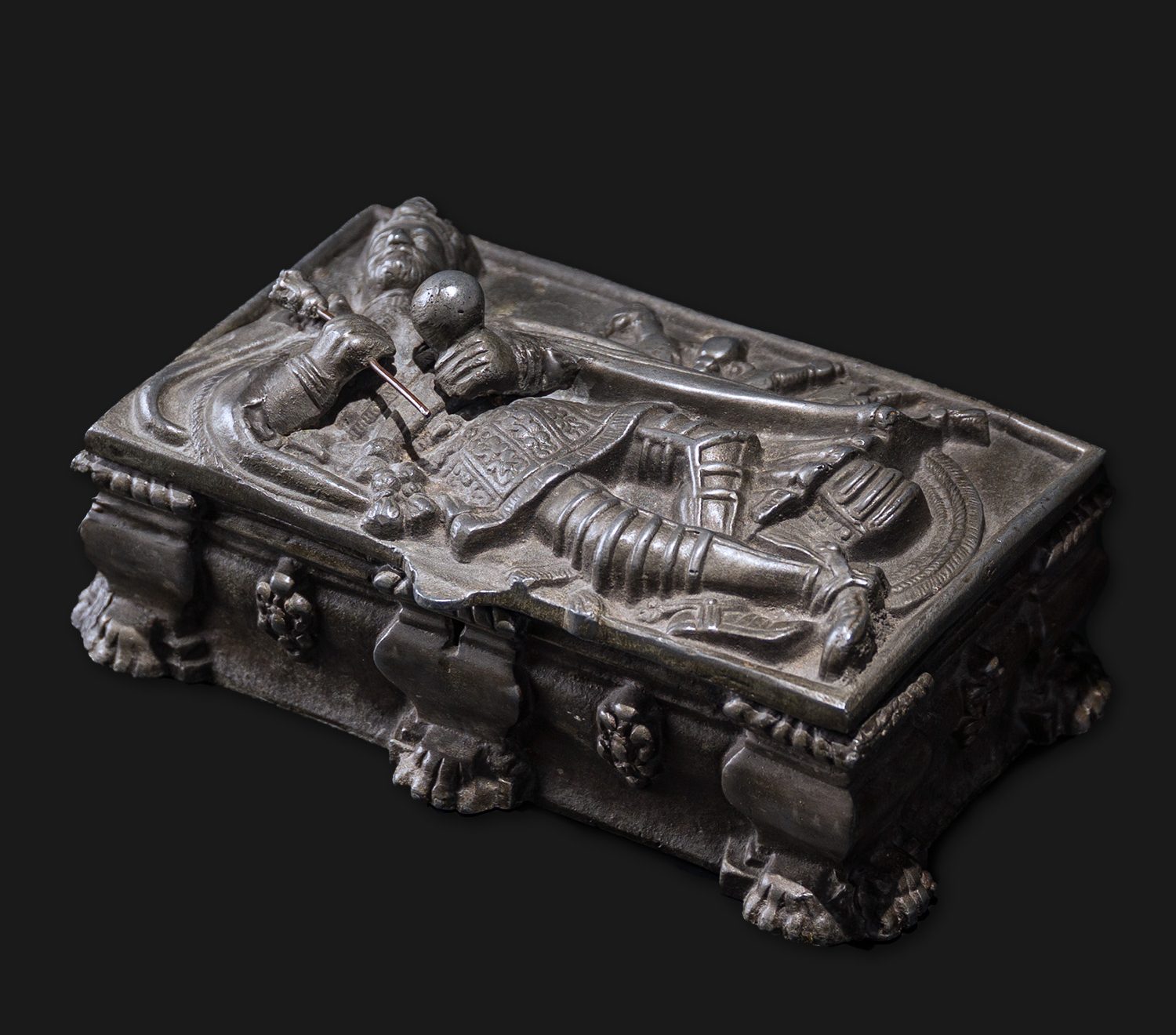
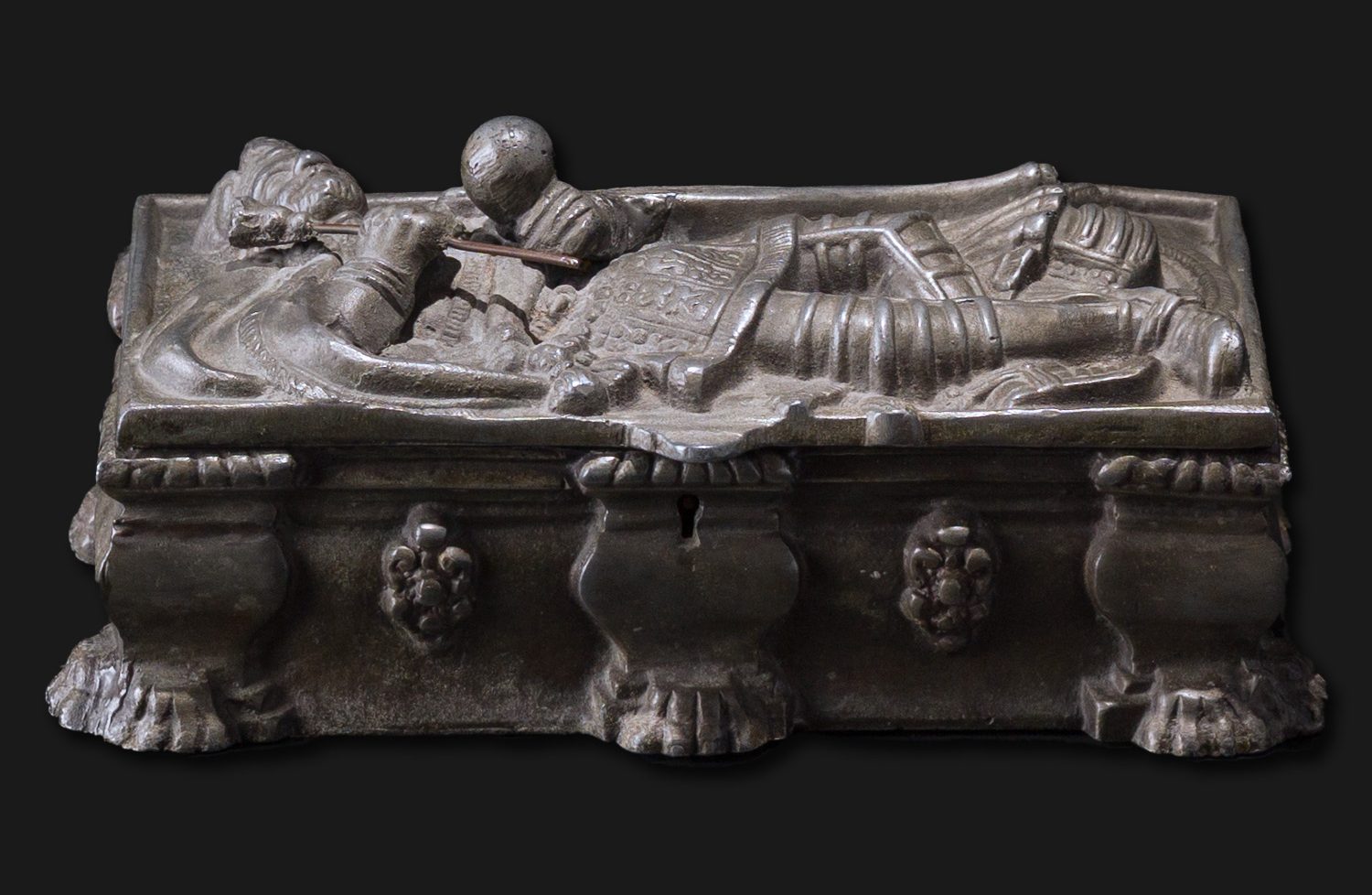
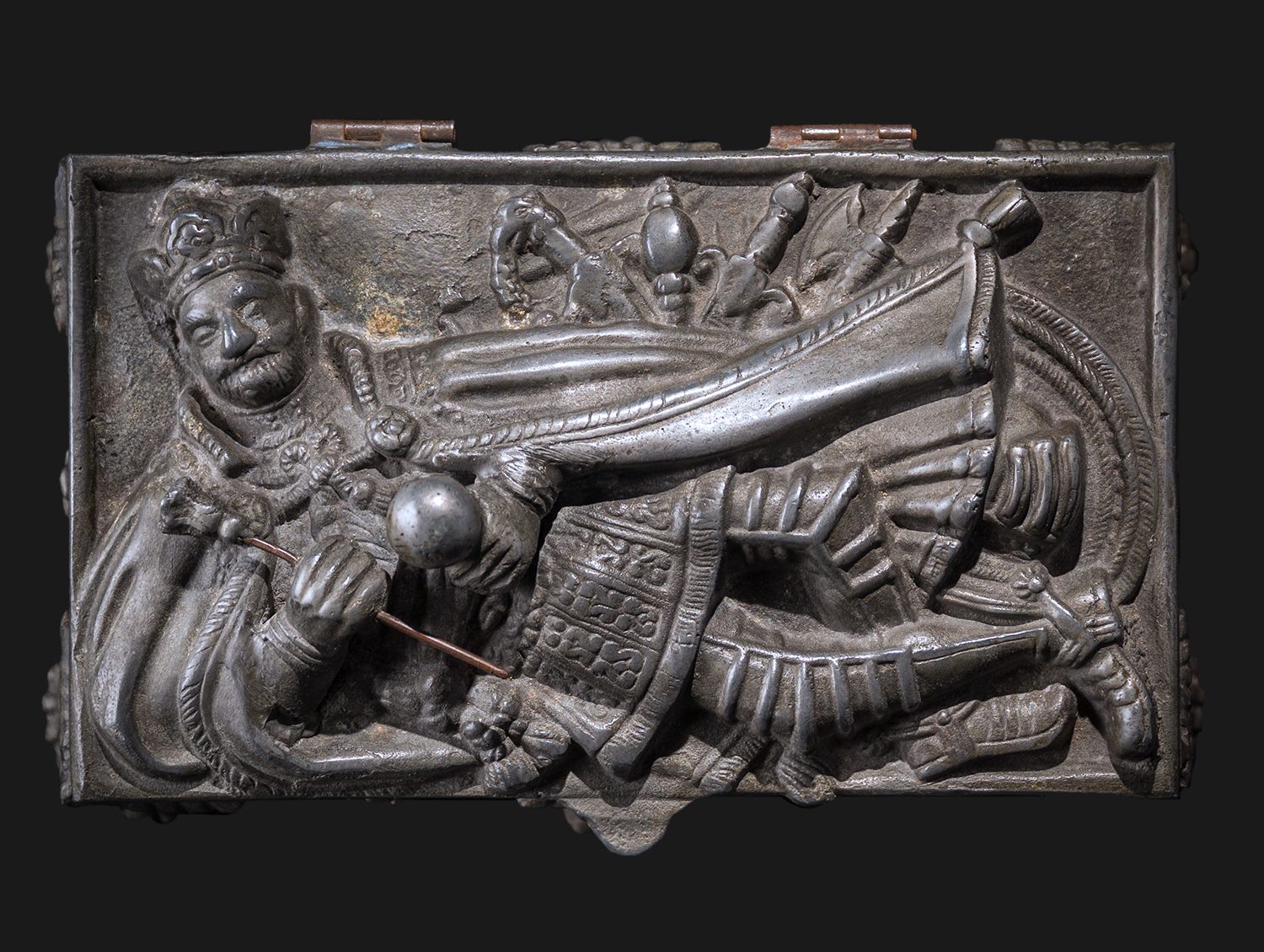
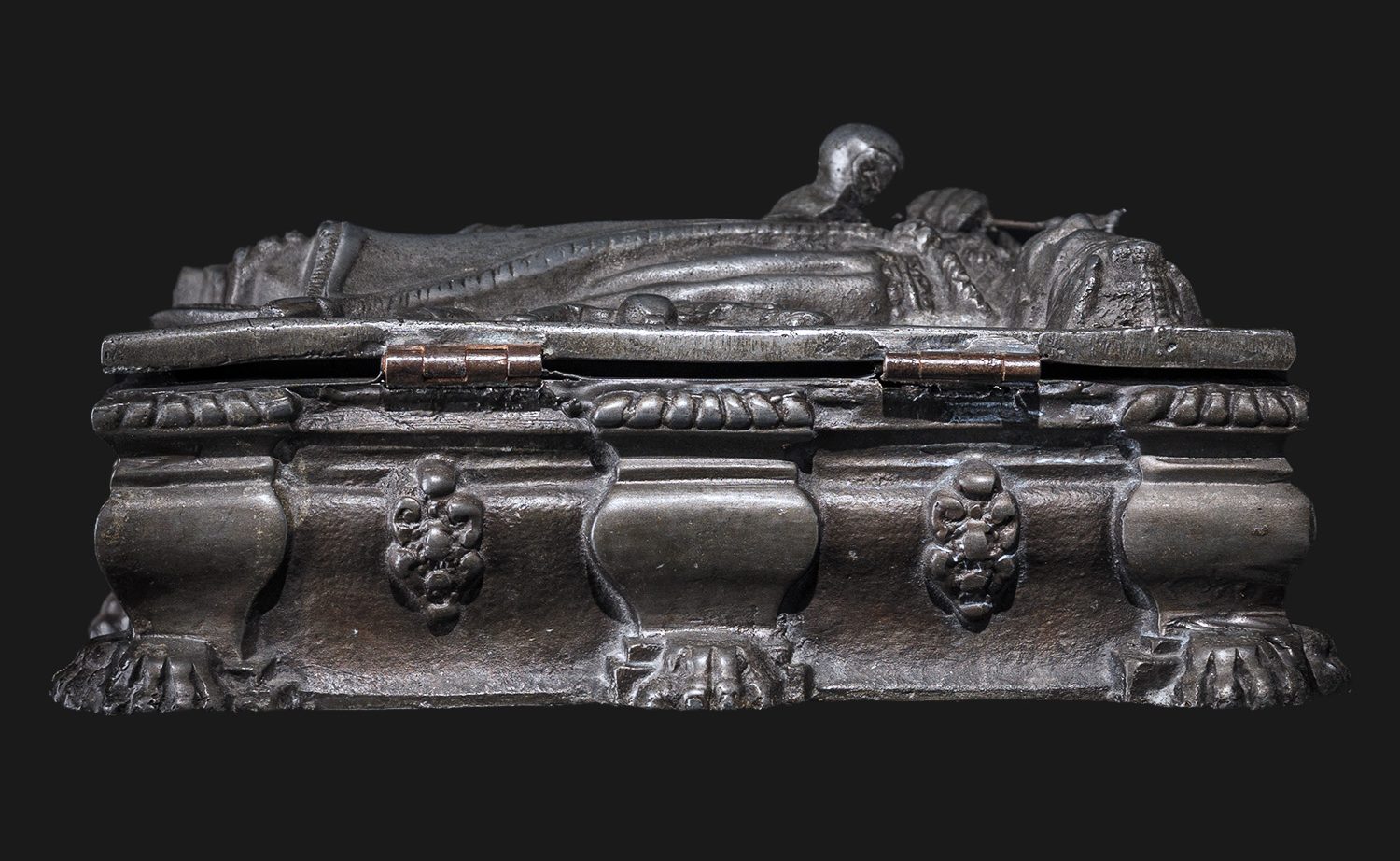
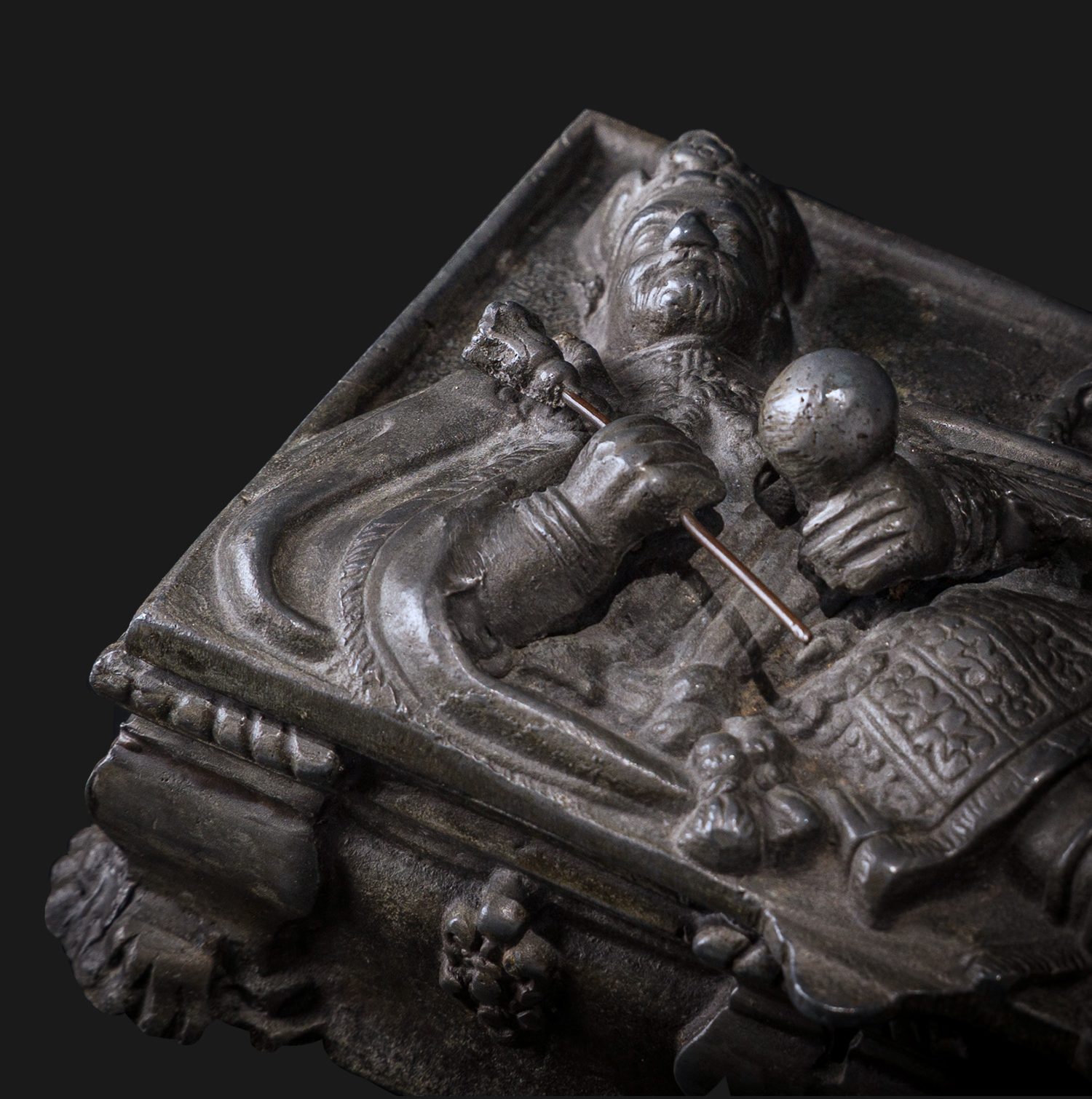
Tin casket, so called "serviette", in the form of a tomb of King Stefan Batory. The body with convex sides, decorated with imitation fittings, supported on lion's feet. The lid depicts a model of the bas-relief from the tomb of Stefan Batory, located in St. Mary's Chapel in Wawel Castle. The king is shown in a semi-recumbent position with a scepter and apple, clad in armor and coronation cloak.
Casket designed by Wojciech Święcki and Kazimierz Stronczyński, made around 1857 in the Warsaw factory of artistic castings of Karol Minter.
During the Partitions, when the need to cultivate national identity prevailed among the Polish elite. Caskets of this type were one of the manifestations of patriotic arts and crafts, carrying ideological content in the form of utilitarian objects.
Stefan Batory (1533-1586), Duke of Transylvania, King of Poland and Grand Duke of Lithuania, was considered one of the strongest rulers of the Polish-Lithuanian Commonwealth. A victor in the war with Moscow and a reformer of the army, he became a symbol of the state's sovereignty and strength. His tombstone in St. Mary's Chapel in Wawel Castle, by Santi Gucci, is a work of great artistic and symbolic significance. It depicts the monarch in armor, in a reclining position, and this motif has been faithfully reproduced on the age of the casket, creating an artistic miniature of this form.