


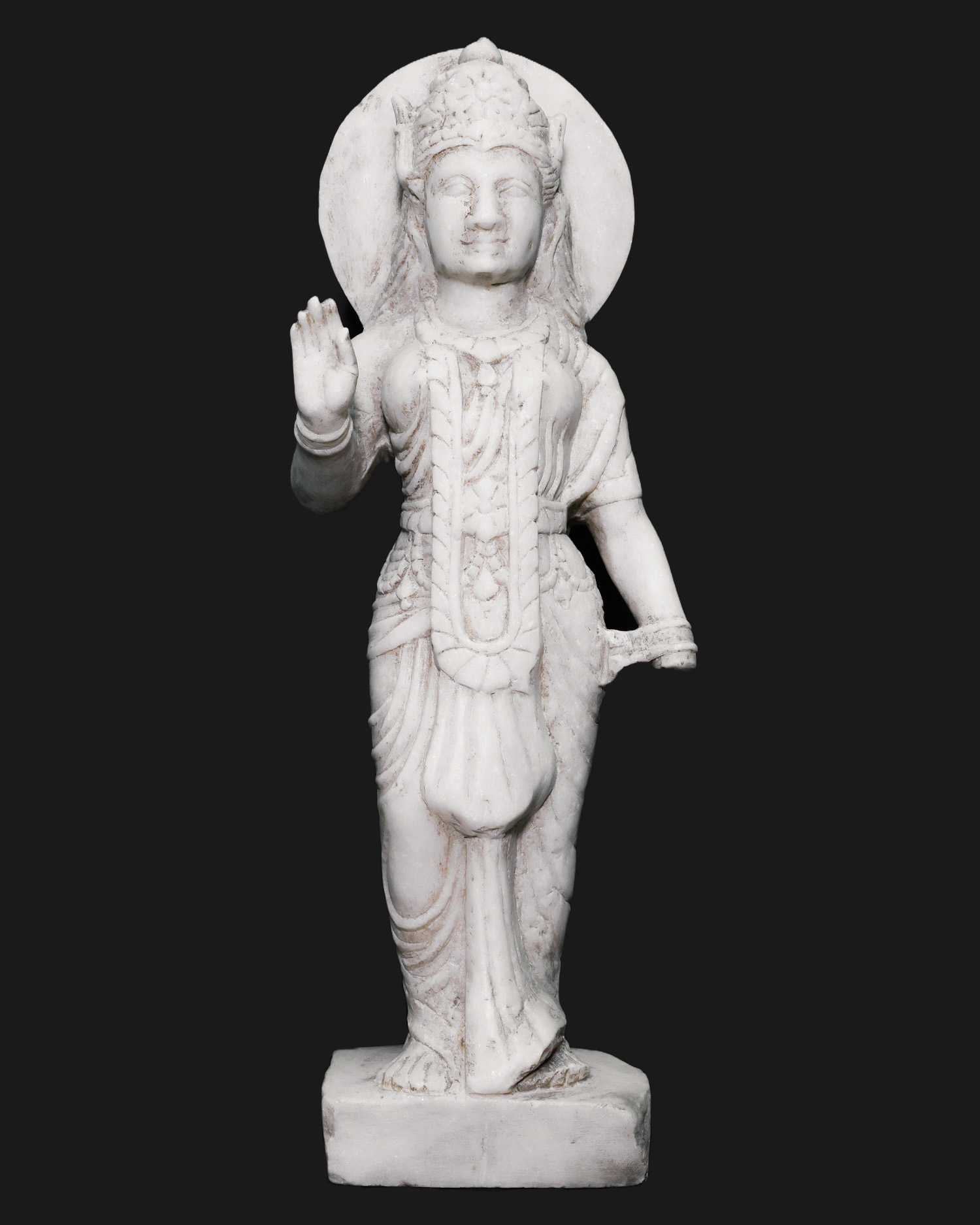
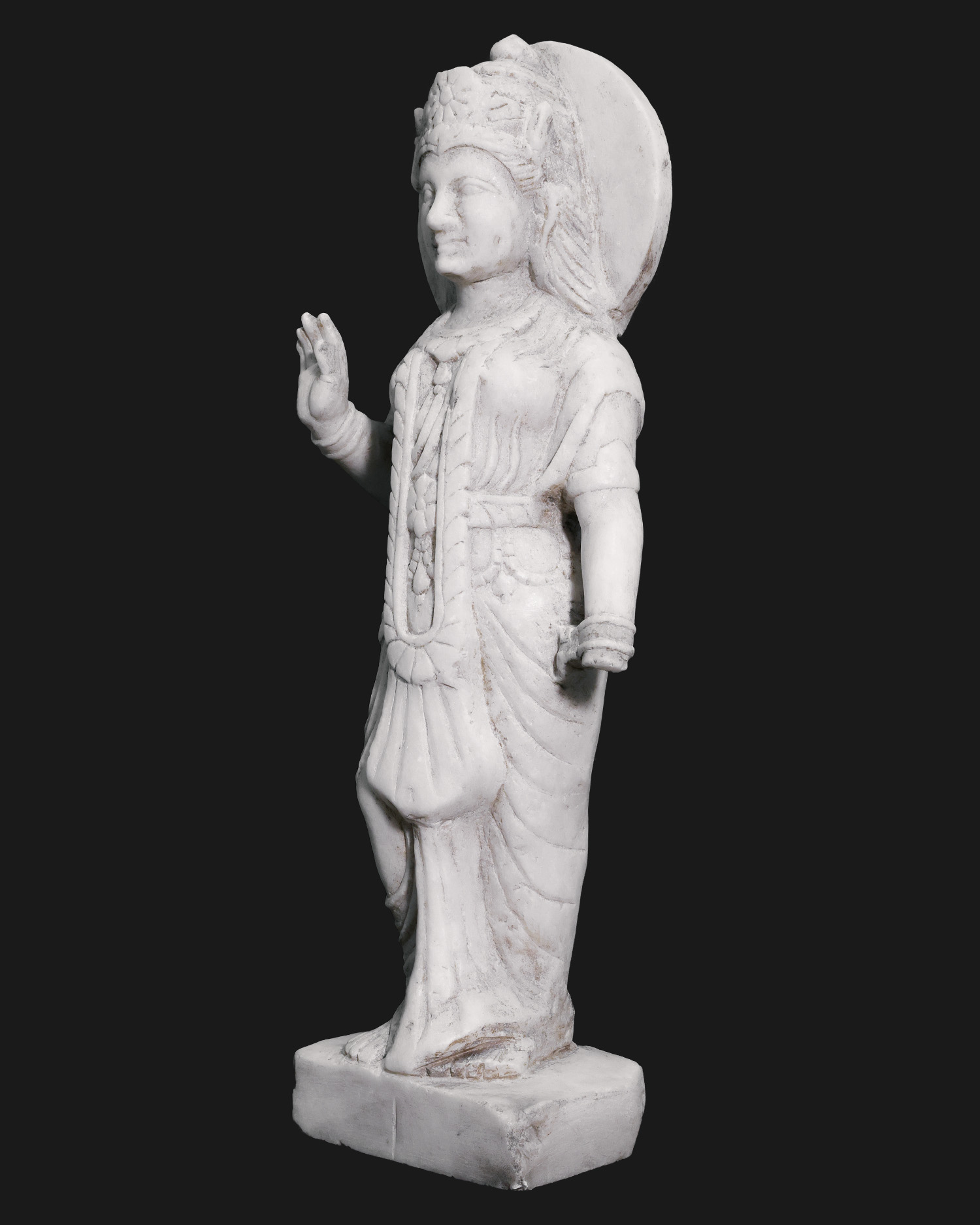
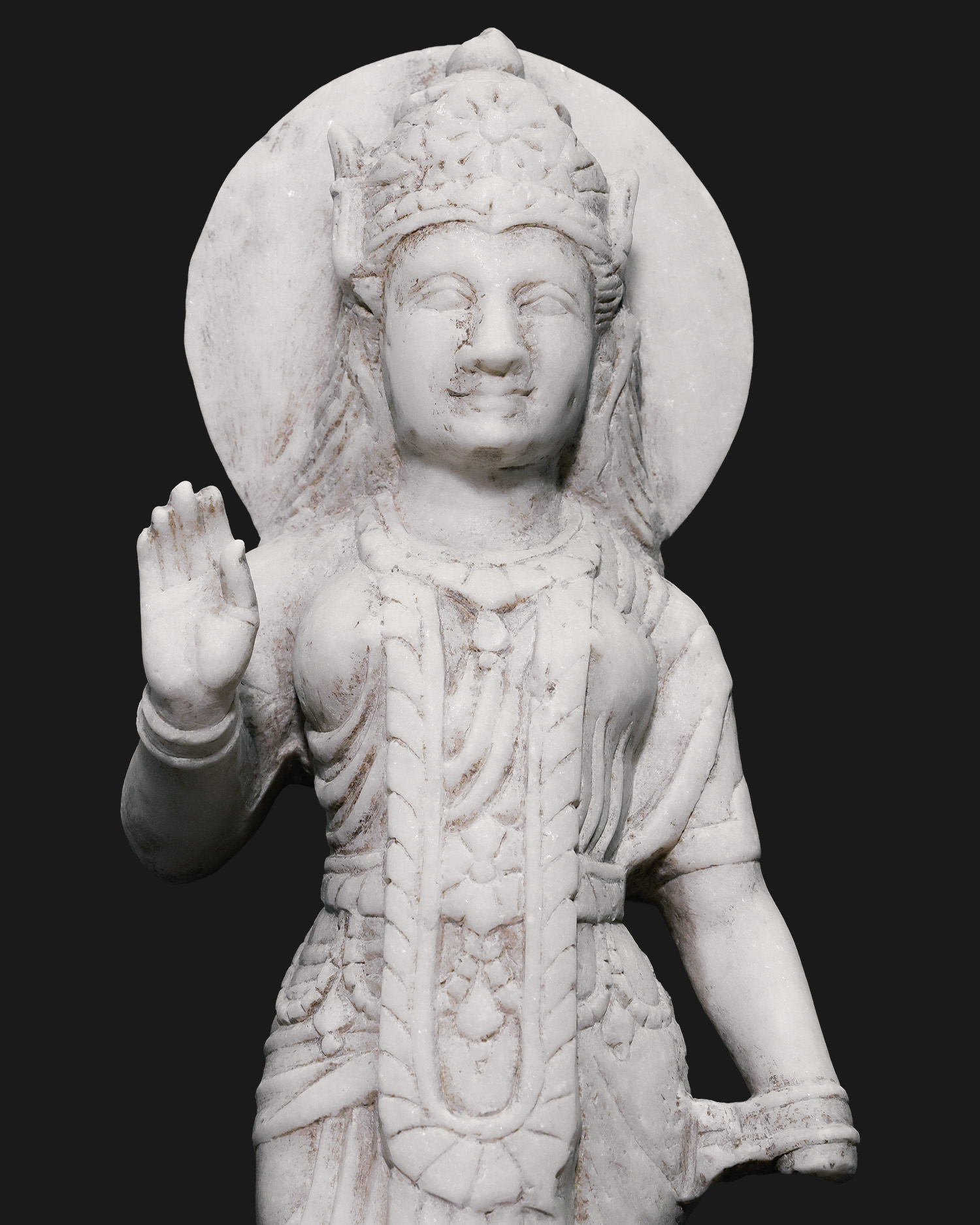
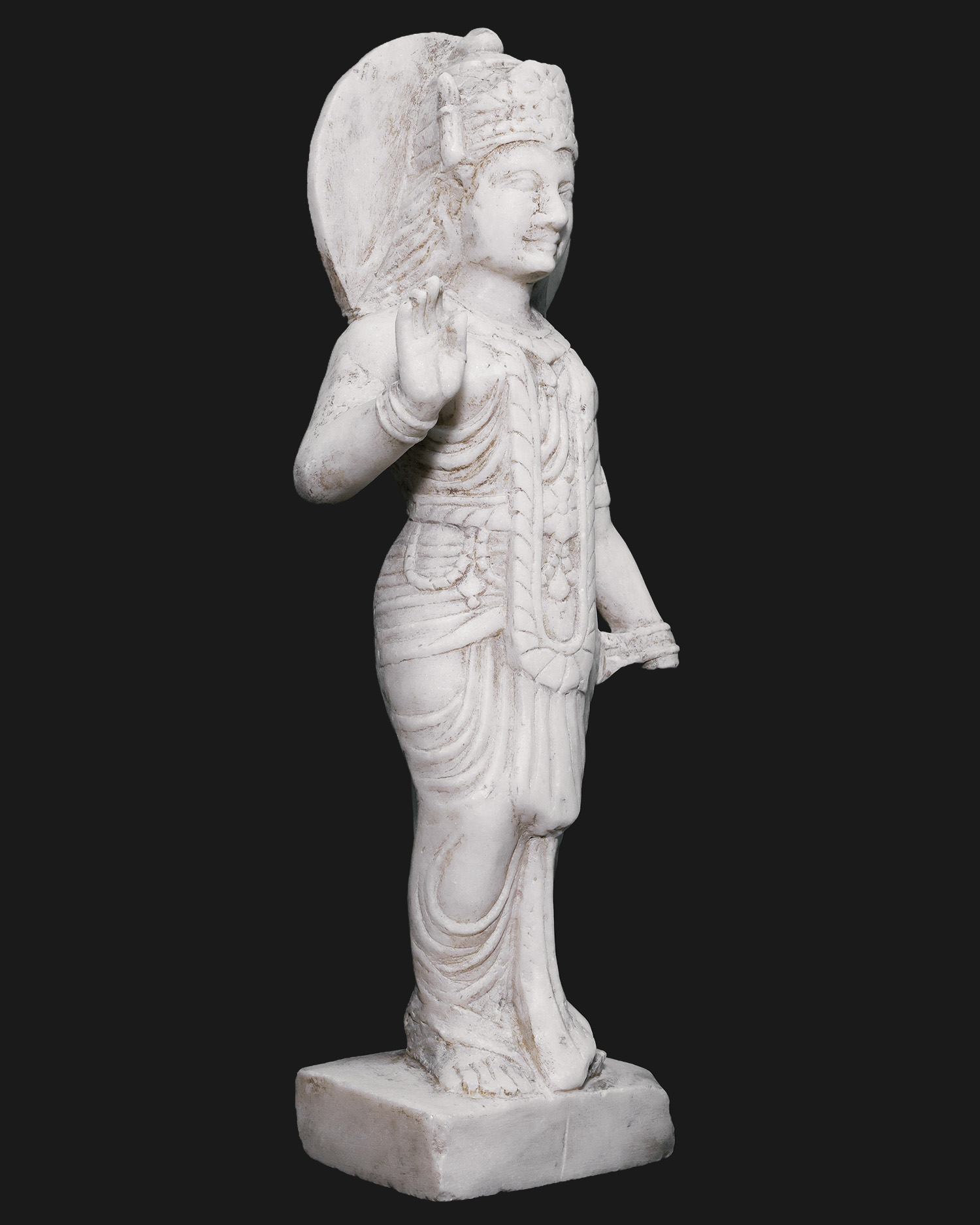
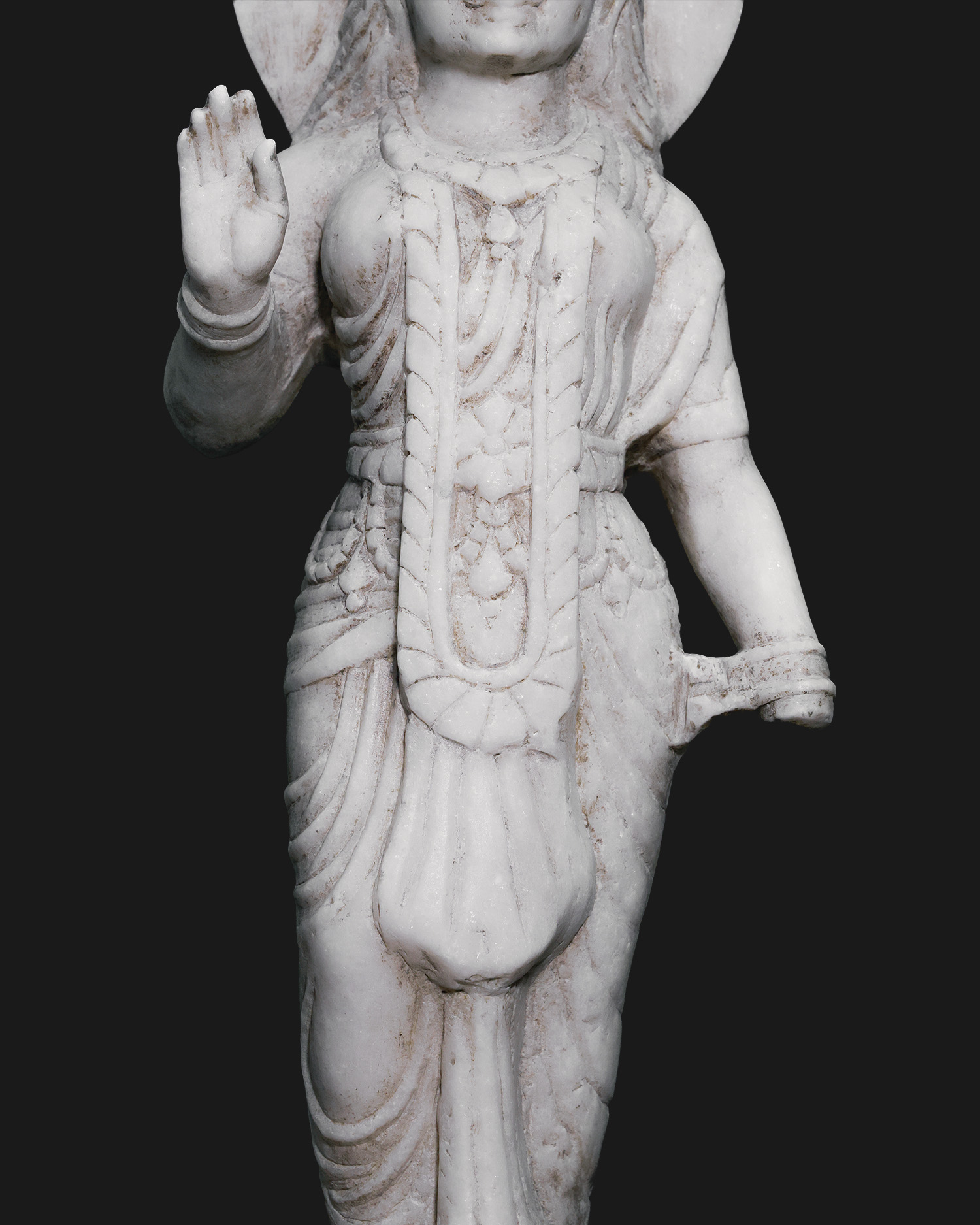
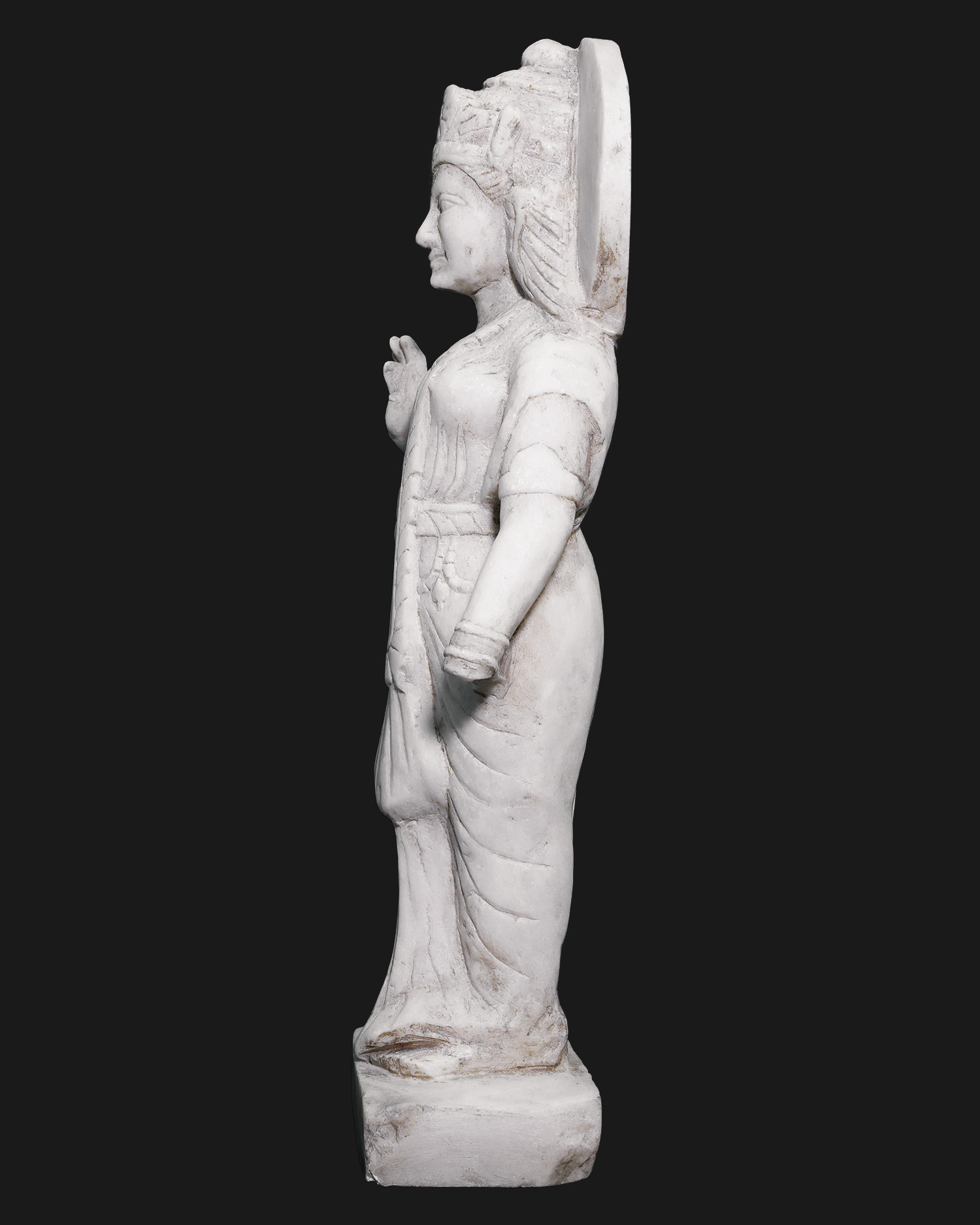
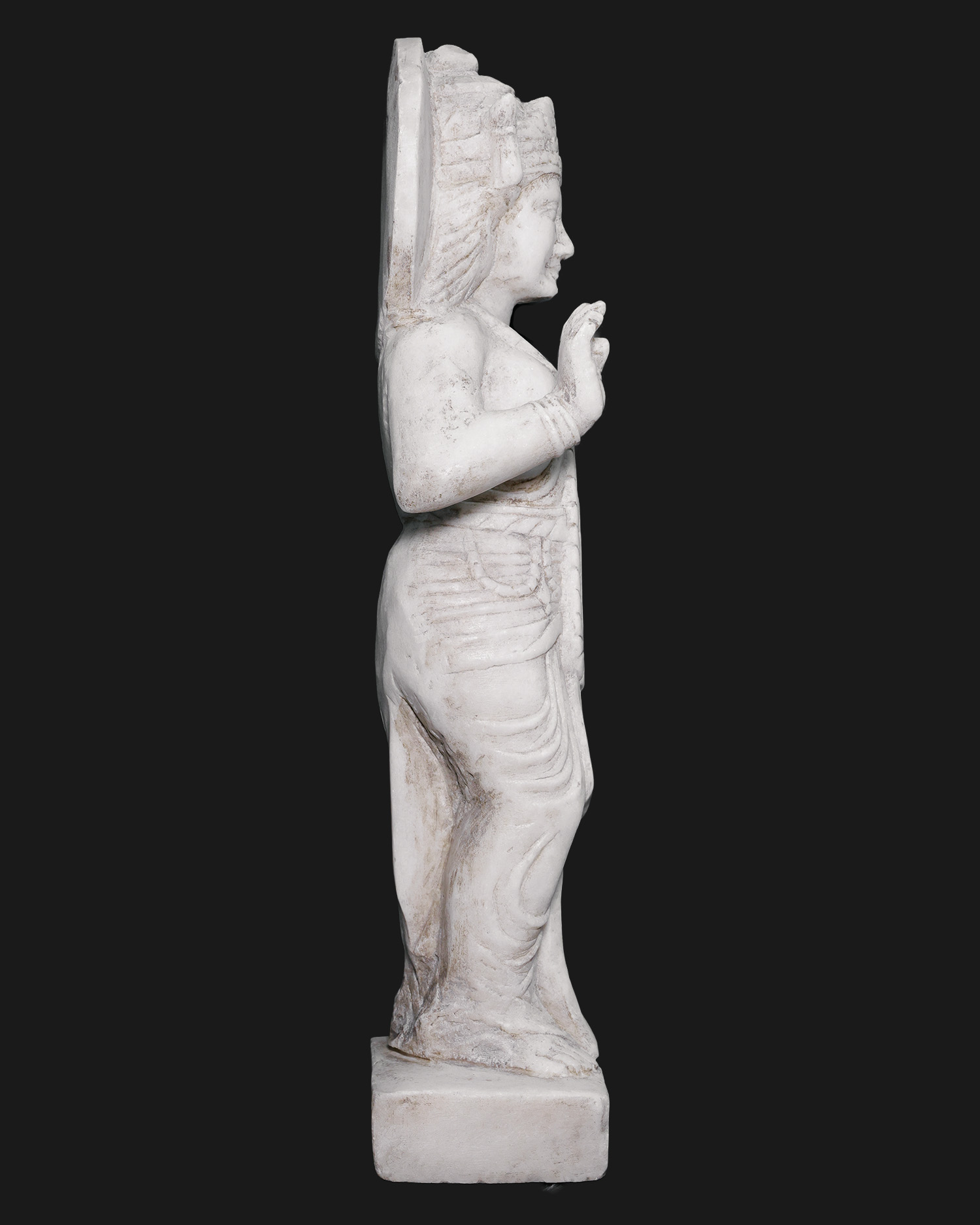
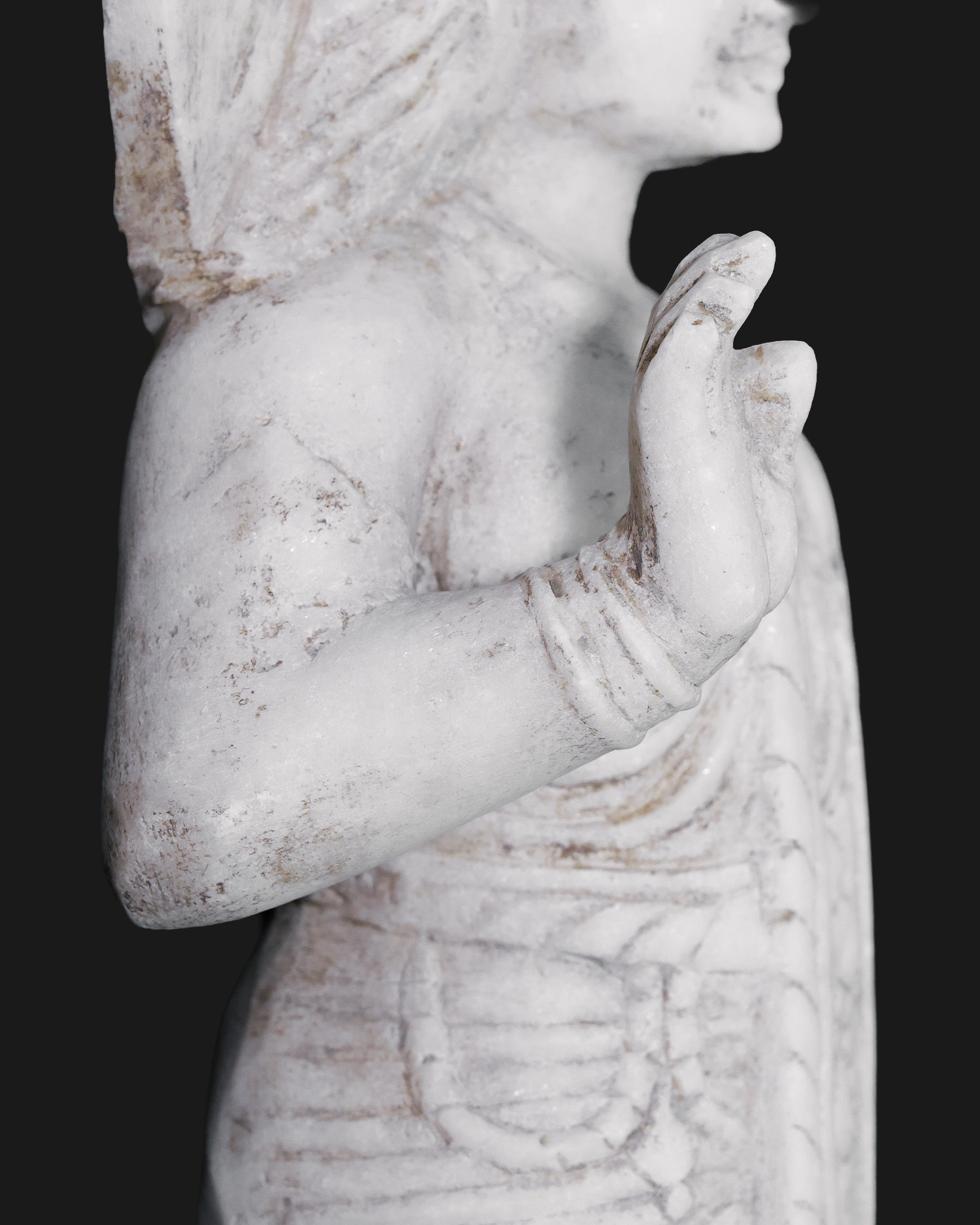
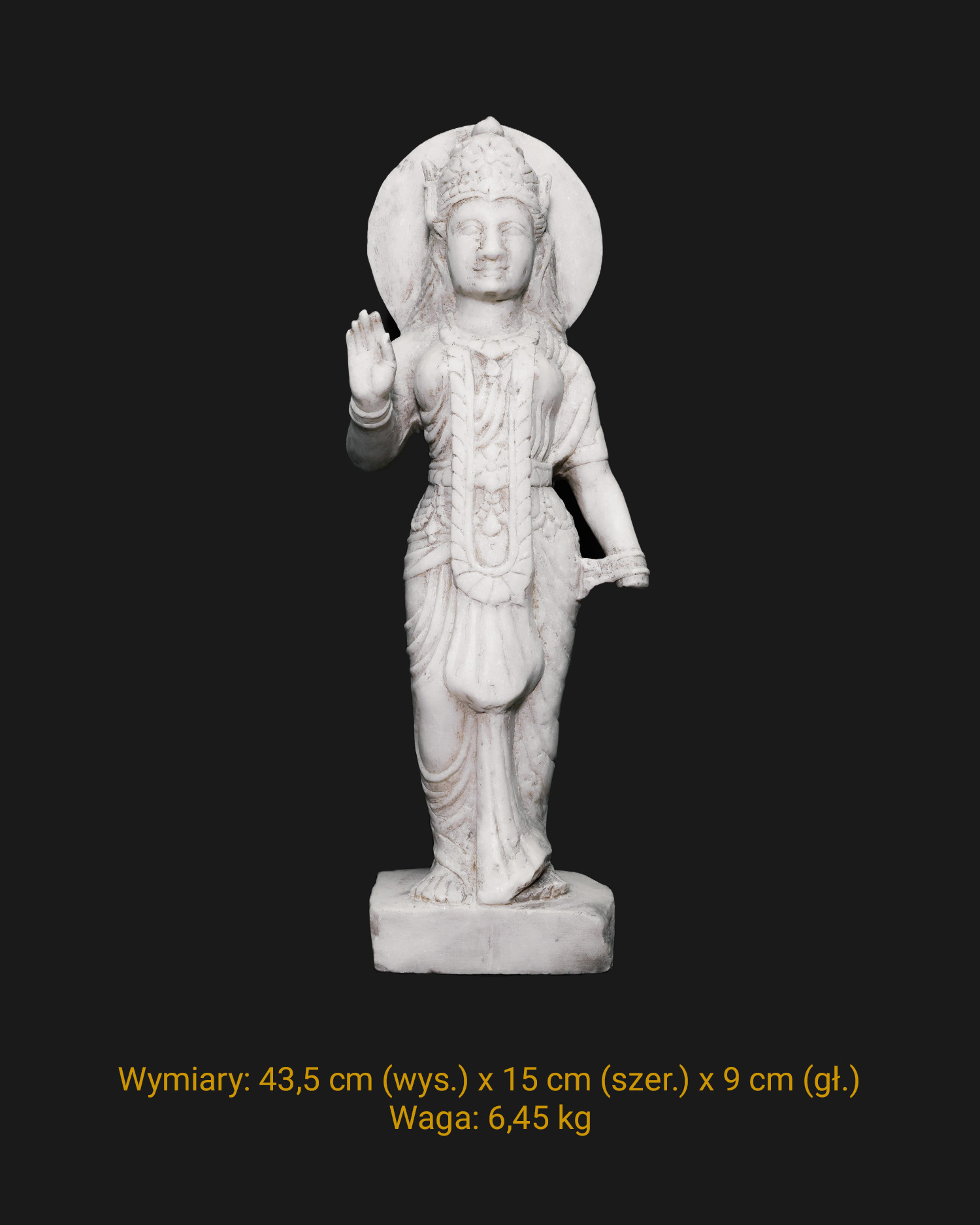

Mata Sita, marble, India, 19th century.
900,00 zł
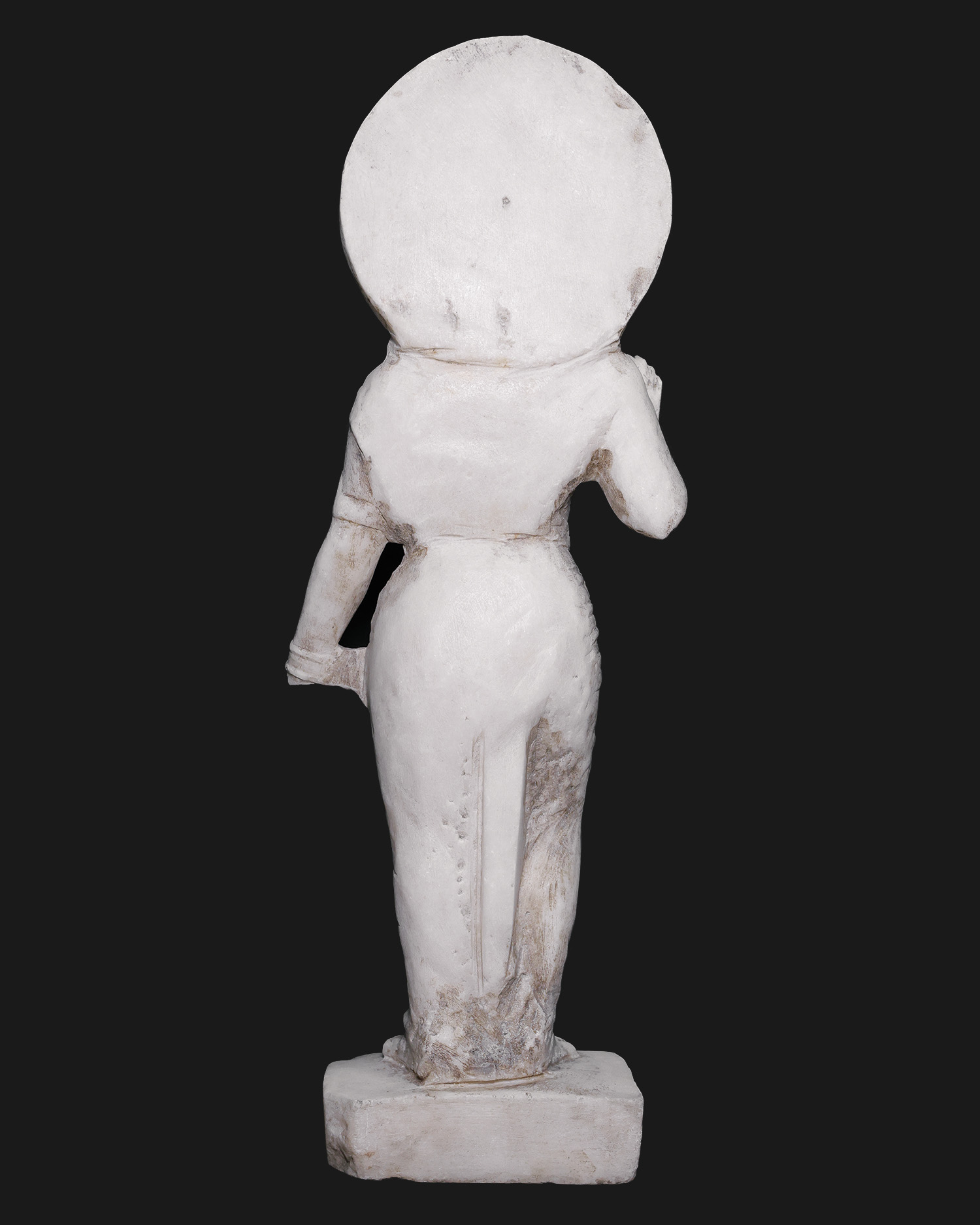
Full-plastic sacred sculpture intended for display in an altar niche, made of marble. It depicts a standing female deity from the Hindu pantheon – identified as Mata Sita (Rama’s spouse) – framed in a hieratic, frontal stance with delicate counterpoint. The figure raises her right hand at breast level in a symbolic gesture of abhaya mudra (a gesture of care and dispelling of fear). The left hand is lowered along the torso; the palm is not preserved, probably holding a lotus flower. The deity’s head is crowned with a high, crown, and a large, smooth nimbus is visible at the back. The face, with full features, has a calm expression, and the eyes have a characteristic almond shape. The figure is dressed in a long gown and wears a wide necklace-collar and a heavy garland, flowing down along the thighs below the knee line. The back of the sculpture was deliberately treated sparingly, as the figure was attached with this side directly to the wall of the altar niche.
The object on display is an example of 19th-century Renaissance marble sculpture in northern India, with a particular focus on the craft centers of Rajasthan (Jaipur region).
Dimensions: 43.5 cm (height) x 15 cm (width) x 9 cm (depth)
Weight: 6.45 kg
1 in stock
Related products
Brahma, marble, India, 19th century.
Ganesha, marble, India, 19th century.
Head of an angel (?), sandstone, France, ca. 1300
Madonna and Child, polychrome wood, gilded, Central Europe, 18th/19th century
Rama, marble, India, 19th century.
A sculpture depicting Rama, one of the most important deities of Hinduism, considered the seventh avatar of Vishnu. The object was hand-carved in white marble in India, probably in the 19th century.
The figure is depicted standing, facing forward. The face has a gentle expression with a soft smile and slightly closed eyes. The head is crowned with a decorative crown, and long necklaces are visible on the chest.
The figure is dressed in a draped robe with clearly marked folds. On its back is a quiver with arrows, characteristic of Rama's depictions.
The hands of the sculpture are not preserved, originally in one of them the figure held a bow - a characteristic element of representations of this deity. Further about these cavities do not write that they are consistent.
Rama is the hero of the epic Ramayana and in the Hindu tradition symbolizes righteousness and fidelity to the principle of dharma. His images occupy an important place in Indian sacred art, although full-figure marble sculptures of this scale are less common.
The object is preserved in good condition, with clear legibility of form and detail.